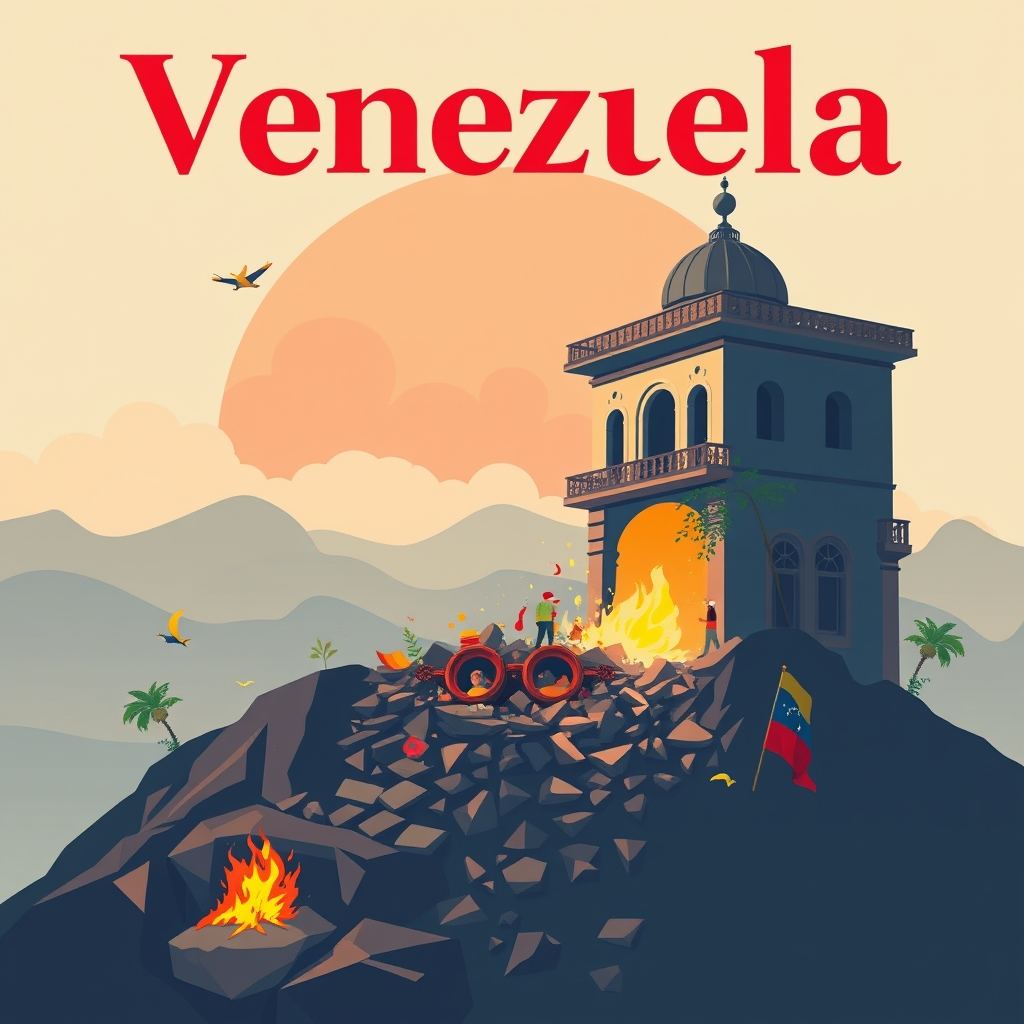
Venezuela Earthquake Crisis: Global Powers Mobilize Amid Rising Death Toll
A series of devastating earthquakes has struck Venezuela, leaving a trail of destruction and claiming at least 235 lives as of June 26, 2026. As rescue operations intensify in hard-hit areas like La Guaira, a massive international humanitarian response is unfolding, revealing the deep geopolitical fault lines in the Western Hemisphere.
A Massive Humanitarian Mobilization
As the death toll climbs, the international community has launched a wide-scale relief effort. The United Nations-certified rescuers, coordinated through interim President Delcy Rodriguez, are working alongside specialists from several European nations. Spain and France are deploying dozens of specialists, while Germany has committed six military transport planes to facilitate the movement of aid. Switzerland is contributing 18 tonnes of equipment and 80 personnel, including specialized rescue dogs.
Financial support is also flowing in rapidly. The International Federation of Red Cross and Red Crescent Societies (IFRC) has released $2.5 million, while the Vatican, via Pope Leo XIV, has sent an initial €100,000 in emergency aid. Regional neighbors are also stepping up; Brazil is dispatching a field hospital and 36 firefighters, while Colombia is sending 60 rescuers and 12 tons of aid to assist its neighbor.
Geopolitics in the Midst of Disaster
The relief efforts are not merely humanitarian; they reflect the complex geopolitical landscape surrounding Venezuela. The United States has announced a significant deployment, including two warships, transport planes, helicopters, and $150 million in aid. This rapid mobilization underscores Washington's strategic interest in the region's stability.
Simultaneously, China and Iran have signaled their presence. China’s Foreign Ministry, through spokesperson Guo Jiakun, expressed a willingness to provide aid "in an appropriate manner," while Iran has voiced readiness to assist in rescue operations. This dual engagement by Western powers and Chinese-Iranian interests highlights how natural disasters can become stages for competing global influences, even during humanitarian crises.
Regional Impact and Immediate Relief Efforts
The tremors were felt across borders, notably in Colombia, which is also managing the aftermath of the quakes. Within Venezuela, the situation remains critical as survivors and rescuers comb through the rubble in La Guaira. Beyond the immediate rescue, the deployment of medical teams—including mobilized Cuban health workers and Mexican military rescuers—indicates that the secondary crisis of disease and medical shortages is a primary concern for the interim government.
As countries like Chile, Argentina, and the Czech Republic prepare their respective aid packages, the focus remains on the immediate survival of those trapped under the debris and the logistical challenge of delivering aid to a nation already facing structural complexities.
What It Means for India
- Strategic Diplomatic Balance: As global powers like the US and China vie for influence through aid diplomacy, India must carefully navigate its own humanitarian engagement to maintain its "Voice of the Global South" stance without being drawn into the bilateral tensions of the region.
- Disaster Management Expertise: The scale of this crisis serves as a reminder of the growing need for India to export its advanced disaster management and rapid response capabilities, potentially through UN-led frameworks, to build soft power in Latin America.
- Energy and Trade Security: Any prolonged instability in Venezuela due to the earthquake and subsequent recovery efforts could impact global energy markets, necessitating close monitoring of oil price volatility which affects India's macroeconomic stability.