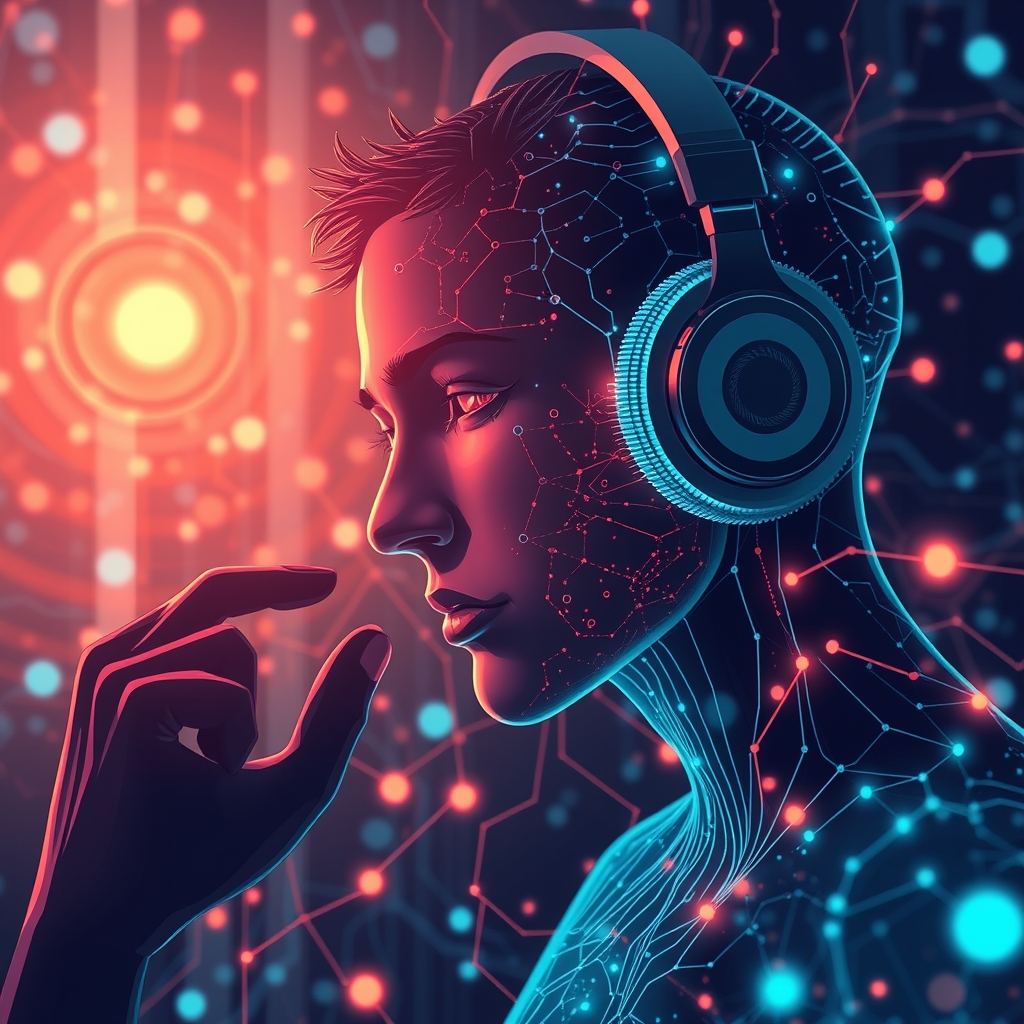
Music streaming has trained us to scroll. For more than a decade, the experience of finding audio has meant thumbing through endless grids of album art, tapping through nested menus, and hoping an algorithmic playlist correctly guesses our mood. Spotify is now testing a different approach. The company has started rolling out an experimental feature called "Talk to Spotify" that turns its mobile app into something closer to a conversation partner than a passive record shelf. Premium subscribers can now navigate music, podcasts, and audiobooks using natural language, issuing requests and follow-up commands rather than hunting through static interfaces.
What "Talk to Spotify" Actually Does
The feature lives exactly where users already spend their time: inside the Home and Now Playing views on Spotify’s mobile app. Rather than burying the tool in a settings menu or hiding it behind a separate portal, the company placed a dedicated AI text box directly in the interface, alongside a microphone icon for voice input. That placement matters. It signals that Spotify wants the chatbot to feel like a persistent layer of the app, not an occasional gimmick.
From the Home tab, a subscriber can type a request like "play some songs I haven't heard before" and receive a freshly generated queue. While a track is already playing, they can tap the microphone and ask who played bass on the song, or request background on the artist without ever leaving the audio stream. The system handles both proactive playback commands and reactive trivia queries, meaning the same interface can start a new listening session or deepen the one already in progress.
This represents a clear break from the traditional search-and-browse model. Instead of typing a song title and selecting a result, users can describe what they want in loose, everyday terms. The chatbot interprets the intent and responds, pulling not just from Spotify’s full catalog but from the user’s own relationship with that catalog.
Your Data, Working for You
Streaming services have used recommendation engines for years, but most operate through broad strokes. They notice that fans of one artist often like another, or they sort millions of listeners into shared mood buckets like "Chill" or "Focus." Spotify’s new chatbot goes deeper by drawing on granular, individual listening data. It has access to your playlists, your repeat listens, your favorite artists, and your historical listening patterns.
That specificity opens up queries a conventional search bar simply cannot handle. A user can ask when they first discovered a particular track, or request a breakdown of which genres dominated their rotation over the past month. It is essentially Spotify’s annual Wrapped summary, but stripped of the year-end wait and made interactive. Want to compare how much jazz you streamed in March versus September? The chatbot can surface that. This shifts personal data from a once-a-year novelty into an on-demand utility that actually shapes daily listening decisions.
Because the tool binds itself to your actual history, its suggestions carry context. It does not just know that you like guitar music; it knows which guitar records you have worn out and which ones you skipped after thirty seconds. That distinction allows for sharper, more relevant answers when you go looking for something new.
From Static Playlists to Living Conversations
This is not Spotify’s first experiment with generative AI. The company previously released a "Prompted Playlist" tool that built static lists based on text descriptions. You might type "indie folk for a rainy afternoon" and receive a fixed playlist. Useful, but limited. Once the list was generated, the interaction ended. The new chatbot moves beyond that one-shot approach and turns playback into an iterative conversation.
The dynamic control works in real time. A user might initiate a session by asking for unfamiliar music. The chatbot queues up tracks that sit outside the listener’s usual habits. After a few minutes, they might decide the energy is too low and type "make it more upbeat." The selection refines instantly. If a particular artist catches their ear, a follow-up like "add more tracks by [Artist Name]" folds that musician into the mix without starting over. The back-and-forth creates a feedback loop that feels closer to talking with a DJ than to operating software.
Dieses iterative Modell lässt sich auch auf Podcasts und Hörbücher anwenden. Ein Nutzer kann nach einer True-Crime-Folge unter dreißig Minuten fragen und die Ergebnisse dann verfeinern, indem er nach etwas fragt, das von einer Frau moderiert wird. Das System passt sich an, anstatt eine einzige, starre Liste zu präsentieren. Diese Unterscheidung zwischen einem statischen Menü und einem lebendigen Dialog ist der Kern dessen, was dieses Feature von bisherigen Suchwerkzeugen unterscheidet.
Die algorithmische Blase durchbrechen
Spotify sieht sich ständiger Kritik von Nutzern ausgesetzt, die sagen, dass die automatischen Empfehlungen irgendwann repetitiv werden. „Discover Weekly“ kann sich wie eine Playlist mit Wiederholungen anfühlen, und die Gewohnheit des Algorithmus, immer wieder auf denselben Pool von Künstlern zurückzugreifen, kann die Plattform klaustrophobisch wirken lassen. Durch das Hinzufügen einer konversationellen Ebene versucht Spotify, dieser Stagnation direkt entgegenzuwirken.
Der Chatbot verleiht den Hörern eine explizite Handlungsfähigkeit. Anstatt passiv zu akzeptieren, was die nächste algorithmische Empfehlung sein mag, können Nutzer ihre Absicht formulieren, einer Richtung widersprechen und das Erlebnis verbal steuern. Man drückt nicht mehr nur einen Daumen-hoch-Button und hofft, dass das System versteht, warum man einen Track mochte. Man kann seine Anfragen direkt erklären, umleiten und präzisieren. Spotify hofft, dass diese explizite Steuerung die Filterblase aufbrechen und die Nutzer Musik außerhalb des engen Korridors aussetzen wird, den die automatisierten Pfade für sie geschaffen hatten.
Mehr als eine Jukebox
Das Tool schlägt zudem bewusst die Brücke zwischen einem dedizierten Media-Player und einem universell einsetzbaren Large Language Model. Wie allgemeinere KI-Assistenten kann der Spotify-Chatbot allgemeine Trivia beantworten und Fragen zu dem beantworten, was gerade läuft. Neugierig auf die Studiomusiker hinter einem Track, die Sampling-Geschichte eines Beats oder die Biografie eines Produzenten? Die App kann diese Informationen liefern, ohne den Nutzer dazu zu zwingen, einen Webbrowser zu öffnen.
Dies macht Spotify zu einer informellen Bildungsressource für Musikwissenschaft und Künstlergeschichte. Es positioniert das Unternehmen zudem in direktem Wettbewerb mit anderen Tech-Giganten, die KI und Audio verschmelzen. Amazon Music verfolgt mit Alexa Plus ähnliche Ziele und ermöglicht es Nutzern, über Sprachassistenten mit ihren Bibliotheken zu kommunizieren. Indem Spotify seine eigene konversationelle Ebene direkt in die App integriert, versucht es, die Hörer innerhalb seines eigenen Ökosystems zu halten, anstatt den Dialog an einen Drittanbieter-Assistenten auszulagern.
Das eigentliche Fazit
„Talk to Spotify“ ist nicht bloß ein Suchfeld mit besseren Manieren. Es verändert den grundlegenden Vertrag zwischen Hörer und Plattform. Die persönliche Historie wird zu einer aktiven, abfragbaren Datenbank statt zu einem passiven Protokoll. Das Abspielen wird zu einem Gespräch, das man steuern kann, statt zu einer Playlist, die man einfach akzeptiert. Und die App selbst wird zu einer Quelle für Kontext und Trivia, nicht nur zu einem Übertragungskanal für Audio. Ob es die Langeweile algorithmischer Empfehlungen tatsächlich löst, wird davon abhängen, wie konsequent die Nutzer es annehmen, aber der grundlegende Wandel ist klar: Spotify möchte, dass Sie aufhören zu scrollen und anfangen zu sprechen.