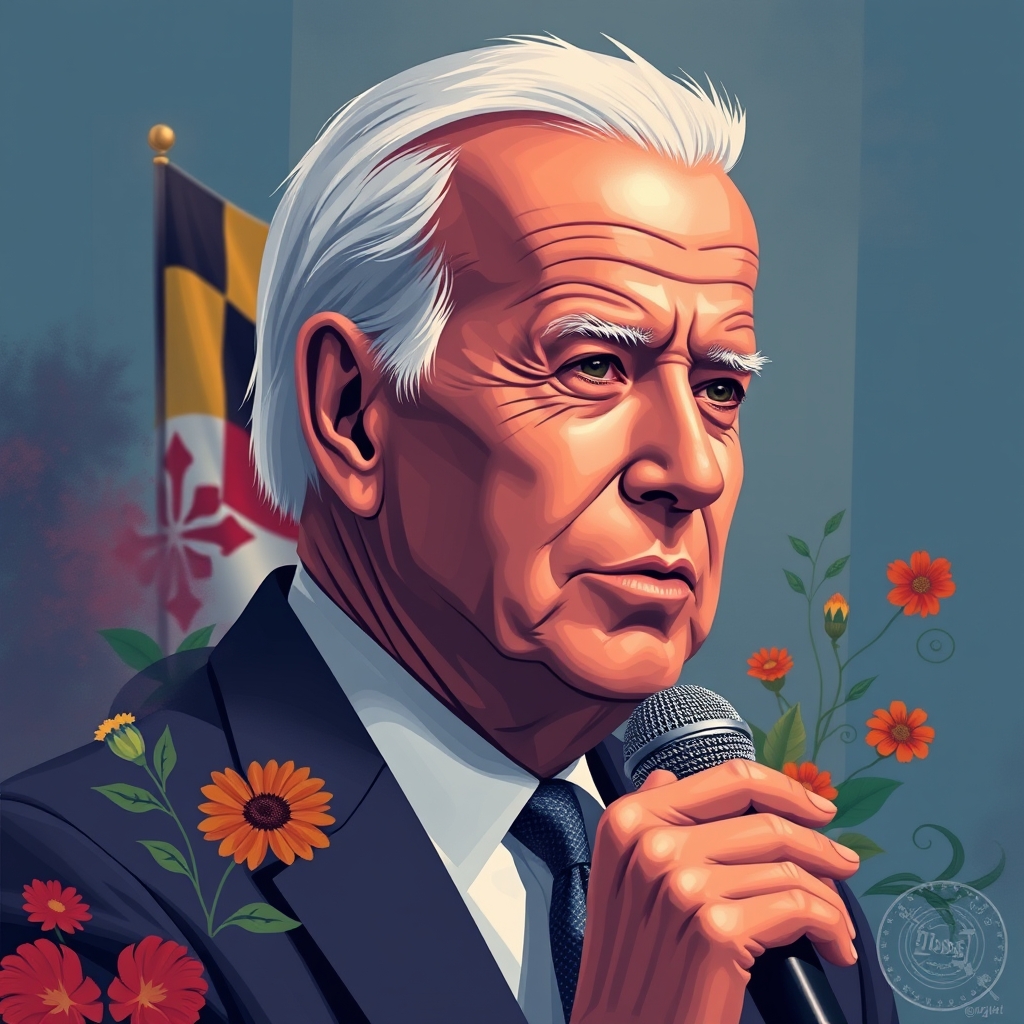
Biden’s Maryland Speech: Political Intensity Amidst Growing Age Concerns
President Joe Biden recently delivered a high-stakes address at a Maryland summit, launching a scathing critique of his predecessor, Donald Trump. While the speech was marked by sharp political rhetoric, it has also reignited intense debates regarding the President's physical stamina and cognitive fitness.
A Scathing Attack on Donald Trump’s Legacy
During his remarks in Maryland, the 83-year-old President Biden did not hold back in his assessment of Donald Trump’s political style and previous administration. Biden characterized Trump’s major initiatives and policy shifts as "vanity projects," alleging that they were driven by personal interest rather than national stability. He further accused the former President of fostering corruption within the political landscape.
The speech was heavily reliant on a teleprompter, a common practice in modern presidential addresses, but the delivery was occasionally interrupted by coughing fits. For supporters, the speech represented a principled stand against populism; for critics, it highlighted the physical toll of the presidency on an aging leader.
Questions Over Physical Stamina and Stage Presence
Beyond the political content, the visual aspects of the speech have become a focal point for international observers. Following his remarks, President Biden appeared to momentarily struggle to locate the correct exit from the stage, a moment that was captured on video and quickly circulated.
This incident does not exist in isolation. It follows other recent on-stage moments where the President appeared disoriented or physically unsteady. In the context of a high-pressure U.S. election cycle, these lapses in stage presence are being scrutinized not just as minor gaffes, but as potential indicators of the challenges facing the White House leadership. As the United States prepares for a critical electoral showdown, the perception of a leader's capability remains a central pillar of political discourse.
The Global Implication of U.S. Leadership Stability
While domestic American media focuses on the optics of the "exit struggle," the international community is watching the implications for global stability. The presidency of the United States is a cornerstone of the current global order, influencing everything from Indo-Pacific security architectures to global trade regulations.
If the internal American political landscape becomes increasingly defined by questions of leadership capability and intense partisan volatility, it could impact the predictability of U.S. foreign policy. For allies and competitors alike, the stability of the White House is not merely a domestic concern but a vital factor in global strategic planning.
What It Means for India
- Predictability in Strategic Partnerships: Any perceived instability or transition in U.S. leadership could lead to shifts in the pace of technology transfers and defense cooperation under the iCET (Initiative on Critical and Emerging Technology) framework.
- Geopolitical Continuity: India relies on a stable and consistent U.S. approach to the Indo-Pacific; a distracted or transitioning U.S. administration might alter the intensity of maritime security cooperation in the region.
- Economic and Trade Policy: As India seeks to strengthen its position in global supply chains, the stability of U.S. trade policies and economic leadership is crucial for maintaining the momentum of bilateral economic engagement.