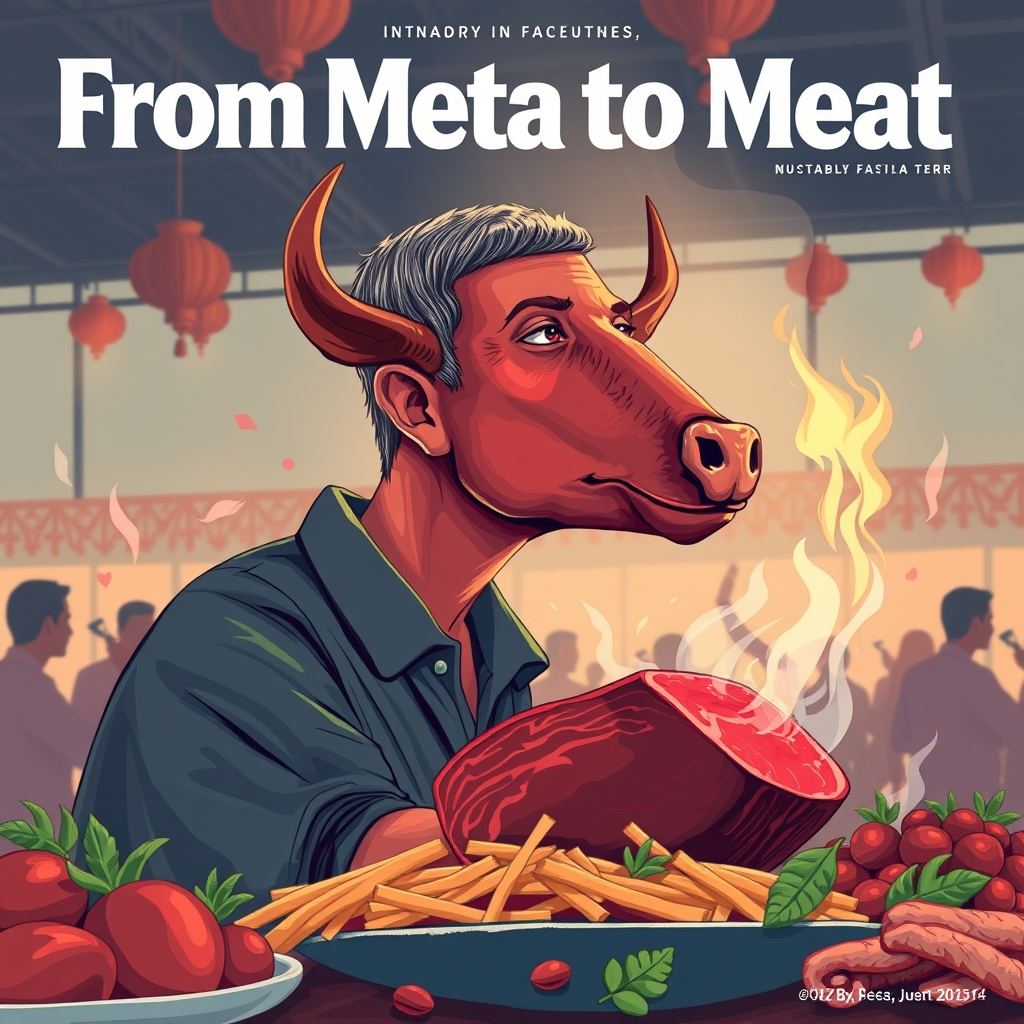
From Meta to Meat: Mark Zuckerberg’s High-Tech Quest for Premium Beef
Meta CEO Mark Zuckerberg is pivoting from the digital metaverse to the agricultural frontier, launching an ambitious venture to produce the world's highest-quality beef. By integrating unconventional nutrition like beer and macadamia nuts into cattle diets, the tech mogul is attempting to revolutionize luxury food production through scientific precision.
The Science of Gourmet Cattle: Beer and Macadamia Nuts
Mark Zuckerberg’s foray into the livestock industry is not a traditional farming endeavor; it is a high-tech biological experiment designed to disrupt the premium meat market. Reports indicate that his operation focuses on optimizing the physiological and nutritional profiles of cattle to achieve unparalleled marbling and flavor.
To achieve this, the ranch utilizes a highly specialized diet. Instead of standard silage or grain, the cattle are fed a combination of macadamia nuts—rich in healthy fats—and beer. The rationale behind this unconventional approach lies in the chemical composition of these inputs; the fats from the nuts are intended to enhance the intramuscular fat (marbling) of the beef, while the fermentation processes associated with beer may influence the gut microbiome and meat texture. This intersection of biotechnology and agriculture reflects the same data-driven mindset that built Meta's digital empire.
Disrupting the Global Luxury Food Supply Chain
This move signals a shift in how "luxury" is defined in the global food economy. Historically, premium beef labels like Wagyu from Japan have relied on specific breeds and traditional feeding methods. Zuckerberg’s venture seeks to challenge these established hierarchies by applying Silicon Valley-style optimization to animal husbandry.
By treating cattle production as a scalable, precision-engineered process, the venture aims to create a new tier of ultra-premium protein. This represents a broader trend where high-net-worth individuals and tech leaders are diversifying their portfolios into "hard assets" like high-end agriculture, leveraging scientific advancements to ensure consistent, high-margin outputs that are immune to the volatility of standard commodity markets.
The Convergence of Tech and Agritech
Zuckerberg’s experiment highlights the growing importance of Agritech—the application of technology to improve agricultural yields and quality. While the use of beer and macadamia nuts may seem eccentric, it underscores a fundamental shift: the future of food security and premium nutrition will increasingly be driven by molecular biology and precision feeding.
As global demand for high-quality protein rises among the burgeoning global middle and upper classes, the ability to engineer food at a cellular level will become a significant competitive advantage. This venture is less about "farming" in the traditional sense and more about "manufacturing" biological products through controlled nutritional inputs.
What It Means for India
- Rise of Precision Agriculture: As India seeks to modernize its massive agricultural sector, Zuckerberg’s model highlights the potential for "niche high-value farming." Indian agritech startups could find inspiration in using data and specialized inputs to move from bulk commodity production to high-margin, export-quality niche products.
- Nutritional Security and Bio-Innovation: The venture underscores the importance of biotechnology in the food chain. For India, investing in the science of animal nutrition and bio-engineering will be critical to meeting the protein demands of its growing population and improving the quality of domestic livestock.
- Shifting Global Food Standards: As tech-driven gourmet food enters the market, India must prepare its food safety and quality certification frameworks to compete in a world where "premium" is increasingly defined by scientific precision rather than just regional tradition.