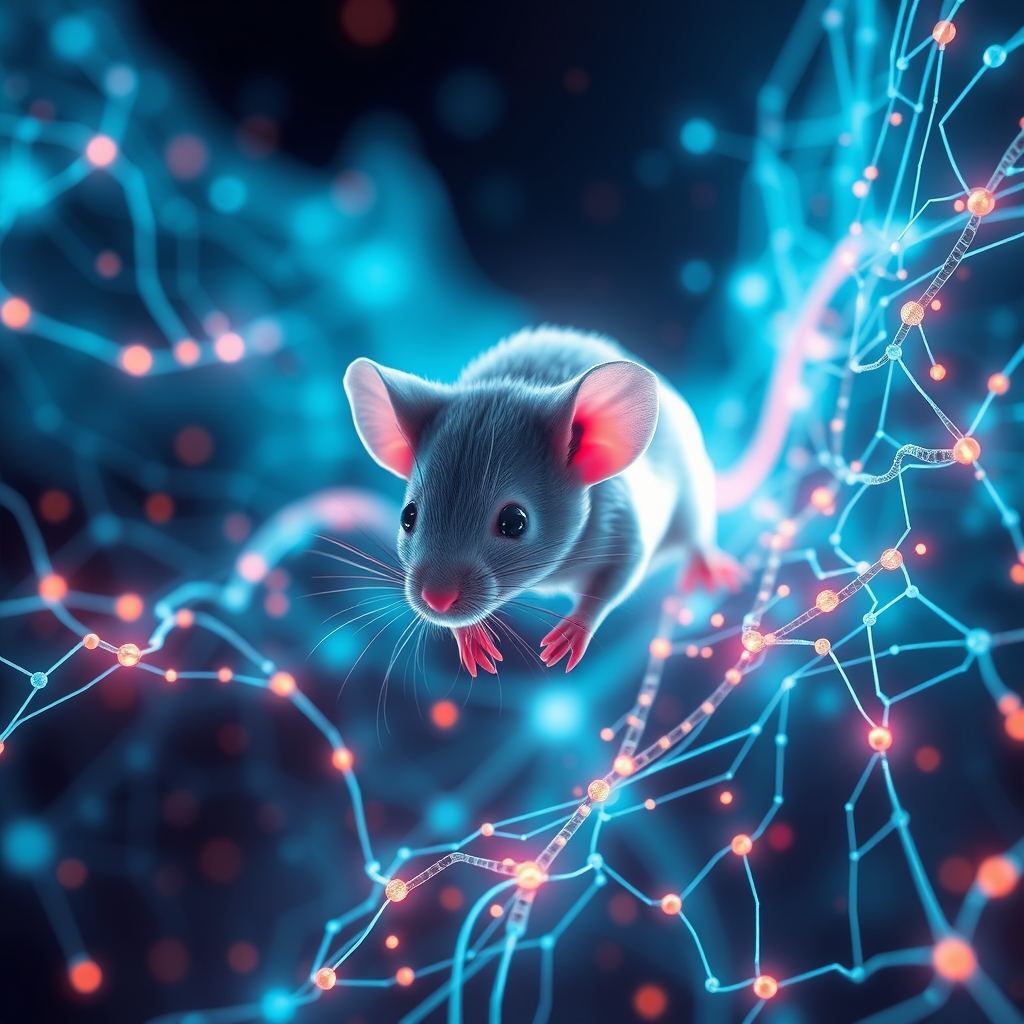
In a landmark biological feat, researchers in Japan have successfully transformed male mouse embryos into females using a targeted CRISPR-based approach. This breakthrough challenges long-standing reproductive paradigms and opens new frontiers for genetic engineering and wildlife conservation.
The Y-CUT Method: Engineering Sex Reversal
A research team led by Takashi Ishiuchi from the University of Yamanashi and Shogo Matoba from the Riken BioResource Research Center has developed a technique called "Y-CUT." Inspired by the Okinawa rubble goby—a fish capable of sequential hermaphroditism—the scientists aimed to bypass the biological necessity of having both males and females for reproduction.
The technical core of this achievement lies in the precision of CRISPR technology. In mammals, sex is determined by chromosomes: XX for females and XY for males. The Y chromosome is the critical driver of male development. The Y-CUT tool targets a specific section of the Y chromosome responsible for ensuring its inheritance during cell division. By cutting and eliminating this chromosome in early-stage XY embryos, the researchers achieved "sex reversal," resulting in healthy, fertile female pups with XO chromosomes (possessing a single X chromosome).
Beyond Natural Limits: Creating Female Clones
The research team extended this capability to cloning, a process that previously hit a reproductive dead end if only male subjects were available. Traditionally, cloning a male animal produces only male offspring, which offers little help in breeding populations where males are scarce.
By combining somatic cell nuclear transfer (SCNT) with Y-CUT, Matoba and his colleagues were able to take the nucleus of a male cell, treat it to remove the Y chromosome, and insert it into an enucleated egg cell. The result was a female clone that is genetically identical to the original male donor, minus the Y chromosome. Crucially, the team demonstrated that they could even use cryopreserved male cells—often stored in "frozen zoos"—to create these female clones, providing a potential lifeline for species preservation.
Implications for Conservation and Genetic Engineering
The implications of this development are twofold, spanning both ecological preservation and laboratory efficiency.
For conservationists, the ability to manufacture females from a limited pool of male genetic material could be a game-changer for rescuing endangered species. If a population of a species falls so low that only a few males remain, Y-CUT could theoretically replenish the female population, preventing extinction.
In the realm of biotechnology, the technique offers significant logistical advantages. Creating genetically engineered animals is currently a time-consuming and expensive endeavor. By using Y-CUT, scientists could create a single genetically modified male and then rapidly produce both male and female clones of that animal, streamlining research and reducing costs.
Key Takeaways
- CRISPR-Driven Sex Reversal: The Y-CUT technique uses CRISPR to eliminate the Y chromosome from male embryos, creating fertile XO female mice.
- Revolutionizing Cloning: Researchers successfully created female clones from male DNA, allowing for the production of both sexes from a single male donor.
- Conservation Potential: This technology could allow scientists to use cryopreserved male cells to rebuild populations of endangered species where females are lacking.
How the Y-CUT technique rewrites sex determination
Mammalian sex hinges on the presence of a Y chromosome, which carries the Sry gene that triggers male development. The researchers designed a CRISPR tool—dubbed “Y-CUT”—to target a segment of the Y chromosome essential for its segregation during cell division. By delivering this edit to XY embryos shortly after fertilisation, the chromosome is excised, leaving a single X (XO) in the resulting cells. XO embryos develop as females and, in the mouse model, mature into fertile adults that can reproduce normally.
The edit is precise: CRISPR’s guide RNA directs the nuclease to the chosen Y-linked region, the DNA is cut, and the cell’s repair machinery discards the fragment. The outcome is not a random mutation but a clean removal of the whole chromosome, eliminating the male-determining signal while preserving the rest of the genome.
Turning male DNA into female clones
La clonazione nei mammiferi si basa tradizionalmente sul trasferimento nucleare di cellule somatiche (SCNT): il nucleo di una cellula donatrice viene inserito in un ovocita enucleato, che viene poi stimolato a svilupparsi in un embrione. Quando la cellula donatrice proviene da un maschio, il clone risultante eredita il cromosoma Y ed è maschio. Il nuovo studio ha accoppiato la SCNT con la tecnica Y-CUT. Dopo aver estratto un nucleo da una cellula somatica maschile, i ricercatori hanno applicato l'editing CRISPR per eliminare il cromosoma Y prima che il nucleo entrasse nell'ovocita. L'embrione ricostruito portava quindi solo il cromosoma X del donatore, e l'animale sviluppatosi era un clone femmina.
Fondamentalmente, il team ha dimostrato che i nuclei donatori possono essere prelevati da cellule maschili criopreservate — campioni che vengono regolarmente conservati negli "zoo congelati" per le specie in via di estinzione. Ciò dimostra che il materiale genetico maschile esistente può essere riutilizzato per generare femmine quando necessario.
Perché questa scoperta è importante
Prospettive di conservazione
Molte popolazioni minacciate sono sbilanciate verso un solo sesso, spesso perché la caccia, la perdita dell'habitat o le malattie eliminano in modo sproporzionato le femmine. In tali casi, una manciata di maschi sopravvissuti potrebbe essere tutto ciò che rimane in un deposito genetico. Y-CUT offre una via per ricostruire la metà mancante del pool riproduttivo senza dover individuare nuove femmine in natura. Convertendo i genomi maschili in femmine fertili, i gestori potrebbero potenzialmente accelerare il recupero della popolazione e ridurre il rischio di inbreeding derivante dall'uso ripetuto degli stessi pochi individui.
Efficienza nei laboratori e nelle biotecnologie
La creazione di una linea di topi geneticamente modificati comporta tipicamente l'editing di un maschio, la sua riproduzione per produrre femmine e poi l'incrocio tra i sessi per propagare il tratto. Y-CUT potrebbe consentire a un singolo maschio modificato di dare origine a entrambi i sessi tramite clonazione, riducendo potenzialmente il numero di generazioni riproduttive e i relativi costi di cura degli animali.
Ostacoli e opinioni divergenti
La tecnica è ancora limitata ai topi, il cui sviluppo embrionale e la biologia cromosomica differiscono da quelli dei mammiferi più grandi. Scalare Y-CUT a specie con cromosomi Y più complessi o meccanismi di determinazione del sesso differenti potrebbe richiedere una sostanziale riprogettazione.
In sintesi
Esciudendo il cromosoma Y con CRISPR e accoppiando l'editing con il trasferimento nucleare, gli scienziati giapponesi hanno dimostrato che un genoma maschile può essere trasformato in un clone femmina fertile. L'approccio promette di facilitare la produzione di animali geneticamente modificati e, in modo più provocatorio, di fornire le femmine mancanti per le specie sull'orlo dell'estinzione. Se il metodo potrà passare dai laboratori di topi ai mammiferi in via di estinzione, e se le società accetteranno le sue implicazioni ecologiche ed etiche, determinerà quanto questa scoperta diventerà davvero trasformativa.