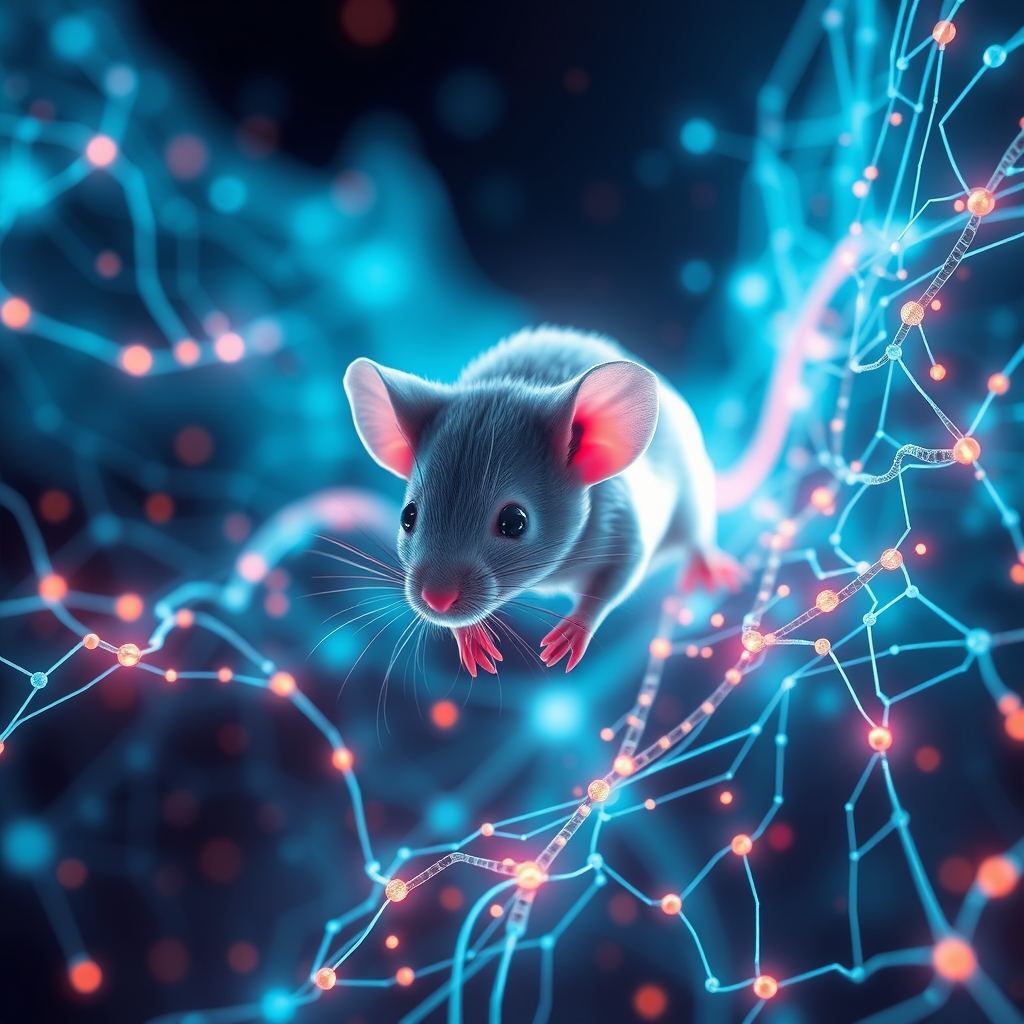
In a landmark biological feat, researchers in Japan have successfully transformed male mouse embryos into females using a targeted CRISPR-based approach. This breakthrough challenges long-standing reproductive paradigms and opens new frontiers for genetic engineering and wildlife conservation.
The Y-CUT Method: Engineering Sex Reversal
A research team led by Takashi Ishiuchi from the University of Yamanashi and Shogo Matoba from the Riken BioResource Research Center has developed a technique called "Y-CUT." Inspired by the Okinawa rubble goby—a fish capable of sequential hermaphroditism—the scientists aimed to bypass the biological necessity of having both males and females for reproduction.
The technical core of this achievement lies in the precision of CRISPR technology. In mammals, sex is determined by chromosomes: XX for females and XY for males. The Y chromosome is the critical driver of male development. The Y-CUT tool targets a specific section of the Y chromosome responsible for ensuring its inheritance during cell division. By cutting and eliminating this chromosome in early-stage XY embryos, the researchers achieved "sex reversal," resulting in healthy, fertile female pups with XO chromosomes (possessing a single X chromosome).
Beyond Natural Limits: Creating Female Clones
The research team extended this capability to cloning, a process that previously hit a reproductive dead end if only male subjects were available. Traditionally, cloning a male animal produces only male offspring, which offers little help in breeding populations where males are scarce.
By combining somatic cell nuclear transfer (SCNT) with Y-CUT, Matoba and his colleagues were able to take the nucleus of a male cell, treat it to remove the Y chromosome, and insert it into an enucleated egg cell. The result was a female clone that is genetically identical to the original male donor, minus the Y chromosome. Crucially, the team demonstrated that they could even use cryopreserved male cells—often stored in "frozen zoos"—to create these female clones, providing a potential lifeline for species preservation.
Implications for Conservation and Genetic Engineering
The implications of this development are twofold, spanning both ecological preservation and laboratory efficiency.
For conservationists, the ability to manufacture females from a limited pool of male genetic material could be a game-changer for rescuing endangered species. If a population of a species falls so low that only a few males remain, Y-CUT could theoretically replenish the female population, preventing extinction.
In the realm of biotechnology, the technique offers significant logistical advantages. Creating genetically engineered animals is currently a time-consuming and expensive endeavor. By using Y-CUT, scientists could create a single genetically modified male and then rapidly produce both male and female clones of that animal, streamlining research and reducing costs.
Key Takeaways
- CRISPR-Driven Sex Reversal: The Y-CUT technique uses CRISPR to eliminate the Y chromosome from male embryos, creating fertile XO female mice.
- Revolutionizing Cloning: Researchers successfully created female clones from male DNA, allowing for the production of both sexes from a single male donor.
- Conservation Potential: This technology could allow scientists to use cryopreserved male cells to rebuild populations of endangered species where females are lacking.
How the Y-CUT technique rewrites sex determination
Mammalian sex hinges on the presence of a Y chromosome, which carries the Sry gene that triggers male development. The researchers designed a CRISPR tool—dubbed “Y-CUT”—to target a segment of the Y chromosome essential for its segregation during cell division. By delivering this edit to XY embryos shortly after fertilisation, the chromosome is excised, leaving a single X (XO) in the resulting cells. XO embryos develop as females and, in the mouse model, mature into fertile adults that can reproduce normally.
The edit is precise: CRISPR’s guide RNA directs the nuclease to the chosen Y-linked region, the DNA is cut, and the cell’s repair machinery discards the fragment. The outcome is not a random mutation but a clean removal of the whole chromosome, eliminating the male-determining signal while preserving the rest of the genome.
Turning male DNA into female clones
哺乳類のクローニングは、伝統的に体細胞核移植(SCNT)に依存しています。これは、ドナー細胞の核を核を除去した卵子に入れ、それを刺激して胚へと成長させる手法です。ドナー細胞が雄の場合、得られるクローンはY染色体を継承するため、雄になります。今回の新しい研究では、SCNTとY-CUTを組み合わせました。研究者たちは、雄の体細胞から核を抽出した後、核が卵子に入る前にCRISPR編集を適用してY染色体を削除しました。その結果、再構築された胚はドナーのX染色体のみを保持することになり、成長した個体は雌のクローンとなりました。
極めて重要な点として、研究チームは、絶滅危惧種の保存のために「凍結動物園」に日常的に保管されている、冷凍保存された雄の細胞からドナー核を取り出せることを実証しました。これは、既存の雄の遺伝物質を、必要に応じて雌を生成するために再利用できることを示しています。
なぜこの画期的な進展が重要なのか
保全の見通し
多くの脅威にさらされている個体群は、狩猟、生息地の喪失、あるいは病気によって雌が不均衡に減少することで、性が偏っていることがよくあります。このような場合、遺伝資源として残っているのは、生き残ったわずかな雄だけかもしれません。Y-CUTは、野生で新しい雌を見つけることなく、繁殖集団の欠けている半分を再構築する手段を提供します。雄のゲノムを繁殖可能な雌に変換することで、管理者は個体群の回復を加速させ、同じ少数の個体を繰り返し使用することによる近親交配のリスクを軽減できる可能性があります。
研究室およびバイオテクノロジーの効率性
遺伝子組み換えマウス系統を作成する場合、通常は雄を編集し、雌を産ませるために繁殖させ、その後、形質を広めるために雌雄を交配させます。Y-CUTを用いれば、編集された単一の雄からクローニングを通じて雌雄両方を生み出すことが可能になり、繁殖世代の数とそれに伴う動物飼育コストを削減できる可能性があります。
課題と異論
この技術はまだマウスに限られており、マウスの胚発生や染色体生物学は、より大型の哺乳類とは異なります。より複雑なY染色体を持つ種や、異なる性決定メカニズムを持つ種にY-CUTをスケールアップするには、大幅な再設計が必要になる可能性があります。
結論
CRISPRでY染色体を切除し、その編集を核移植と組み合わせることで、日本の科学者たちは、雄のゲノムを繁殖可能な雌のクローンに変えられることを示しました。このアプローチは、遺伝子組み換え動物の生産を容易にし、さらに踏み込んだ議論として、絶滅の危機に瀕している種に不足している雌を供給することを約束するものです。この手法がマウスの研究室から絶滅危惧種の哺乳類へと飛躍できるか、そして社会がその生態学的・倫理的な影響を受け入れるかどうかが、この画期的な進展が真にどれほど変革的なものになるかを決定することになるでしょう。