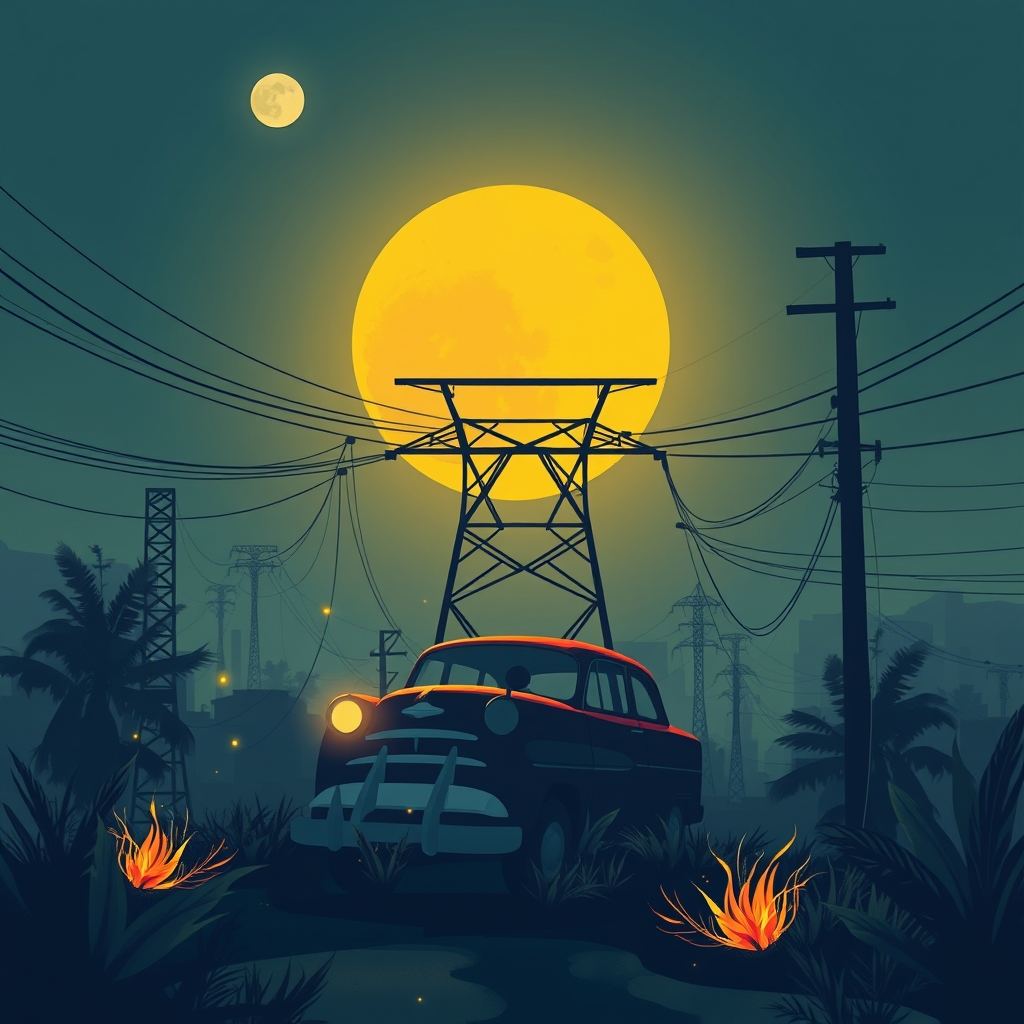
Nearly ten million people woke to a silence that only total darkness brings. Cuba’s national power grid had collapsed entirely, extinguishing lights across the island and freezing its infrastructure in place. The blackout did not arrive as a surprise to those living through months of destabilizing energy shortages, but its totality marked a grim threshold. Rolling outages had already been grinding down daily life for months. This failure was different. It was systemic, island-wide, and it threw into sharp relief just how brittle the country’s energy backbone had become.
A System Pushed Past Its Limit
A national grid collapse is not merely a large-scale power cut. It is a mechanical unraveling. Cuba relies on thermal power plants to keep its electricity flowing, and these facilities demand a constant feed of fuel to maintain the steam pressure and turbine speed that keep frequency stable. When fuel runs short, or when aging equipment falters, plants drop offline. Each loss of generation drags the grid frequency down. Protective relays trip automatically to prevent equipment damage. Within minutes, a synchronized system that serves an entire nation can decouple and die.
For months, Cubans had been enduring precisely the conditions that make such a collapse inevitable. Aging electrical infrastructure and severe fuel shortages had forced rotating blackouts. Power plants running past their design life require more maintenance and spare parts that are increasingly difficult to source. When you combine obsolete machinery with an emptying fuel tank, the breaking point is not a question of if, but when.
The consequences extend far beyond inconvenience. Without grid power, water sanitation systems lose pressure and treatment capacity. Hospital backup generators can only bridge the gap for so long before they too require fuel and maintenance. Food stocks spoil in silent refrigerators. Industrial furnaces cool and crack, destroying productivity alongside public safety. The economic shock radiates through every structure that depends on a reliable current.
Sanctions, Supply Chains, and Accountability
Havana has placed a significant share of blame on United States sanctions, arguing that long-standing economic restrictions have choked off the fuel imports necessary to run its thermal fleet. The mechanism is familiar to observers of sanctions regimes: international banks grow wary of clearing payments, shipping companies avoid ports where cargo might be seized or contested, and insurance costs for vessels heading to Cuban waters climb prohibitively high. Even when fuel is physically available on world markets, moving it to Cuban power plants becomes a labyrinth of financial and legal obstacles.
Yet the conversation around Cuba’s darkness is not one-dimensional. The impact of sanctions remains fiercely debated internationally. Aging infrastructure does not fail simply because of foreign policy; it fails from years of deferred maintenance, scarce hard currency, and technical mismanagement. Decaying technology and domestic resource constraints have played their part. What exists on the ground is a convergence of pressures—external economic strangulation meeting internal institutional exhaustion. The result is a state with rapidly shrinking capacity to deliver the most basic utility of modern life.
The Caribbean Energy Warning
Cuba’s collapse should be read as a signal flare for the entire Caribbean. Island economies across the region operate small, isolated grids with limited redundancy. Most depend on imported fossil fuels to generate power. When a single large plant fails or a fuel shipment is delayed, the margin for error is tiny. There is no neighboring grid to import emergency megawatts from.
The destabilization in Cuba carries real regional weight. Trade patterns shift when a major island cannot operate its ports, process goods, or maintain manufacturing schedules. Migration pressures intensify when citizens lose access to clean water, preserved food, and medical care. For the Western Hemisphere, the crisis is a blunt reminder that energy security is not an abstract policy goal. In island nations, it is the difference between a functioning society and a humanitarian emergency.
What India Should Watch
Geography separates India and