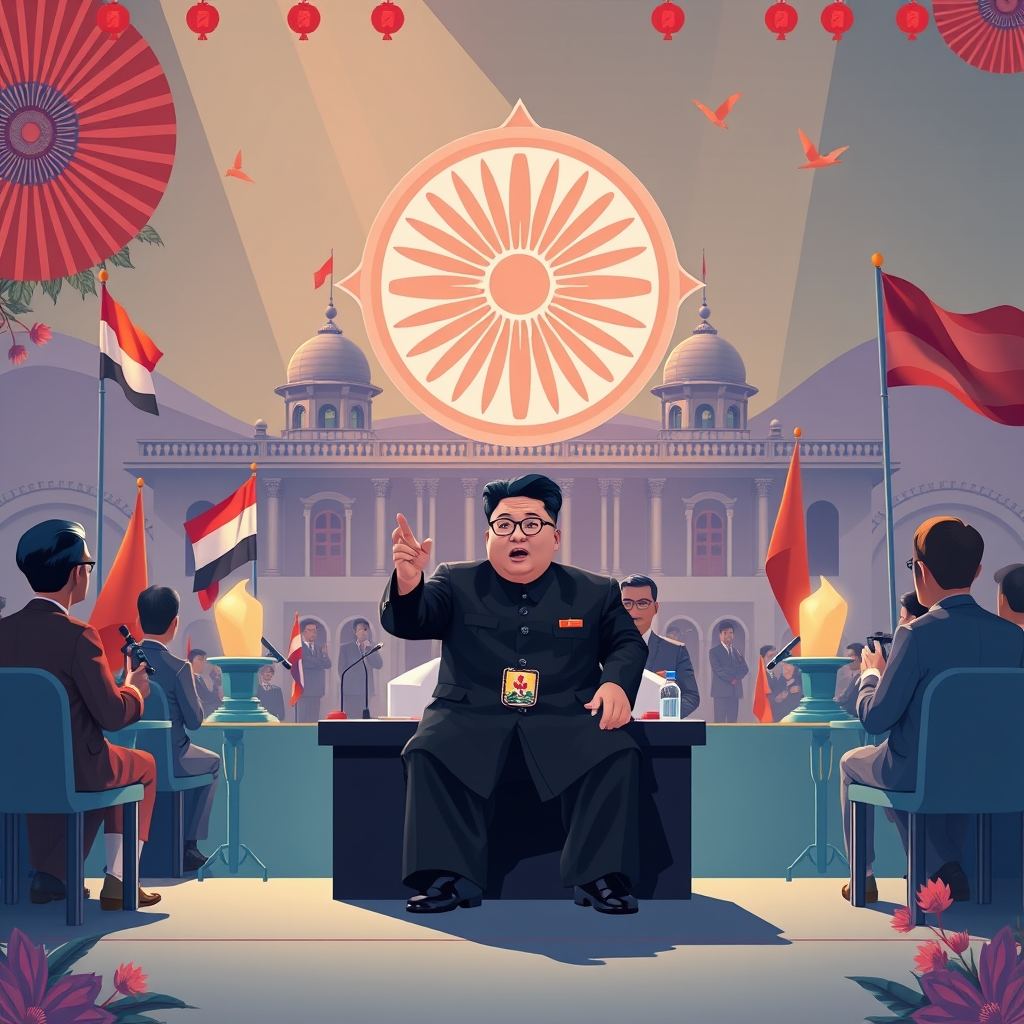
North Korea Condemns NATO Summit, Demands Shift in Denuclearisation Focus
North Korea has issued a sharp condemnation of the recent NATO summit held in Turkiye, accusing the alliance of fueling global instability through increased military spending. Pyongyang’s latest rhetoric signals a heightened period of tension in the Asia-Pacific as Western military blocs tighten their cooperative frameworks.
NATO’s Strategic Expansion and the $50 Billion Surge
The NATO summit, concluded on July 7, 2026, marked a significant pivot in Western defense strategy. Amidst growing pressure from U.S. President Donald Trump for European allies to shoulder a greater share of the collective defense burden, the alliance announced over $50 billion in new military procurement and industrial agreements.
This surge in defense spending is not confined to Europe. The summit highlighted an increasing desire for NATO to extend its influence and military cooperation into the Asia-Pacific region. This expansion was echoed by South Korean President Lee Jae Myung, who expressed interest in expanding cooperation with NATO allies in cutting-edge research, development, and the production of advanced weapon systems.
Pyongyang’s Counter-Narrative on Denuclearisation
Responding via state media KCNA on July 11, 2026, North Korea’s Foreign Ministry accused NATO of portraying its sovereign rights as a global threat. Pyongyang argued that the alliance is geared toward "bloc-to-bloc confrontation," prioritizing exclusive geopolitical interests over regional peace.
In a provocative shift in its diplomatic stance, North Korea claimed that Western-led denuclearisation efforts are fundamentally flawed. Instead of demanding that Pyongyang abandon its nuclear arsenal, the North Korean government asserted that denuclearisation efforts should first address the nuclear ambitions of NATO members involved in nuclear-sharing arrangements. Furthermore, it called for scrutiny of South Korea and Japan's potential pursuit of their own nuclear capabilities under the U.S. security umbrella.
Accelerating Nuclear Modernisation
The diplomatic friction comes at a time of heightened military readiness. Following calls from leader Kim Jong Un to modernise the nation's military, the KCNA reported on July 10, 2026, that North Korea has decided to implement measures to strengthen its nuclear forces both "quantitatively and qualitatively." This move suggests that Pyongyang is preparing for a prolonged period of heightened military competition, viewing the strengthening of NATO-aligned structures in the Pacific as a direct challenge to its survival.
What It Means for India
The escalating friction between the NATO bloc and North Korea creates a complex security architecture in the Indo-Pacific, impacting India’s strategic calculations in the following ways:
- Navigating Bloc Politics: As NATO seeks deeper ties in the Asia-Pacific, India must carefully balance its "Strategic Autonomy" to avoid being drawn into rigid bloc-to-bloc confrontations while maintaining robust security dialogues with Western powers.
- Regional Stability and Maritime Security: Increased military procurement and the expansion of NATO-aligned interests in the Pacific could lead to heightened naval activity, necessitating India to further strengthen its role as a "Net Security Provider" in the Indian Ocean Region.
- Non-Proliferation Concerns: Pyongyang's demand that denuclearisation focus on U.S. allies highlights the fragility of the global non-proliferation regime; India must remain vigilant as shifting alliances may complicate the international consensus on nuclear containment.