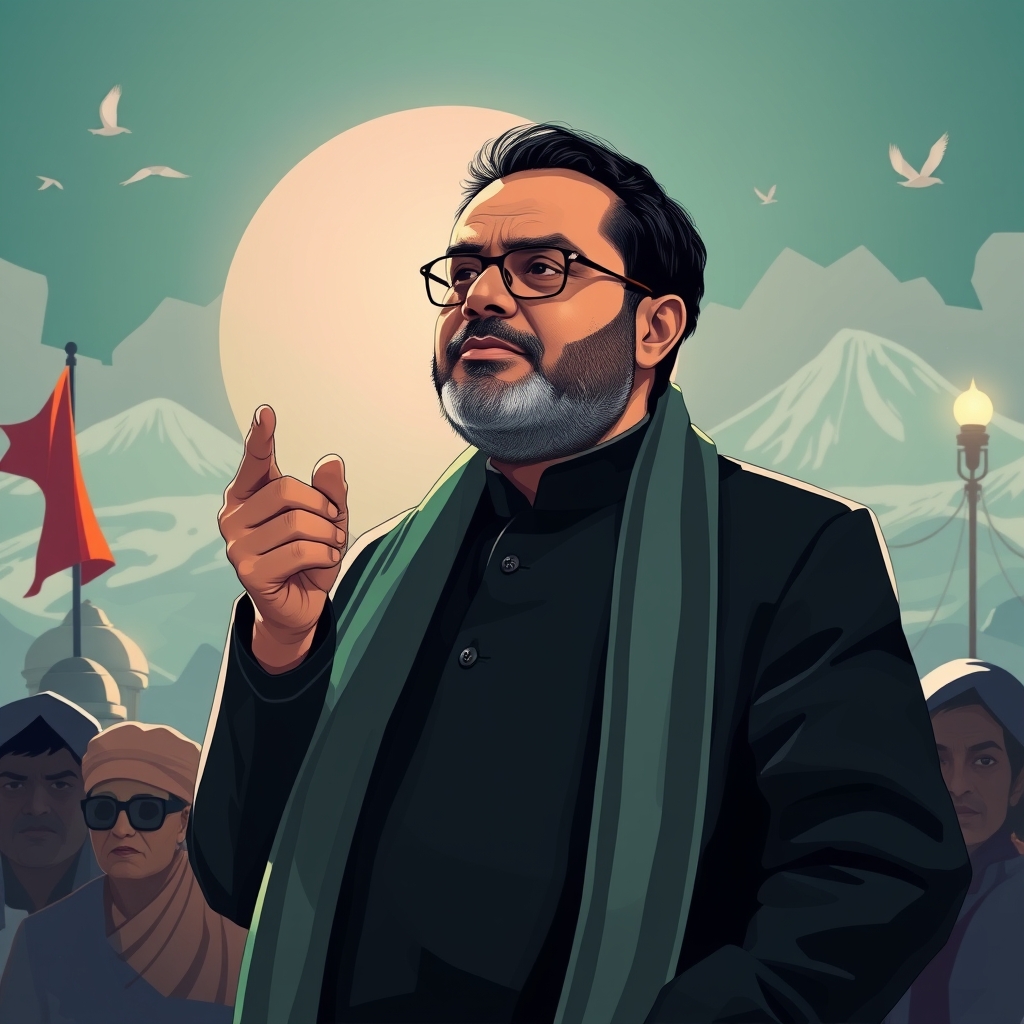
Nawaz Sharif’s PoK Ambition: A New Layer of Instability in Occupied Kashmir
In a provocative move that signals deepening political maneuvering within Pakistan, PML-N chief Nawaz Sharif has expressed a desire to serve as the Prime Minister of Pakistan-occupied Kashmir (PoK). By framing the occupied territory as his "second home," Sharif has added a complex new dimension to the volatile political landscape of the region.
The Sharif Family’s Strategic Pivot to Muzaffarabad
During a recent election rally in Muzaffarabad, the capital of PoK, Nawaz Sharif made a startling declaration regarding his political future. Claiming ancestral ties to the region, Sharif stated that he would request his brother, current Prime Minister Shehbaz Sharif, to appoint him as the leader of PoK to "personally oversee" its development.
This statement comes at a critical juncture as PoK prepares for elections scheduled between July 27 and August 10. The PML-N is currently locked in a high-stakes contest against its own federal coalition partner, the Pakistan People's Party (PPP). Sharif’s attempt to bridge the gap between the federal government in Islamabad and the administration in Muzaffarabad suggests a strategic effort to consolidate the Sharif family's influence over the disputed territory, treating it with the same political weight as their stronghold in Punjab.
Grassroots Unrest and the Crisis of Legitimacy
The Sharif family's ambitions stand in stark contrast to the reality on the ground in PoK. The region is currently gripped by severe civil unrest, characterized by massive protests led by the Jammu Kashmir Joint Awami Action Committee (JKAC). The movement is fueled by intense resentment against the Pakistani administration over runaway inflation, skyrocketing electricity tariffs, and the perceived privileges of the political elite.
The situation has turned violent, with reports indicating that the unrest has claimed over 30 lives. While the JKAC recently suspended its planned "long march" to provide the Pakistani government a final opportunity to address demands, the group has already called for renewed mega-protests. This internal instability highlights a growing disconnect between the ruling political class in Islamabad and the disillusioned population in the occupied territories, who view the Pakistani administration more as an extractive force than a governing one.
India’s Consistent Stance on Illegal Occupation
From New Delhi's perspective, the political shifts and electoral exercises in PoK are viewed through the lens of sovereignty and international law. India has consistently maintained that the entire Union Territories of Jammu and Kashmir and Ladakh are integral and inalienable parts of the Indian Union.
New Delhi’s official position remains firm: Pakistan is in "illegal and forcible occupation" of these territories. India has repeatedly lodged formal protests regarding any elections or legislative assemblies formed in PoK and Gilgit-Baltistan, refusing to recognize the legitimacy of such bodies. Nawaz Sharif’s attempt to institutionalize his influence in PoK only reinforces India's argument that these administrative maneuvers are unilateral attempts to change the status quo of a disputed territory.
What It Means for India
- Heightened Border Vigilance: Increased political activity and internal unrest in PoK may lead to unpredictable security movements along the Line of Control (LoC), requiring heightened alertness from Indian security forces.
- Validation of India's Diplomatic Position: The widespread civil disobedience and protests against Pakistani administration in PoK serve to validate India’s long-standing assertion that the occupation is illegitimate and detrimental to the local population.
- Strategic Monitoring of Pakistan's Internal Stability: The friction between the PML-N and PPP over PoK's governance indicates a fracturing of the Pakistani political consensus, which could lead to further volatility in a neighboring nuclear-armed state.