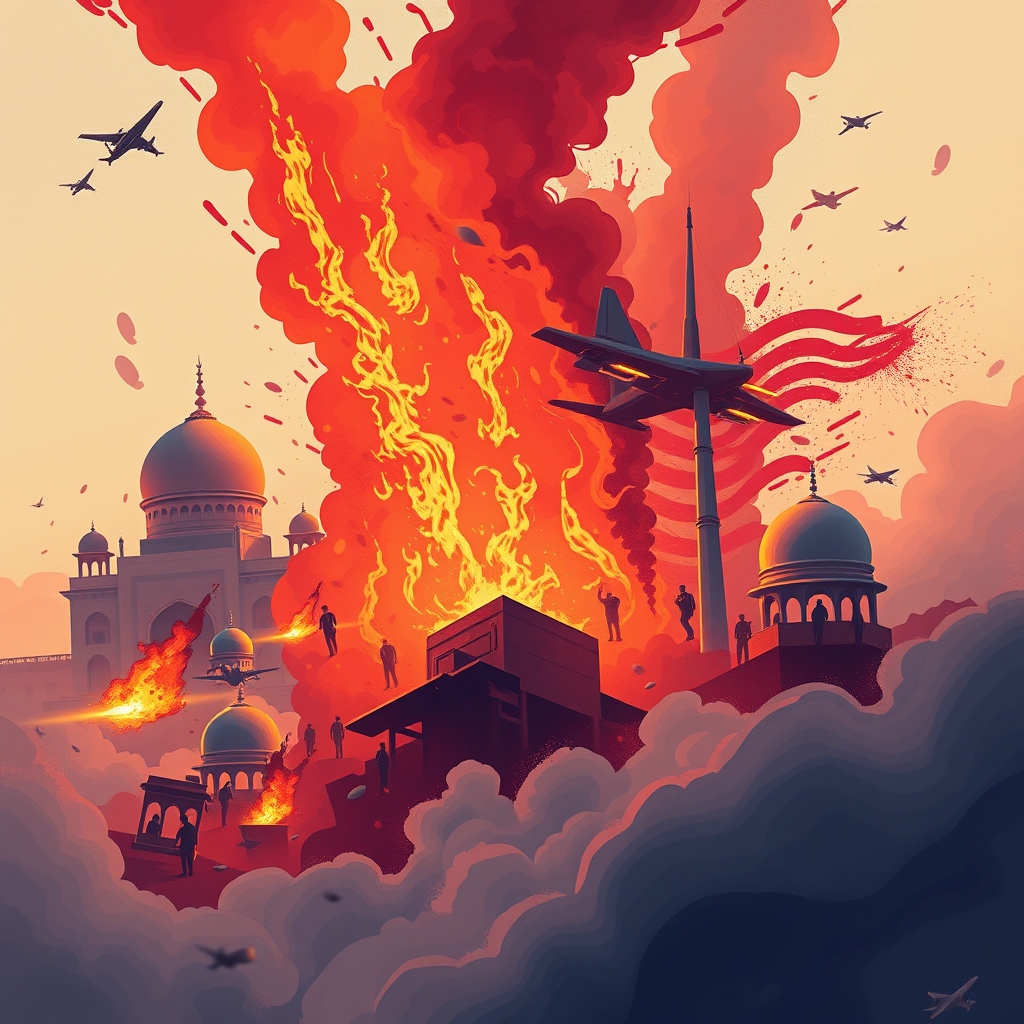
Escalating West Asia Conflict: Iran Strikes US Targets as Strait of Hormuz Tensions Rise
The fragile peace in West Asia has fractured as Iran claims to have struck US-linked targets following American airstrikes on its southern coast. With Bahrain reporting drone attacks and Iran asserting control over the vital Strait of Hormuz, the regional security architecture is facing a period of extreme volatility.
Retaliatory Strikes and the Collapse of the Ceasefire
On Saturday, June 27, 2026, the Middle East witnessed a significant escalation in hostilities. Iran’s Foreign Ministry announced "defensive" attacks against targets linked to United States forces, describing them as a direct response to American airstrikes on coastal surveillance facilities in the port city of Sirik. While Iranian state media suggests the port remains operational, the incident marks a critical breach of the June 17 Islamabad Memorandum of Understanding (MoU) intended to end the four-month war.
The United States, through Central Command, justified its recent kinetic actions as a response to an Iranian drone strike on a cargo ship in the Strait of Hormuz on June 26. U.S. Vice President J.D. Vance has signaled a hardline stance, stating that while the U.S. has honored the ceasefire, "violence will be met with violence."
Sovereignty Violations and the Battle for the Strait
The conflict has expanded beyond direct US-Iran engagement. Bahrain, home to the U.S. Navy’s Fifth Fleet, condemned an Iranian drone attack on its territory, labeling it a flagrant violation of sovereignty. Simultaneously, a major geopolitical struggle is unfolding over the Strait of Hormuz—a maritime chokepoint through which one-fifth of the world's oil and LNG supplies pass.
Iran has moved to assert regulatory authority over this waterway, claiming that under the interim agreement, Tehran has the right to dictate shipping routes. Ebrahim Azizi, head of Iran’s parliamentary national security committee, warned that any deviation from Iranian shipping instructions would face "decisive" responses. In contrast, U.S. Secretary of State Marco Rubio, following talks with the Gulf Cooperation Council (GCC), has demanded "free, unconditional, and unrestricted navigation" without attempts at Iranian maritime hegemony.
Economic Ripples and Regional Fragility
Despite the military escalation, there are signs of cautious economic movement. Oil prices dipped by 3% on June 26 as tankers temporarily exited the Strait, and Saudi Aramco has resumed crude loadings at the Ras Tanura terminal. However, the threat to global supply chains remains acute. While fertilizer shipments have seen a slight uptick, providing some relief to global food price concerns, the underlying instability threatens to disrupt the energy security of the entire globe.
The situation is further complicated by the shifting dynamics in the Levant, where an agreement between Israel and Lebanon to disarm Hezbollah remains highly uncertain, with Hezbollah openly stating it will not cooperate with the terms.
What It Means for India
- Energy Security Risks: As a major importer of crude oil and LNG from the Gulf, any prolonged disruption or "toll-based" control of the Strait of Hormuz by Iran will lead to massive inflationary pressures and energy volatility in the Indian economy.
- Maritime Trade Vulnerability: Indian commercial vessels transiting the Strait of Hormuz face heightened risks of collateral damage or interception, necessitating increased costs for maritime insurance and potential rerouting.
- Strategic Balancing Act: The intensifying US-Iran confrontation forces India to navigate a delicate diplomatic path, balancing its strategic partnership with the West against its vital energy and developmental ties with West Asian nations.