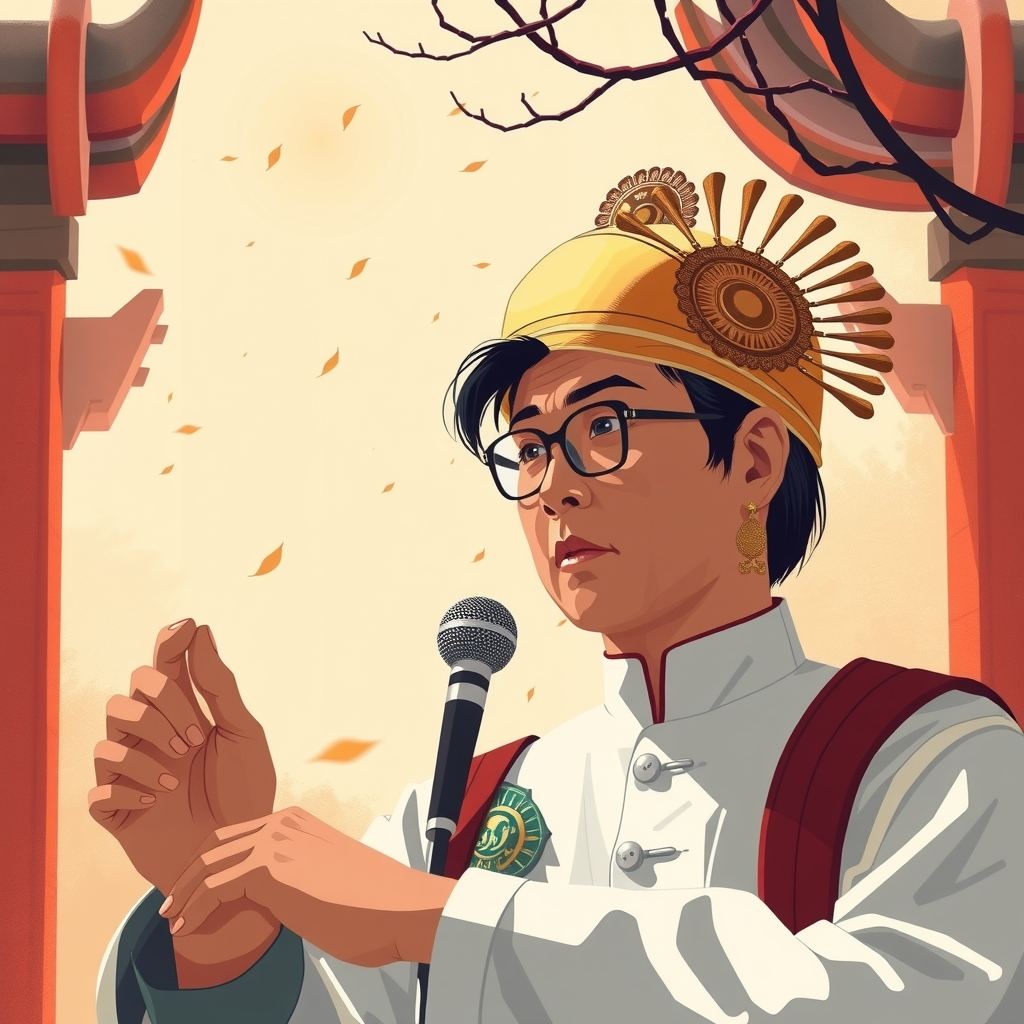
A routine family reunion in China has taken a tragic turn following the three-year prison sentence handed to artist Gao Zhen. The conviction, based on charges of "infringing upon the reputation of heroes," signals a tightening grip by Beijing over creative and political expression.
The Legal Pretext and the Arrest of Gao Zhen
The sentencing of Gao Zhen marks a significant escalation in China's crackdown on dissent through cultural mediums. Gao was arrested following a period intended for family reunification, only to be charged with crimes related to his satirical artwork. The specific legal mechanism used against him involves accusations of "infringing upon the reputation of heroes"—a broad and often loosely defined legal category used by Chinese authorities to penalize those whose work critiques the Communist Party’s historical narratives or its foundational figures.
The suddenness of the conviction has left Gao’s family and legal supporters in shock. His wife has publicly expressed deep disappointment and sadness, noting that the legal proceedings felt unexpected and disproportionate to the nature of his artistic endeavors.
Retroactive Justice and the Shrinking Space for Expression
A central point of contention in Gao’s case is the timeline of his creative output. Supporters and legal advocates for the artist argue that the specific artworks under scrutiny predate the very laws under which he is now being prosecuted. This raises serious questions regarding the principle of non-retroactivity in law, suggesting that the Chinese judicial system may be employing legislative tools ex post facto to target specific individuals.
This development is not an isolated incident but part of a broader trend within the People's Republic of China. As Beijing moves to consolidate domestic control, the "red lines" for artistic, journalistic, and political expression are being constantly redrawn. What was once considered subtle satire is increasingly being categorized as a threat to national security or the dignity of the state, effectively closing the window for any meaningful cultural critique.
Geopolitical Implications of Domestic Tightening
The crackdown on figures like Gao Zhen serves a dual purpose for the Chinese leadership: it reinforces domestic ideological purity and signals to the international community that China’s internal governance operates under a distinct set of rules regarding human rights and freedom of expression. For a global superpower, the use of the judiciary to police art reflects a shift toward a highly controlled information environment, which has long-term implications for China's "soft power" and its ability to engage in global cultural diplomacy.
What It Means for India
- Monitoring Ideological Shifts: For Indian strategic planners, the use of retroactive laws to target dissenters provides a case study in how authoritarian regimes use legal frameworks to manage internal stability and suppress perceived ideological threats.
- Information Warfare and Narrative Control: As India and China navigate complex digital and cultural boundaries, the tightening of Chinese domestic expression highlights the growing importance of understanding the "controlled" nature of Chinese media and cultural narratives.
- Diplomatic Divergence on Human Rights: This incident reinforces the widening gap between India’s democratic values and China’s governance model, a fundamental friction point in bilateral relations and a key theme in India’s advocacy for a rules-based international order.
International and geopolitical fallout
Domestically, the sentencing reinforces a message of ideological conformity. Internationally, it signals that China’s internal governance operates under a distinct set of expectations for human rights and freedom of expression. The use of the judiciary to police art erodes the country’s soft-power appeal and complicates cultural diplomacy, as foreign artists and institutions weigh the risks of engagement.