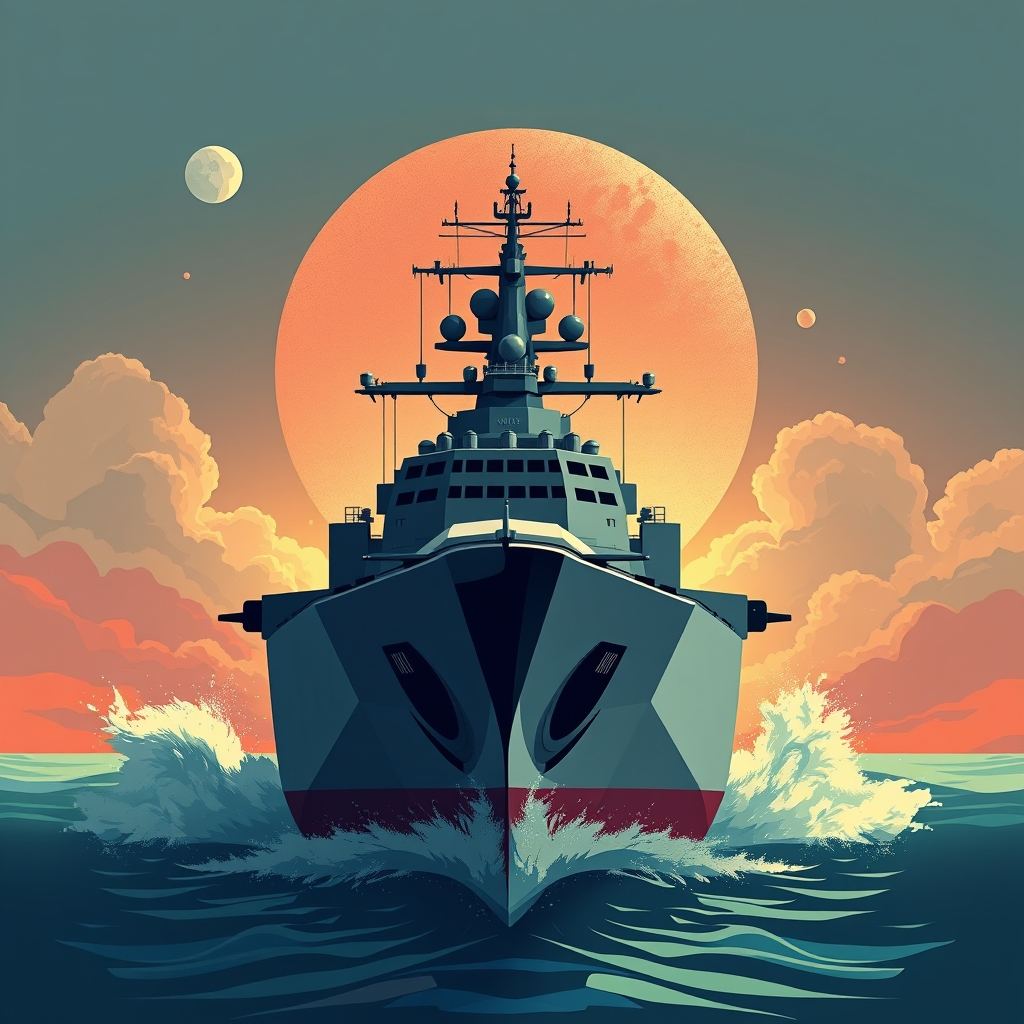
Kim Jong Un Unveils Plans for 10,000-Ton Nuclear-Armed Warships
North Korean leader Kim Jong Un has announced a radical escalation in his nation's maritime military capabilities, declaring plans to equip the navy with nuclear-armed warships. This strategic shift, announced during a recent warship commissioning ceremony, signals Pyongyang's intent to project nuclear power far beyond its coastal borders.
A Shift from Land to Sea-Based Nuclear Deterrence
During a state-sponsored ceremony on Wednesday, Kim Jong Un officially commissioned a new vessel while outlining a massive naval expansion program. The most significant revelation was the intent to equip North Korean destroyers with nuclear weapons, moving the regime's nuclear doctrine from terrestrial missiles to a mobile, sea-based platform.
The proposed fleet includes massive 10,000-ton warships, a significant jump in scale compared to North Korea's current aging naval assets. By developing a "nuclear navy," Pyongyang is attempting to achieve a second-strike capability. Unlike fixed missile silos, nuclear-armed ships are harder to track and target, providing the regime with a more survivable and unpredictable deterrent against regional adversaries.
Escalating the Maritime Arms Race in Northeast Asia
This announcement comes at a time of heightened tension in the Indo-Pacific region. The transition toward large-scale, nuclear-capable naval vessels suggests that North Korea is no longer content with being a "fortress state" protected by land-based artillery and short-range missiles.
The development of 10,000-ton destroyers indicates an ambition to challenge the maritime dominance of the United States, South Korea, and Japan. While North Korea's naval technology has historically lagged behind its missile technology, this specific pivot toward heavy-tonnage naval warfare suggests a concentrated effort to modernize their maritime doctrine to match their growing ballistic missile capabilities.
Strategic Implications for Regional Stability
The move toward a nuclear navy complicates the existing security architecture in East Asia. For the United States and its allies, the presence of nuclear-armed warships in the Sea of Japan (East Sea) and the Yellow Sea creates a much more complex defensive landscape.
Unlike land-based nuclear deployments, which can be monitored through satellite intelligence and seismic sensors, nuclear-armed naval assets represent a "floating threat" that is significantly more difficult to counter. This development is likely to trigger further military modernization and increased naval patrols by the ROK (Republic of Korea) Navy and the Japanese Maritime Self-Defense Force, potentially leading to a cycle of rapid militarization in the waters surrounding the Korean Peninsula.
What It Means for India
- Heightened Maritime Security Concerns: As India continues to expand its presence in the Indo-Pacific through its "Act East" policy, the proliferation of nuclear-capable naval assets in Northeast Asia adds a layer of complexity to the regional maritime security environment.
- Countering Non-State and Rogue Actor Proliferation: India's commitment to a rules-based maritime order is challenged by North Korea's disregard for international norms. This development underscores the need for India to strengthen its naval intelligence and maritime domain awareness in the broader Pacific region.
- Diplomatic Balancing Act: As a responsible nuclear power, India must navigate the geopolitical fallout of North Korea's escalation. This shift reinforces India's stance on the necessity of complete, verifiable, and irreversible denuclearization of the Korean Peninsula while maintaining strategic autonomy in a volatile Indo-Pacific.