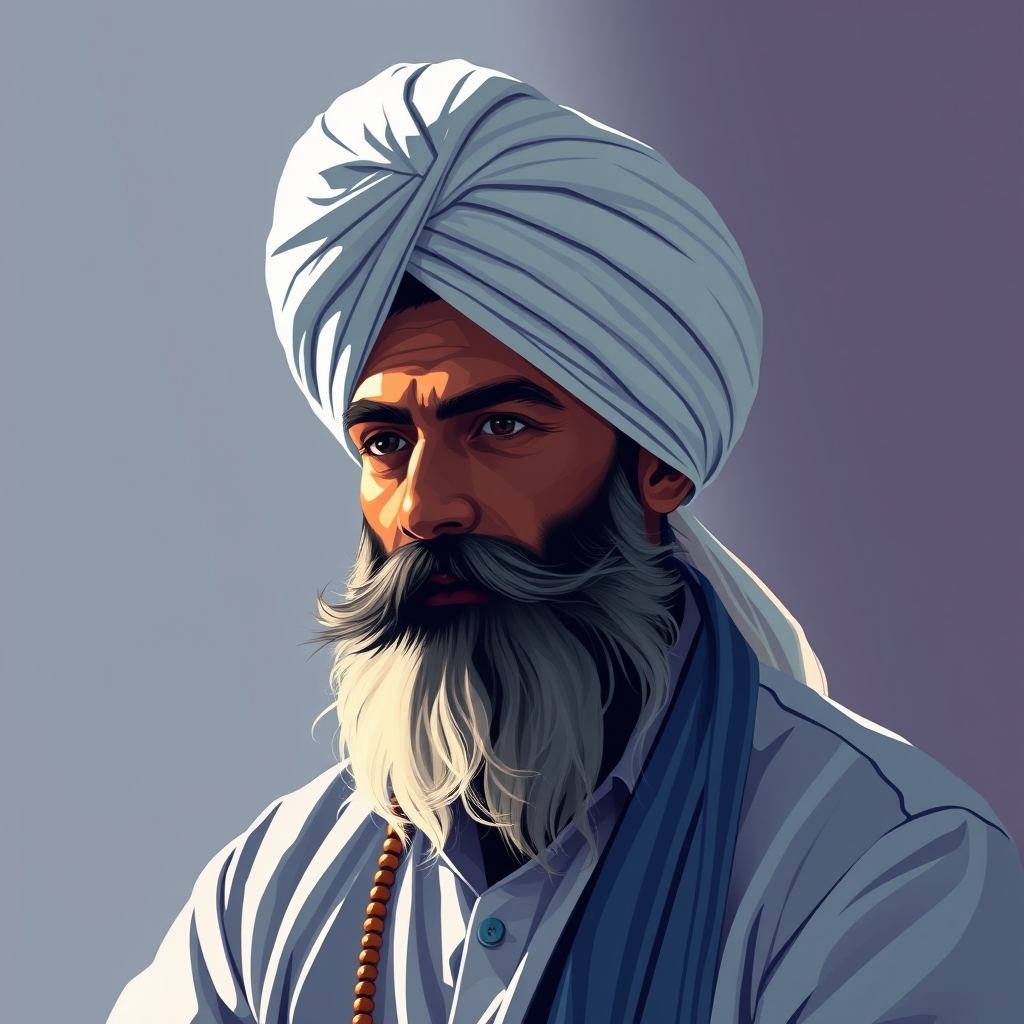
For a keshdhari Sikh, the articles of faith are non-negotiable. The unshorn hair, the beard, the turban—these are not stylistic choices but core obligations. For decades, those same obligations functioned as automatic disqualifiers for Sikhs hoping to serve in the United States military under standard grooming and uniform regulations. That history makes the arrival of Chirag Veer Singh Sarao at the U.S. Air Force Academy in Colorado Springs so consequential. On April 4, 2026, Sarao became the first keshdhari Sikh American appointed to the academy. Two and a half months later, on June 20, he received official religious accommodation. He reported for In-Processing Day on June 24 and is now enduring the academy’s six-week boot camp alongside his classmates. The moment is personal, but the shift it represents is institutional.
The Accommodation and What It Took
Religious accommodation in the U.S. military is not a handout. It is a formal process that requires command approval, legal review, and, in many cases, years of advocacy. For Sikhs, the fight to serve with beards and turbans has moved in stages. Earlier accommodations were often granted on a case-by-case basis, typically restricted to non-combat positions or个体的个別审批. Full integration—especially at the most selective entry points of American military leadership—has remained elusive.
Sarao’s appointment breaks that pattern at the highest level of officer training. The U.S. Air Force Academy is one of only five federal service academies, and its graduates earn commissions as second lieutenants in the U.S. Air Force or the nascent U.S. Space Force. These are not support roles on the periphery. They are combat-ready leadership tracks that feed directly into the command structure of the world’s most technically advanced military branches. For Sarao to enter that pipeline while maintaining kesh means the institution has accepted, in writing and in practice, that his identity does not compromise his capacity to lead.
The timeline matters. Appointed on April 4. Accommodation granted June 20. I-Day on June 24. That compressed sequence suggests the academy knew exactly what it was doing. There was no ambiguity to sort out after his arrival. The paperwork was settled before the first drill instructor called his name.
The Candidate
This is not a story of lowered standards. Sarao’s record reads like a blueprint for the kind of cadet the academies actively recruit. Before accepting his appointment, he earned full scholarships from both the Air Force Reserve Officers’ Training Corps and the Naval ROTC. He also held admissions offers from the University of Southern California and the University of Washington. In other words, he had elite options and chose the harder path.
His extracurriculars match the academic pedigree. Sarao is an Eagle Scout, a distinction that requires years of project management, community service, and demonstrated leadership. He holds a second-degree black belt in Taekwondo, which signals not just physical discipline but the patience to progress through a hierarchical grading system. He competed in varsity water polo, a sport that demands stamina, teamwork, and the ability to perform under exhaustion. These are not resume fillers. They are traits that translate directly to the pressure cooker of basic training and, beyond that, to the operational tempo of modern air and space operations.
Life at the Academy
Right now, Sarao is in the middle of the academy’s six-week boot camp, officially called Basic Cadet Training. It is the initiation phase for every incoming class, designed to strip away civilian habits and rebuild the group as a unit. Cadets march, run, drill, and study under sleep deprivation and constant evaluation. The physical demands are obvious, but the psychological pressure is the real filter. For Sarao, the experience includes an additional layer of logistical complexity. He will need to maintain his turban and beard under field conditions, during physical training, and within a uniform culture that has historically prized identical appearance. How the academy handles those practical details—whether through modified headgear under helmets or adjusted grooming inspections—will set precedents for every keshdhari cadet who follows.
BCT结束后,学年正式开始。美国空军学院(USAFA)的学员在履行军事训练要求、体能标准和领导责任的同时,还要完成完整的本科课程。毕业后将直接获得委任军官资格。与在民用大学和军事训练之间分配时间的ROTC毕业生不同,军事学院的学员在连续的四年里都生活在军事生态系统中。这种投入更深,期望也更高。
这种转变的实际意义
宗教便利的实际理由非常直接:如果你因为候选人戴头巾或留胡须就将他们过滤掉,你就是在由于武断的原因而错失人才。美国军方在理论上早已明白这一点,但在执行层面一直滞后,尤其是在军官团中。Sarao进入USAFA表明,空军不再将多样性视为一种公关手段,而是将其视为一个准入问题。当你的战略竞争涵盖网络、太空和人工智能时,你无法承担因缩小人才储备范围(仅限于外貌和信仰完全一致的人)而带来的风险。
这还涉及公信力维度。美国经常主张,开放的机构能够吸引全球人才。当一名锡克裔美国人能够在不放弃信仰的情况下进入联邦军事学院时,这一论点就变得可见且具体。它触及了旁遮普邦、不列颠哥伦比亚省和东伦敦的家庭。它告诉他们,服役并不意味着必须抹杀自我。
印度的视角
对于印度而言,这个故事除了对侨民成功的普遍庆祝外,还具有特殊的意义。
侨民纽带。 进入美国精英机构的高成就锡克裔美国人加强了印度离散群体的联系。这些并非交易性的关系,而是跨越选举周期和政策变动的、旨在增进相互理解的长期投资。当一名锡克教学员在科罗拉多斯普林斯敬礼时,其涟漪效应会触及阿姆利则的亲戚和德里的校友网络。
软实力输出。 当印度的传统遗产被视为在其他国家的权力中心发挥作用时,印度便从中受益。Sarao的存在并非在宣传印度政府的政策,而是在展示印度文化的生命力。它表明,保持完整的锡克教身份可以在技术和军事卓越的最高水平上运作。这种影响力是任何大使馆手册都无法复制的。
国内机构的参考点。 印度拥有世界上规模最大的军事和教育机构,同时也面临着制度统一性与宗教表达之间的紧张关系。美国在正式化宗教便利方面的经验提供了一个运作模型,尽管伴随着官僚主义的烦恼和妥协。它不是一个可以全盘照搬的模板,但却是一个值得观察的活生生的实验。学院如何在允许视觉差异的同时维持团队凝聚力?指挥链如何在不破坏纪律的前提下尊重良知?这些是每一个大型多元化社会都必须回答的问题。
启示
当个人迫使机构去面对其宣称的价值观与实际运行规则之间的差距时,机构就会发生改变。Chirag Sarao进入美国空军学院时并非一名活动家。他是一名表现优异的候选人,他拒绝用信仰去交换野心。作为回应,学院决定他的野心值得进行相应的调整。这种交换——即卓越的才干要求获得便利,而便利又扩展了机构的边界——正是融合真正发生的方式。为期六周的新兵训练将考验他的耐力。未来的四年将考验他的领导力。但那道最难逾越的障碍——那道让保持长发的锡克教徒(keshdhari Sikhs)几代人都无法进入这一人才通道的障碍——已经倒塌了。