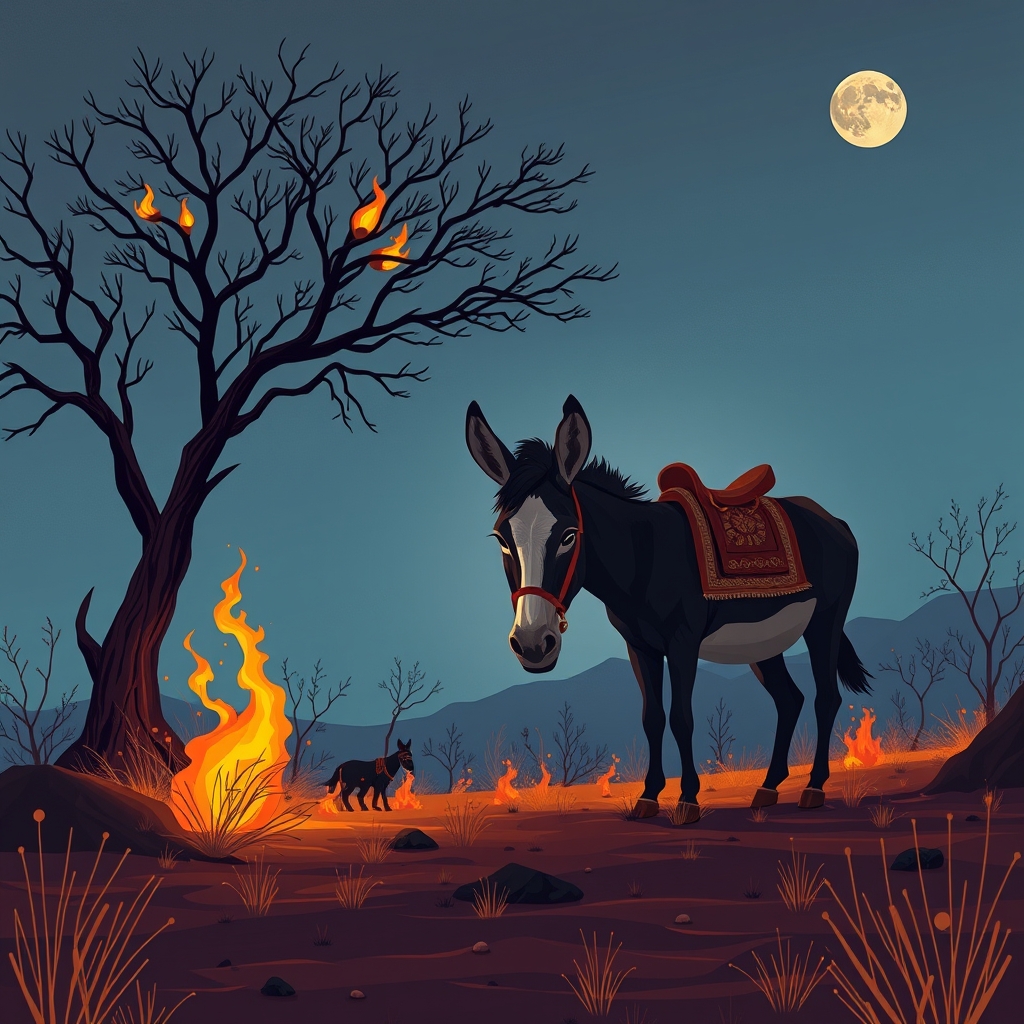
Nature’s Firebreaks: How Spain is Using Donkeys to Combat Wildfires
As climate change intensifies wildfire seasons across Southern Europe, Spain is turning to an unconventional ally: rescued donkeys. While high-tech solutions like drones and AI are becoming standard, a grassroots movement in Catalonia is proving that ancient, biological methods can be just as effective in protecting landscapes.
The Rise of Biological Firebreaks
Southern Europe has faced an unprecedented surge in wildfire activity this year, with Spain alone losing more than 240,000 acres of land to raging blazes. In response to this ecological crisis, the Tivissa Donkey Firefighters—a nonprofit founded in 2020 by Joan Cedó Sans—is deploying a herd of 62 rescued donkeys to manage flammable vegetation.
The logic behind this "low-tech" intervention is grounded in rigorous ecological principles. Donkeys naturally graze on the dry, fine grasses that act as high-intensity fuel for spreading fires. Furthermore, their physical weight helps trample and break up thick layers of dry undergrowth, creating natural, biological firebreaks. Unlike mechanical clearing, which can disrupt soil health, these animals provide a sustainable method of maintaining firebreaks and managing the Mediterranean landscape.
From Rescue to Resilience
The project operates on a dual-purpose model of animal welfare and environmental protection. The herd consists of animals like Roberto, a former racing donkey saved from slaughter, and Paloma, who was rehabilitated after being mistreated. By providing these animals with veterinary care and a "dignified life," the initiative converts a social liability (abandoned livestock) into a critical environmental asset.
Experts, including Dr. Jordi Bartolomé Filella from the Universitat Autònoma de Barcelona, suggest that integrating different types of herbivores—such as sheep, goats, and wild horses—can create a multi-layered defense against wildfires. This movement represents a broader revival of traditional rural practices that once relied on livestock to manage land, now being modernized to combat the specific threats posed by a warming planet.
Technological Limits and Ecological Synergy
While the world focuses on the "digital frontier" of wildfire management through satellite monitoring and AI-driven predictive modeling, the Spanish case highlights the limitations of technology alone. Drones can detect a fire, but they cannot physically remove the fuel that allows a fire to grow.
The Tivissa model suggests a hybrid approach: using advanced technology for detection and rapid response, while utilizing biological tools like grazing to mitigate the actual risk. This synergy between ancient wisdom and modern science offers a blueprint for land management in arid, fire-prone regions globally.
What It Means for India
As a country facing increasing heatwaves and forest fire risks in the Himalayan regions and central India, the Spanish model offers several strategic takeaways:
- Sustainable Land Management: India can look toward integrating traditional grazing patterns with modern forest management to create cost-effective, biological firebreaks in hilly and forest-dense terrains.
- Circular Economy in Rural Areas: The concept of utilizing rehabilitated or abandoned livestock for specialized ecological services could provide new economic and social frameworks for India’s vast rural and animal-husbandry sectors.
- Climate Adaptation Strategy: As India scales its disaster management capabilities, there is a growing need to balance high-cost technological interventions (drones/satellites) with low-cost, nature-based solutions to build long-term climate resilience.