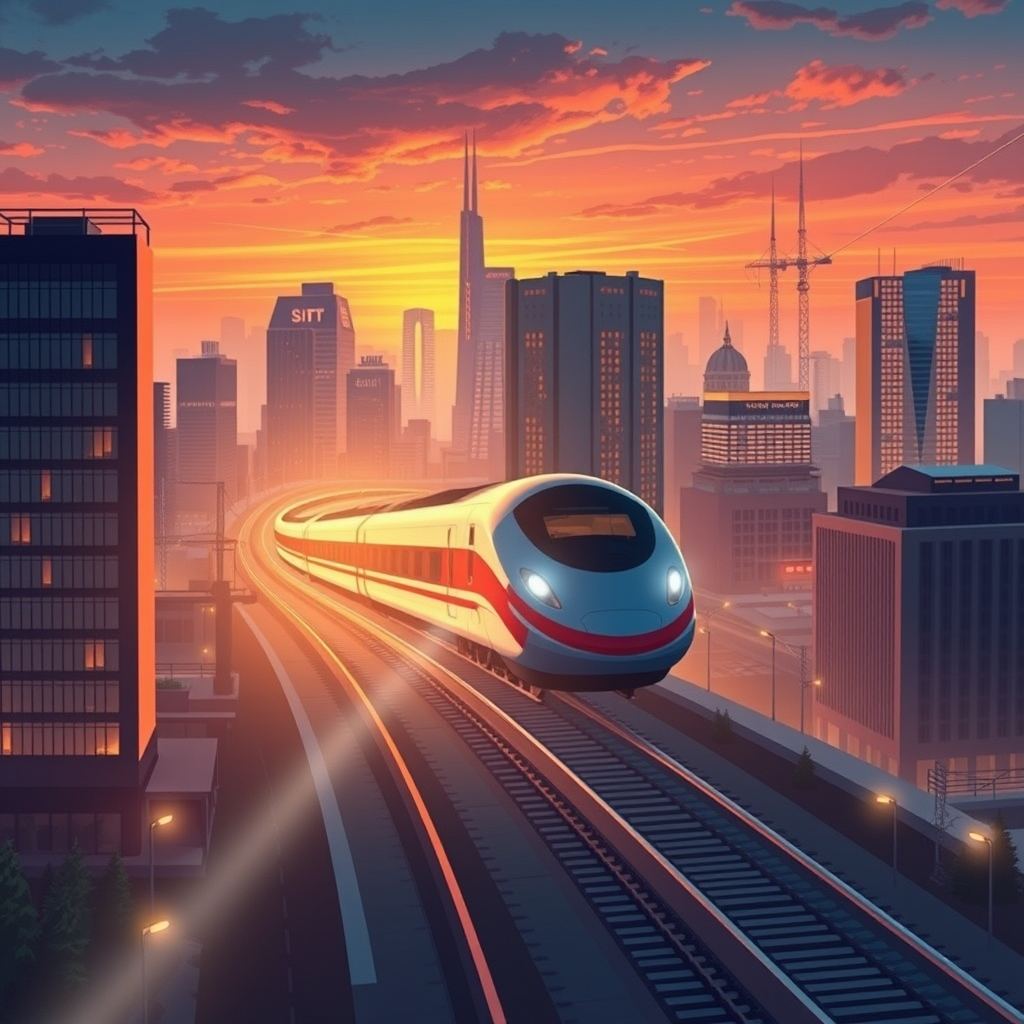
India's Indigenous Bullet Train Mission: A Massive Engineering Leap
India is on the verge of a transportation revolution, with the Surat–Bilimora section of the Mumbai-Ahmedabad high-speed rail corridor expected to be operational by August 2027. Beyond just faster travel, the true significance lies in India's ambitious plan to manufacture these high-speed train sets indigenously, marking a monumental shift in the nation's engineering capabilities.
The 'Make in India' Milestone: BEML and the ₹866 Crore Contract
The journey toward high-speed rail has officially transitioned from concept to manufacturing. Integral Coach Factory (ICF) Chennai has awarded a ₹866.87 crore contract to BEML Limited to design, manufacture, and commission two prototype high-speed train sets.
These initial "B-28" train sets will feature eight coaches each and are designed for a design speed of 280 kmph, with operational capabilities exceeding 250 kmph. To support this mission, BEML has established a dedicated ‘Aditya’ High-Speed Rail Complex in Bengaluru, specifically tailored for high-precision manufacturing.
From Stainless Steel to Aluminium: A Two-Phased Speed Strategy
India is adopting a phased approach to mastering high-speed technology. The first phase focuses on stainless steel train sets capable of reaching 280 kmph. However, the long-term vision is much more aggressive.
Railway Minister Ashwini Vaishnaw has confirmed that the next generation of bullet trains will be engineered for speeds of 350 kmph. To achieve these higher velocities, India plans to transition from stainless steel to lightweight aluminium train sets. This shift will require a complete overhaul of the supply chain, including advanced aluminium extrusions and distributed traction systems, but it is essential for reducing weight and increasing energy efficiency.
Why High-Speed Rail is an Engineering Challenge
Manufacturing a bullet train is fundamentally different from producing the LHB coaches currently used by Indian Railways. The complexities extend far beyond mere speed; engineers must solve several critical technical hurdles:
- Aerodynamics and Pressure Management: Trains must be designed to cut through air efficiently and manage "head pressure pulses" to ensure passenger comfort during tunnel transits.
- Advanced Stability: High-speed travel requires next-generation bogies and suspension systems to manage high-frequency vibrations and ensure ride stability.
- Climate Adaptation: Unlike European or Japanese models built for cold climates, Indian bullet trains must be specifically engineered to withstand intense heat and heavy dust.
- Sophisticated Control Systems: At speeds of 320 kmph, a train covers nearly 89 metres per second, making advanced Train Control Management System (TCMS) software and mission-critical signalling systems indispensable.
The Economic and Strategic Advantage
The move toward indigenous manufacturing is driven by significant cost advantages. Experts, including Sudhanshu Mani, the architect of Vande Bharat, suggest that indigenously produced high-speed trains could cost less than half of what it would cost to acquire foreign technology. By moving from simple technology transfer to indigenous design, testing, and certification, India is positioning itself to become a global player in high-speed rolling stock.
Key Takeaways
- Indigenous Manufacturing: BEML has secured an ₹866.87 crore contract to build the first prototype high-speed train sets in Bengaluru.
- Phased Speed Goals: India will start with 280 kmph stainless steel sets before transitioning to 350 kmph aluminium train sets.
- Massive Cost Savings: Building trains locally is expected to reduce costs by more than 50% compared to importing foreign technology.