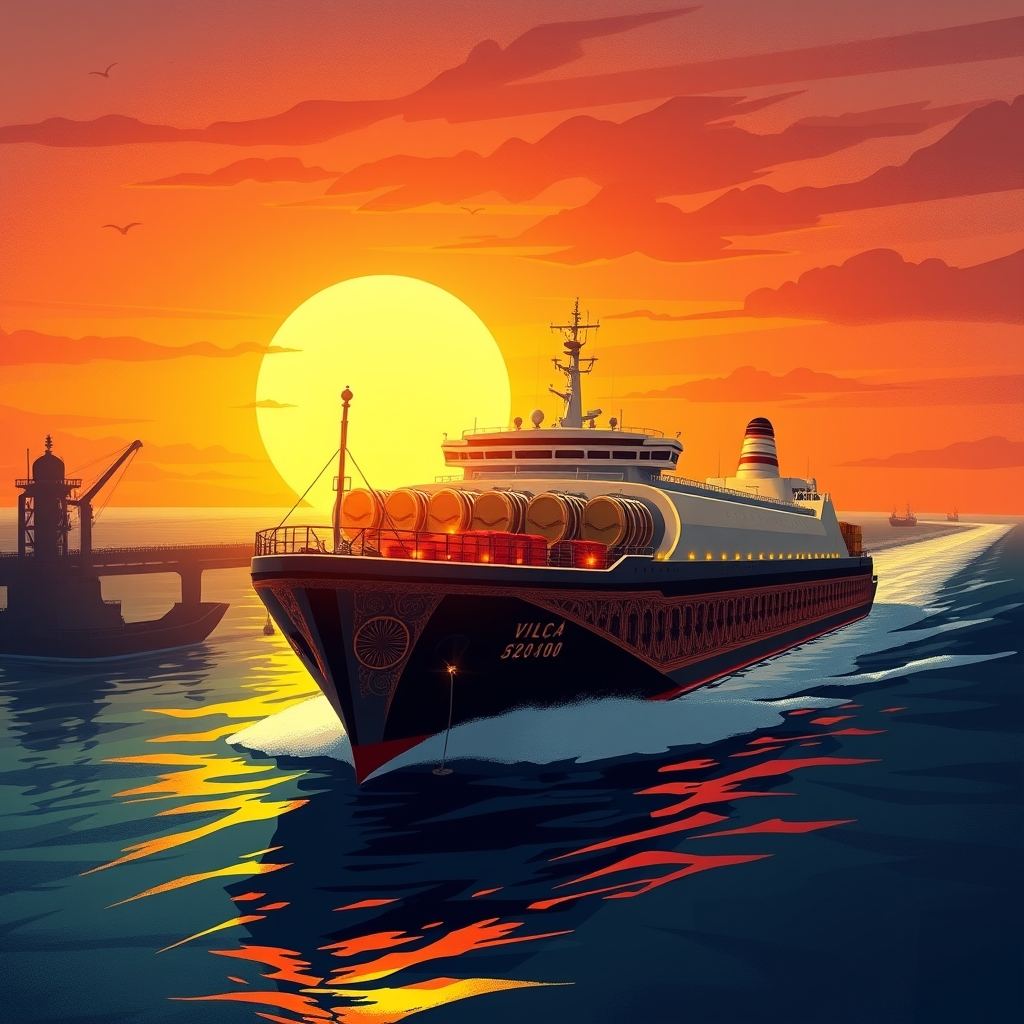
The Strait of Hormuz has once again become a theater of high-stakes maritime brinkmanship, leaving Indian seafarers caught in the crossfire of geopolitical rivalries. A recent transit by a Very Large Crude Carrier (VLCC) carrying two million barrels of oil underscores the harsh reality of navigating one of the world’s most volatile chokepoints.
A Tug-of-War Between Iran and the United States
On July 13, 2026, an Indian tanker faced a terrifying dilemma near the Oman coast. As the vessel neared the strait’s entrance, the Iranian Navy used smaller boats to radio direct threats, declaring the water “closed” and warning that any ship within range would be destroyed.
At the same time, the U.S. Navy broadcast assurances over high-frequency channels, ordering the ship to proceed and pledging protection in international waters. The crew found themselves paralyzed by the clash of authorities. Iran urged them to distrust U.S. promises; the U.S. Naval Computer and Telecommunications Command kept constant contact, demanding position reports every ten minutes.
The Economic Pressure and Human Risk
The decision to keep moving was anything but easy. After an attack on the GFS Galaxy—which forced Indian crew members to abandon ship—maritime security warnings jumped from medium to severe. The tanker’s owner first told the crew to stop, leaving the vessel drifting off Abu Dhabi for four days.
Pressure mounted quickly. To offset the extreme Gulf risks, the company doubled standard pay, calling the offer “insane.” This mirrors a broader trend: as tensions rise, payouts for “red-zone” routes climb, putting Indian seafarers’ lives at the center of a high-stakes gamble.
Tactical Observations Amidst Chaos
Jets and helicopters buzzed overhead, and Abu Musa Island loomed nearby, yet the VLCC and two other ships slipped through unscathed. A sailor on board noted that smaller vessels drew fire while the massive tanker remained untouched. Two explanations emerged:
- A spill from a two-million-barrel tanker would wreak catastrophic environmental damage, deterring any side from attacking.
- Covert U.S. actions may have safeguarded the oil flow while avoiding a public showdown.
To dodge radio interception, the crew switched to email for one-on-one communication with U.S. naval commands.
What It Means for India
- Vulnerability of human capital – India supplies a huge share of the world’s seafarers; its crews now face psychological and physical threats from West-Asian conflicts.
- Energy-security concerns – Any disruption in the Hormuz corridor can spike crude prices and destabilize India’s oil imports.
- Strategic-neutrality dilemma – The incident spotlights the tightrope Indian maritime interests walk between Iran’s and the United States’ competing naval doctrines.
Indian-flagged tankers and their crews were caught in a direct clash of radio messages on July 13, 2026, as a VLCC carrying two million barrels of oil approached the Strait of Hormuz. Iranian naval units warned the ship that the strait was “closed” and that any vessel within range would be destroyed, while the U.S. Navy simultaneously broadcast permission to proceed and pledged protection. The contradictory orders left the crew in a state of paralysis, illustrating how geopolitical rivalry has become a psychological battlefield for India’s seafarers.
The July 13 Transit: A Test of Authority
The vessel, sailing under the Indian flag, was on the southern route near Oman when Iranian boats began radioing the crew: turn back or be sunk. At that moment, the U.S. Naval Computer and Telecommunications Command switched to high-frequency channels, telling the ship to keep moving and promising U.S. forces would monitor it every ten minutes. The crew had to report its position at that interval—a routine that suddenly felt like a lifeline.
Iran framed the strait as a sovereign defensive zone, warning that any foreign ship ignoring its orders would be treated as hostile. The United States invoked freedom of navigation, presenting the same waters as international and safe for commercial traffic, and offered real-time guidance to avoid accidental escalation.
Why the Strait Matters
The Hormuz corridor is one of the world’s narrowest chokepoints for oil. Any disruption reverberates across energy markets.
Economic Pressure and “Insane” Incentives
Die Entscheidung, die Durchfahrt fortzusetzen, wurde nicht leichtfertig getroffen. Anfang des Jahres wurde der Tanker GFS Galaxy – ebenfalls unter indischer Flagge – angegriffen, was die indischen Besatzungsmitglieder dazu zwang, das Schiff zu verlassen. Nach diesem Vorfall stiegen die maritimen Sicherheitswarnungen von mittel auf schwer. Das Unternehmen, dem das am 13. Juli eingesetzte Schiff gehörte, riet der Besatzung zunächst, anzuhalten und zu warten, wodurch das Schiff vier Tage lang vor Abu Dhabi abtrieb.
Als das Unternehmen die Besatzung schließlich zur Weiterfahrt drängte, koppelte es die Anweisung an eine drastische Gehaltserhöhung – der Standardlohn für die Passage wurde verdoppelt. Das Angebot wurde als „wahnsinnig“ bezeichnet, was ein wachsendes Muster in der globalen Schifffahrt widerspiegelt: höhere Auszahlungen für Routen, die als riskant gelten. Für viele indische Seeleute überwiegt die Aussicht auf einen plötzlichen Geldsegen die Angst vor feindlichem Beschuss, insbesondere wenn die Alternative langwierige Liegezeiten sind, die wochenlange Lohnlosigkeit bedeuten könnten.
Realität an Deck: Jets, Hubschrauber und ungewöhnliche Ruhe
Selbst als der VLCC und zwei weitere Schiffe die Meerenge passierten, kreisten Jets und Hubschrauber am Himmel, und die Gewässer nahe der Insel Abu Musa waren voller kleinerer Boote. Laut einem Matrosen an Bord zogen die kleineren Fahrzeuge die Aufmerksamkeit auf sich; der massive VLCC passierte die Zone unversehrt. Die Besatzung lieferte zwei Erklärungen:
- Ein Austritt aus einem Tanker mit zwei Millionen Barrel würde katastrophale Umweltschäden verursachen, was einen gezielten Angriff für jede Seite zu einem riskanten Manöver machen würde.
- Verdeckte US-Marineoperationen könnten im Spiel gewesen sein, um den Ölfluss zu sichern und gleichzeitig eine öffentliche Konfrontation zu vermeiden.
Um das Risiko des Abhörens des Funkverkehrs durch feindliche Akteure zu verringern, wurde die Besatzung angewiesen, E-Mails für die direkte Kommunikation mit dem US-Marinekommando zu nutzen – ein Umweg, der verdeutlichte, dass selbst die Routine-Navigation mittlerweile Sicherheitsmaßnahmen auf Cyber-Niveau erfordert.
Was dies für Indiens maritime Arbeitskräfte bedeutet
- Humankapital in Gefahr – Indische Seeleute gehören zu den am stärksten gefährdeten Gruppen, wenn regionale Spannungen aufflammen. Ihre Sicherheit hängt nun ebenso sehr vom Tonfall der Funknachrichten ab wie von der Präsenz von Kriegsschiffen.
- Verknüpfung mit der Energiesicherheit – Jede Störung in der Straße von Hormus kann die Ölpreise in die Höhe treiben und Indiens Importbudget belasten, wodurch das Wohlergehen einzelner Besatzungsmitglieder an die nationale wirtschaftliche Stabilität gekoppelt wird.
- Neutralität unter Druck – Indiens Politik der strategischen Autonomie wird auf die Probe gestellt, wenn seine Schiffe widersprüchliche Befehle von zwei mächtigen Marinen erhalten.