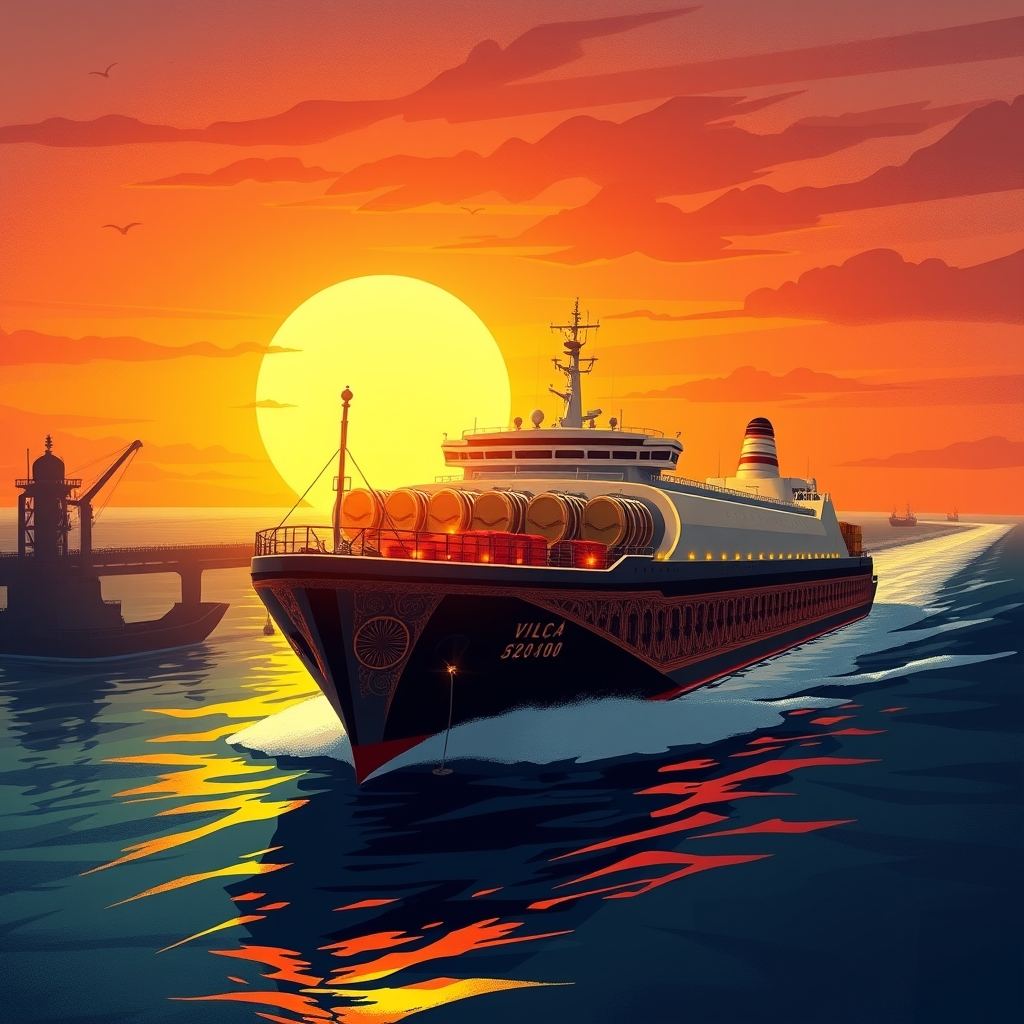
The Strait of Hormuz has once again become a theater of high-stakes maritime brinkmanship, leaving Indian seafarers caught in the crossfire of geopolitical rivalries. A recent transit by a Very Large Crude Carrier (VLCC) carrying two million barrels of oil underscores the harsh reality of navigating one of the world’s most volatile chokepoints.
A Tug-of-War Between Iran and the United States
On July 13, 2026, an Indian tanker faced a terrifying dilemma near the Oman coast. As the vessel neared the strait’s entrance, the Iranian Navy used smaller boats to radio direct threats, declaring the water “closed” and warning that any ship within range would be destroyed.
At the same time, the U.S. Navy broadcast assurances over high-frequency channels, ordering the ship to proceed and pledging protection in international waters. The crew found themselves paralyzed by the clash of authorities. Iran urged them to distrust U.S. promises; the U.S. Naval Computer and Telecommunications Command kept constant contact, demanding position reports every ten minutes.
The Economic Pressure and Human Risk
The decision to keep moving was anything but easy. After an attack on the GFS Galaxy—which forced Indian crew members to abandon ship—maritime security warnings jumped from medium to severe. The tanker’s owner first told the crew to stop, leaving the vessel drifting off Abu Dhabi for four days.
Pressure mounted quickly. To offset the extreme Gulf risks, the company doubled standard pay, calling the offer “insane.” This mirrors a broader trend: as tensions rise, payouts for “red-zone” routes climb, putting Indian seafarers’ lives at the center of a high-stakes gamble.
Tactical Observations Amidst Chaos
Jets and helicopters buzzed overhead, and Abu Musa Island loomed nearby, yet the VLCC and two other ships slipped through unscathed. A sailor on board noted that smaller vessels drew fire while the massive tanker remained untouched. Two explanations emerged:
- A spill from a two-million-barrel tanker would wreak catastrophic environmental damage, deterring any side from attacking.
- Covert U.S. actions may have safeguarded the oil flow while avoiding a public showdown.
To dodge radio interception, the crew switched to email for one-on-one communication with U.S. naval commands.
What It Means for India
- Vulnerability of human capital – India supplies a huge share of the world’s seafarers; its crews now face psychological and physical threats from West-Asian conflicts.
- Energy-security concerns – Any disruption in the Hormuz corridor can spike crude prices and destabilize India’s oil imports.
- Strategic-neutrality dilemma – The incident spotlights the tightrope Indian maritime interests walk between Iran’s and the United States’ competing naval doctrines.
Indian-flagged tankers and their crews were caught in a direct clash of radio messages on July 13, 2026, as a VLCC carrying two million barrels of oil approached the Strait of Hormuz. Iranian naval units warned the ship that the strait was “closed” and that any vessel within range would be destroyed, while the U.S. Navy simultaneously broadcast permission to proceed and pledged protection. The contradictory orders left the crew in a state of paralysis, illustrating how geopolitical rivalry has become a psychological battlefield for India’s seafarers.
The July 13 Transit: A Test of Authority
The vessel, sailing under the Indian flag, was on the southern route near Oman when Iranian boats began radioing the crew: turn back or be sunk. At that moment, the U.S. Naval Computer and Telecommunications Command switched to high-frequency channels, telling the ship to keep moving and promising U.S. forces would monitor it every ten minutes. The crew had to report its position at that interval—a routine that suddenly felt like a lifeline.
Iran framed the strait as a sovereign defensive zone, warning that any foreign ship ignoring its orders would be treated as hostile. The United States invoked freedom of navigation, presenting the same waters as international and safe for commercial traffic, and offered real-time guidance to avoid accidental escalation.
Why the Strait Matters
The Hormuz corridor is one of the world’s narrowest chokepoints for oil. Any disruption reverberates across energy markets.
Economic Pressure and “Insane” Incentives
La décision de poursuivre le transit n'a pas été prise à la légère. Plus tôt cette année, le pétrolier GFS Galaxy — battant également pavillon indien — a été attaqué, forçant les membres d'équipage indiens à abandonner le navire. Après cet incident, les alertes de sécurité maritime sont passées de niveau moyen à sévère. La compagnie propriétaire du navire du 13 juillet a initialement conseillé à l'équipage de s'arrêter et d'attendre, laissant le navire à la dérive au large d'Abou Dabi pendant quatre jours.
Lorsque la compagnie a finalement pressé l'équipage de repartir, elle a assorti l'ordre d'une augmentation de salaire spectaculaire — doublant le salaire standard pour la traversée. L'offre a été qualifiée d'« insensée », reflétant une tendance croissante dans le transport maritime mondial : des rémunérations plus élevées pour les routes jugées risquées. Pour de nombreux marins indiens, l'attrait d'un gain soudain l'emporte sur la peur des tirs hostiles, surtout lorsque l'alternative est un arrêt prolongé qui pourrait signifier des semaines sans salaire.
Réalité sur le pont : jets, hélicoptères et calme inhabituel
Alors même que le VLCC et deux autres navires entraient dans le détroit, des jets et des hélicoptères sillonnaient le ciel, et les eaux près de l'île d'Abou Moussa étaient encombrées de petites embarcations. Selon un marin à bord, les petits navires attiraient l'attention ; le massif VLCC est passé sans être touché. Deux explications ont été avancées par l'équipage :
- Un déversement provenant d'un pétrolier de deux millions de barils causerait des dommages environnementaux catastrophiques, faisant de toute attaque délibérée un choix risqué pour n'importe quelle partie.
- Des actions navales américaines clandestines étaient peut-être à l'œuvre, assurant le flux de pétrole tout en évitant une confrontation publique.
Afin de réduire les risques d'interception radio par des acteurs hostiles, l'équipage a reçu l'instruction d'utiliser l'e-mail pour communiquer directement avec le commandement naval américain, une solution de contournement qui souligne à quel point même la navigation de routine implique désormais des mesures de sécurité de niveau cybernétique.
Ce que cela signifie pour la main-d'œuvre maritime de l'Inde
- Capital humain en péril – Les marins indiens font partie des groupes les plus exposés lorsque les tensions régionales s'intensifient. Leur sécurité dépend désormais autant du ton des messages radio que de la présence de navires de guerre.
- Lien avec la sécurité énergétique – Tout incident dans le détroit d'Ormuz peut faire grimper les prix du pétrole et peser sur le budget des importations de l'Inde, liant le bien-être des membres de l'équipage à la stabilité économique nationale.
- Neutralité mise à l'épreuve – La politique d'autonomie stratégique de l'Inde est testée lorsque ses navires reçoivent des ordres contradictoires de la part de deux puissantes marines.