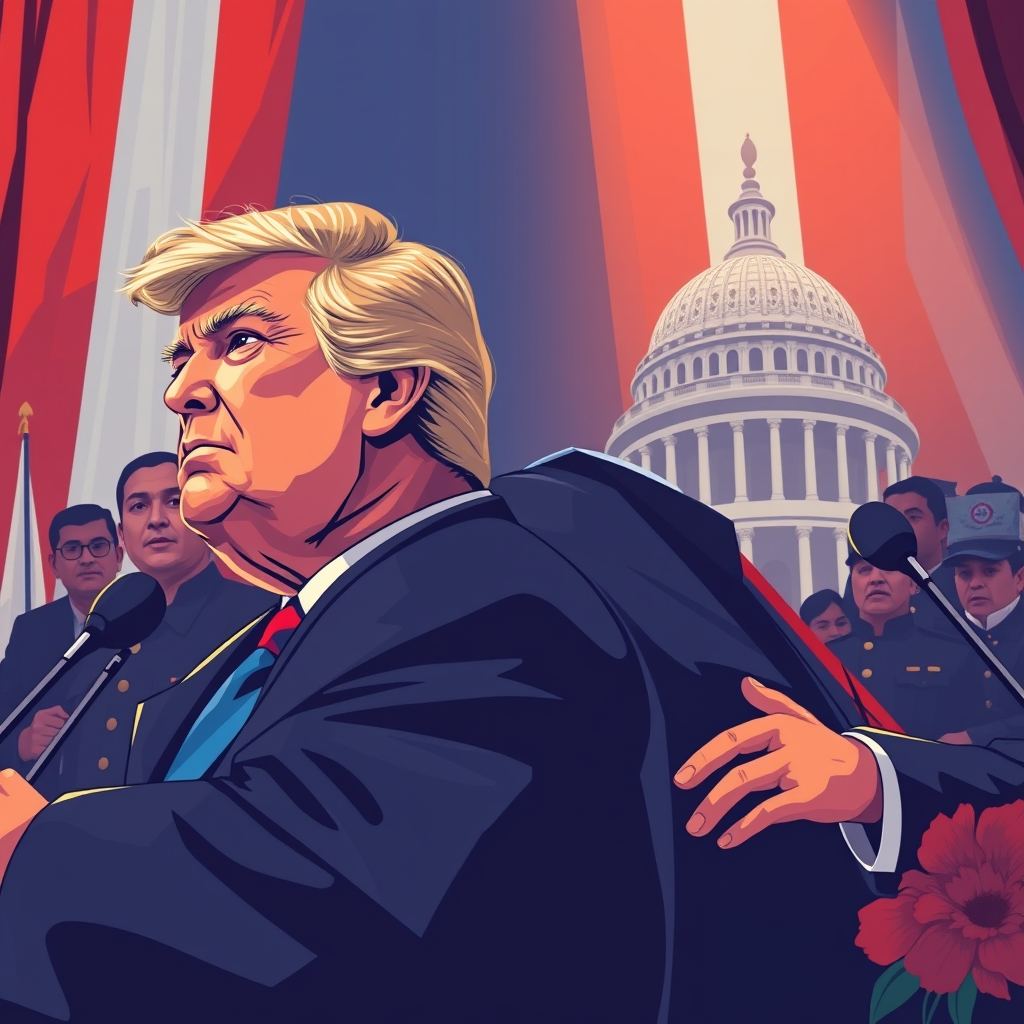
US Political Gridlock: Trump and House Speaker Johnson Seek Legislative Breakthrough
The United States is currently witnessing a high-stakes standoff between President Donald Trump and key members of his own party, threatening to stall critical national legislation. As Speaker Mike Johnson attempts to bridge the divide, the resulting legislative paralysis carries significant implications for global stability and American foreign policy.
The Internal Republican Rift: SAVE America Act vs. Legislative Functionality
The core of the current crisis lies in the "SAVE America Act," a controversial piece of legislation championed by President Trump that mandates photo ID and proof of citizenship for federal voting. While the bill passed the House in February 2026, it has repeatedly failed in the Senate. This impasse has triggered an unprecedented revolt within the Republican party.
Hardline elements, led by U.S. Representative Anna Paulina Luna, have effectively shut down the House floor. These insurgents are refusing to allow any further legislative business until the Senate passes the voter ID bill. This tactic has moved beyond mere debate into active obstructionism, preventing the House from addressing essential matters such as veteran support and funding for federal agencies, including the State Department, ahead of the October 1 fiscal year deadline.
Trump’s Pressure Tactics and the Midterm Shadow
President Trump has adopted an aggressive stance to break the deadlock, recently withdrawing from a signing ceremony for a bipartisan housing bill to pressure Senate Republicans. This move highlights the growing tension between the executive’s priority on election-related laws and the legislative need to address high-cost-of-living issues—a primary concern for voters ahead of the November midterm elections.
With a razor-thin Republican majority in the House (218-212), Speaker Mike Johnson faces a precarious balancing act. While he seeks to reassure the President that the House will "stop any blockade," he must navigate a raucous caucus where even a small defection can derail the entire legislative agenda. The shadow of the November elections looms large, as Trump’s 34% approval rating complicates the political math for Republican leaders attempting to maintain party unity.
Strategic Maneuvers: Budget Reconciliation and the Senate Hurdle
To bypass the traditional Senate roadblocks, some Republican leaders, including Representative Tom Emmer, are suggesting the use of the budget reconciliation process. This maneuver could theoretically allow the SAVE America Act to pass with just 51 votes, potentially overruling the Senate parliamentarian. However, Senate Majority Leader John Thune has expressed skepticism, noting that the necessary bipartisan or even unified Republican support may not exist for such a controversial move.
As the Senate enters a July 4 break without action on the voter ID bill, the risk of a government shutdown or a failure to fund key diplomatic and defense departments increases. The focus on domestic voting rules over broader governance and foreign policy funding marks a period of intense inward-looking volatility in Washington.
What It Means for India
The ongoing legislative instability in the United States carries direct consequences for India's strategic and economic interests:
- Diplomatic and Defense Funding Uncertainty: The inability of Congress to pass timely funding for the State Department and other agencies could lead to delays in implementing bilateral strategic initiatives and security cooperation frameworks essential to India's Indo-Pacific strategy.
- Economic Volatility: Political gridlock and the threat of government shutdowns often trigger market uncertainty. For India, this may lead to fluctuations in capital flows and heightened volatility in the foreign exchange markets.
- Policy Continuity Risks: As the U.S. moves toward midterm elections amidst intense domestic polarization, India must prepare for potential shifts in American foreign policy priorities, particularly regarding trade agreements and regional security stances in the South Asian context.