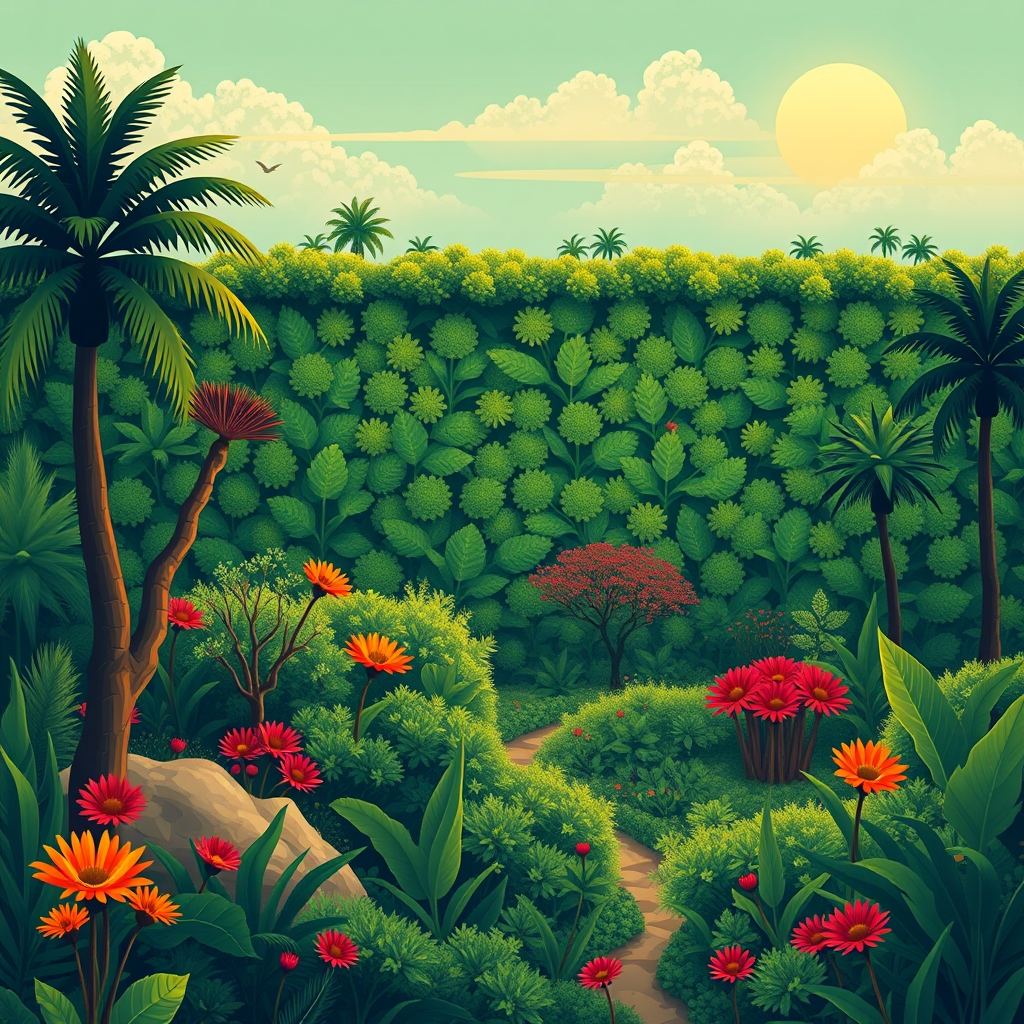
Africa’s Great Green Wall: A Massive 8,000-km Shield Against Climate Change
Africa is undertaking one of the most ambitious environmental restoration projects in human history, aiming to build an 8,000-km "wall of trees" across the Sahel. This massive initiative seeks to combat desertification, restore degraded landscapes, and secure the livelihoods of millions living on the edge of the Sahara Desert.
Beyond a Line of Trees: The Evolution of the Sahel Initiative
Launched by the African Union in 2007, the Great Green Wall was originally envisioned as a continuous 15-kilometre-wide belt of trees stretching from Senegal on the Atlantic coast to Djibouti on the Red Sea. However, the project has evolved into a sophisticated, multi-dimensional ecosystem restoration strategy. Rather than a rigid barrier, it is now a mosaic of restored forests, grasslands, wetlands, and farmlands tailored to local ecological conditions.
The initiative addresses the critical crisis of desertification in the Sahel, a semi-arid region that separates the Sahara Desert from southern savannas. By focusing on native vegetation and sustainable land management, the project aims to stabilize soils, improve water retention, and revitalize the natural biodiversity that has been eroded by decades of drought and unpredictable rainfall.
Ambitious Targets for 2030 and Regional Progress
The scale of the Great Green Wall is unprecedented in its scope and humanitarian intent. The project has set specific, high-stakes targets to be achieved by 2030:
- Land Restoration: Rehabilitating 100 million hectares of degraded land—an area comparable to the size of Egypt.
- Carbon Sequestration: Capturing 250 million tonnes of carbon dioxide to mitigate global warming.
- Economic Impact: Creating 10 million "green jobs" to provide sustainable livelihoods for the African youth.
Significant milestones have already been reached, with approximately 30 million hectares of land restored to date. Countries like Senegal have successfully planted millions of trees, while Ethiopia has led large-scale rehabilitation programmes. Nigeria and Niger are also making strides in implementing sustainable land management practices to combat the encroachment of the desert.
Challenges to Implementation
Despite the momentum, the project faces formidable obstacles. Achieving the 2030 goals requires massive financial investment from international development banks and global environmental groups. Furthermore, the Sahel is a region often plagued by political instability and conflict; maintaining security in these areas is essential for the long-term survival of the newly planted ecosystems. Success will ultimately depend on deep regional cooperation and the ability to integrate environmental protection with economic resilience.
What It Means for India
As a nation that shares similar challenges regarding land degradation, water scarcity, and extreme climate variability, India can draw significant strategic parallels from Africa's initiative:
- Climate Diplomacy and Leadership: As India champions the International Solar Alliance and the Coalition for Disaster Resilient Infrastructure (CDRI), observing the Great Green Wall provides a blueprint for South-South cooperation in large-scale ecological restoration.
- Food and Energy Security: The project demonstrates that environmental resilience is directly linked to food security. For India, which manages vast agricultural landscapes, the Sahel’s transition from land degradation to productive farmland offers critical lessons in climate-smart agriculture.
- Mitigation and Carbon Markets: The goal of capturing 250 million tonnes of CO2 highlights the growing importance of nature-based solutions in meeting global net-zero targets, a sector where Indian expertise in renewable energy and sustainable technology can find new collaborative avenues.