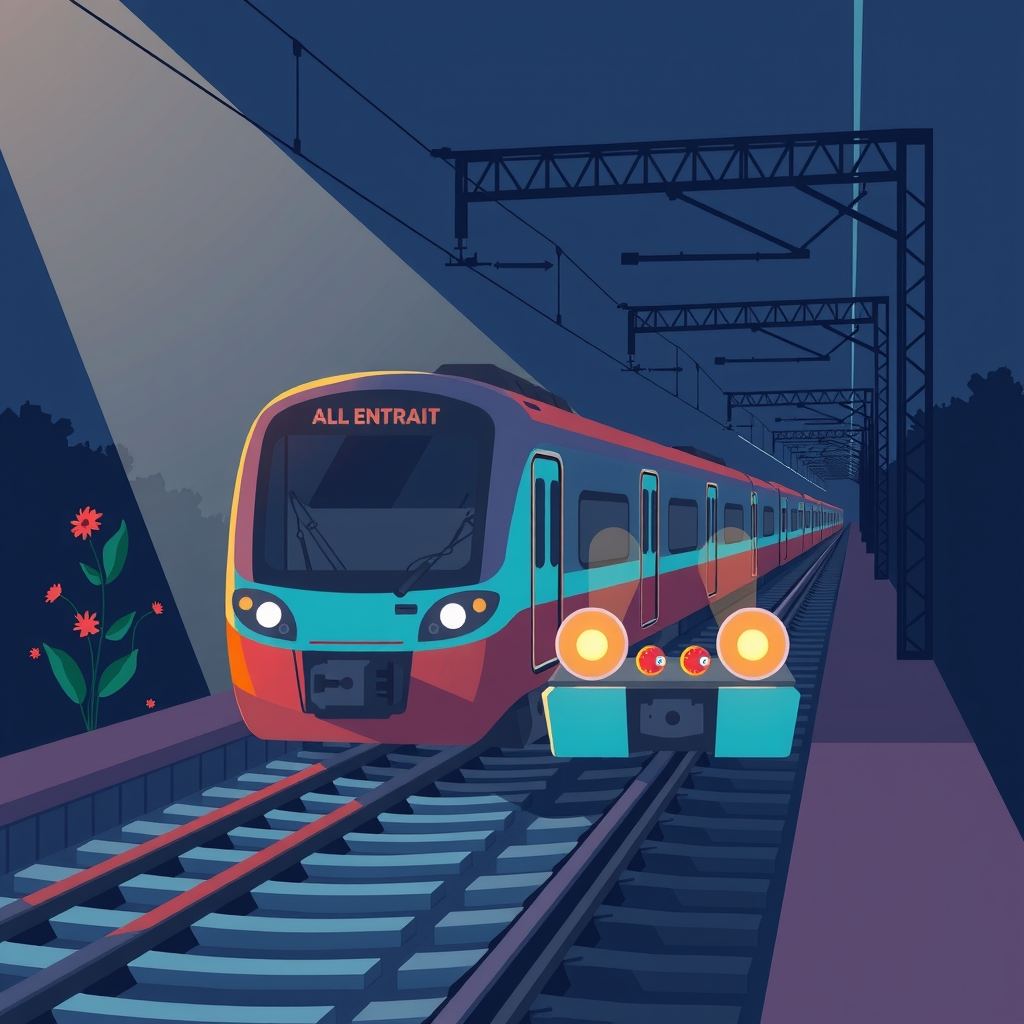
A train traveling between Rouen and Caen derailed near the town of Cleon on Friday evening. Forty-four of the 180 passengers were injured, and a helicopter rescued a victim in critical condition. Emergency crews sent 140 firefighters to the scene.
French authorities say the train struck an unidentified object on the tracks; the cause remains under investigation. SNCF halted service on the Rouen-Caen and Caen-Le Havre lines and deployed replacement buses.
Why AI-driven monitoring matters
Rail networks depend on a clean track bed, yet foreign-object debris—fallen cargo, stray vehicles, even branches—can appear without warning. Traditional inspections rely on scheduled human walks, visual checks from inspection trains, or fixed cameras that record video for later review. Those methods miss transient hazards or spot them only after a train has passed.
AI systems process sensor data in real time and flag anomalies the moment they appear. A typical deployment mounts high-resolution lidar or radar scanners on trackside posts or moving inspection vehicles and feeds the feed to computer-vision models trained to recognize shapes that don’t belong on a railway. When the algorithm spots an out-of-place object, it sends an alert to the control centre, slows or stops approaching trains, and dispatches maintenance crews to the exact GPS coordinate.
If such a system had been active on the Normandy line, the obstacle that forced the train off the rails could have been identified minutes—or seconds—before the train arrived, giving operators a chance to intervene.
The broader context
Europe’s railways are under pressure to move more passengers and freight as governments push for greener transport. France, with one of the continent’s most extensive high-speed and regional networks, markets safety as a core public-service value. Incidents like the Cleon derailment expose a vulnerability that technology could mitigate.
Rail operators worldwide are already testing AI-enabled monitoring. In several Asian countries, pilots use drone-based aerial surveys that feed video into neural-network classifiers, producing live maps of track conditions. In the United States, freight railroads have installed wayside lidar that continuously scans for track-side intrusions and links to automated braking systems.
Early lidar-based obstacle-detection kits cost several hundred thousand euros per kilometre. Recent advances in sensor miniaturisation and cloud-based model serving have driven that price down dramatically—a cost many operators can amortise over a few years given the avoided expenses of accidents, service disruptions, and liability claims.
Who gains, who bears the risk
Rail operators could cut accident-related downtime and protect their reputation. Savings would come from fewer emergency repairs, lower insurance premiums, and more reliable schedules.
Passengers would enjoy smoother, safer journeys. The 44 injuries and one critical case in Normandy might have been avoided, sparing lives and trauma.
Governments and regulators would gain clearer compliance evidence. AI monitoring can generate audit trails that demonstrate proactive safety management, simplifying the path to meet national and European directives.
Technology providers stand to tap a market worth billions of euros across Europe, Asia, and North America as operators shift from manual inspection regimes to AI platforms.
Adoption is not frictionless. Continuous video streams raise data-privacy concerns, potentially capturing people on adjacent properties. Algorithmic bias can trigger false positives, causing unnecessary service interruptions that erode passenger confidence. Integration complexity forces legacy signalling systems to be retrofitted for real-time hazard inputs without compromising existing safety interlocks.
What the French investigation reveals
SNCF and French police will examine whether the object resulted from vandalism, a fallen cargo container, or a maintenance lapse. If investigators find the object entered the track corridor through an unsecured access point, the case will highlight the need for better perimeter security in addition to detection. If the object was a transient natural hazard—like a fallen branch—AI sensors that differentiate static infrastructure from moving debris would have been especially valuable.
루앙-캉 및 캉-르아브르 노선의 운행 중단은 단 한 번의 사고가 지역 네트워크 전체에 어떻게 파급 효과를 미치는지 보여줍니다. 이는 통근자들을 더 느린 버스로 내몰고 지역 도로 교통에 부담을 줍니다. 위험 요소를 사전에 제거함으로써, AI 모니터링은 이러한 주요 통로를 개방된 상태로 유지하고 철도가 뒷받침하는 경제적 흐름을 보존할 수 있습니다.
반론: 기술은 만능 해결책이 아니다
비판론자들은 AI에 대한 과도한 의존이 운영자의 안일함을 초래할 수 있다고 경고합니다. 물체를 감지하더라도 이를 잘못 분류하는 시스템은 운영자가 빈번한 오보에 익숙해질 경우 무시될 수 있습니다. 또한 AI 모델이 안정적으로 작동하려면 대규모의 고품질 데이터셋이 필요합니다. 수천 킬로미터에 달하는 선로 전체에서 이러한 데이터를 수집하는 것은 실행 측면에서 매우 어려운 과제입니다.
비용 대 위험 또한 또 다른 논쟁거리입니다. 교통량이 적은 지역 노선의 경우, 위험 물체가 발생할 통계적 가능성이 낮다면 정교한 lidar 어레이와 엣지 컴퓨팅 하드웨어에 투자하는 것이 타당하지 않을 수 있습니다. 이러한 경우에는 강화된 정기 점검과 간헐적인 AI 기반 정밀 점검을 결합한 하이브리드 방식이 더 나은 균형을 맞출 수 있습니다.
향후 전망: 주목해야 할 점
- 규제 프레임워크: 유럽연합(EU)은 새로운 철도 프로젝트에 대해 AI 기반 장애물 감지를 의무화할 수 있는 업데이트된 안전 가이드라인을 발표할 것으로 예상됩니다. 운영자들은 조달 및 인증 프로세스를 이에 맞춰 조정해야 할 것입니다.
- 데이터 형식의 표준화: 센서 공급업체, AI 모델 제공업체, 철도 신호 시스템 간의 상호 운용성이 매우 중요해질 것입니다. 업계 단체들은 특정 업체에 종속되는 '벤더 락인(vendor lock-in)' 현상을 방지하기 위해 공통 인터페이스를 설계하고 있습니다.
- 시범 운영: 여러 유럽 철도 구간이 내년 초 시범 프로그램을 실시한다고 발표했습니다. 이는 다양한 기상 조건과 조명 환경에서 AI 감지 정확도를 검증하는 것을 목표로 합니다.
- 비용 편익 분석: 사고 예방을 통한 장기적 비용 절감액과 초기 자본 지출을 비교하는 독립적인 평가 결과는 고밀도 노선과 농어촌 노선 모두의 의사 결정에 지침이 될 것입니다.
요약
노르망디 탈선 사고는 정체불명의 장애물 하나가 어떻게 일상적인 지역 운행을 수십 명의 부상자를 내고 주요 교통 통로를 폐쇄하는 위기로 몰아넣을 수 있는지 보여줍니다. AI 기반 선로 모니터링 및 장애물 감지 시스템은 열차가 장애물에 도달하기 전에 이를 포착하여 인명을 구조하고, 운행 일정을 유지하며, 철도가 제공하는 경제적 생명선을 보호할 것을 약속합니다. 기술만으로는 모든 위험을 제거할 수 없지만, 실시간 AI 감시를 기존 안전 프로토콜에 통합하는 것은 다음 "정체불명의 물체"가 뉴스 헤드라인을 장식하는 사태를 막는 결정적인 단계가 될 수 있습니다.