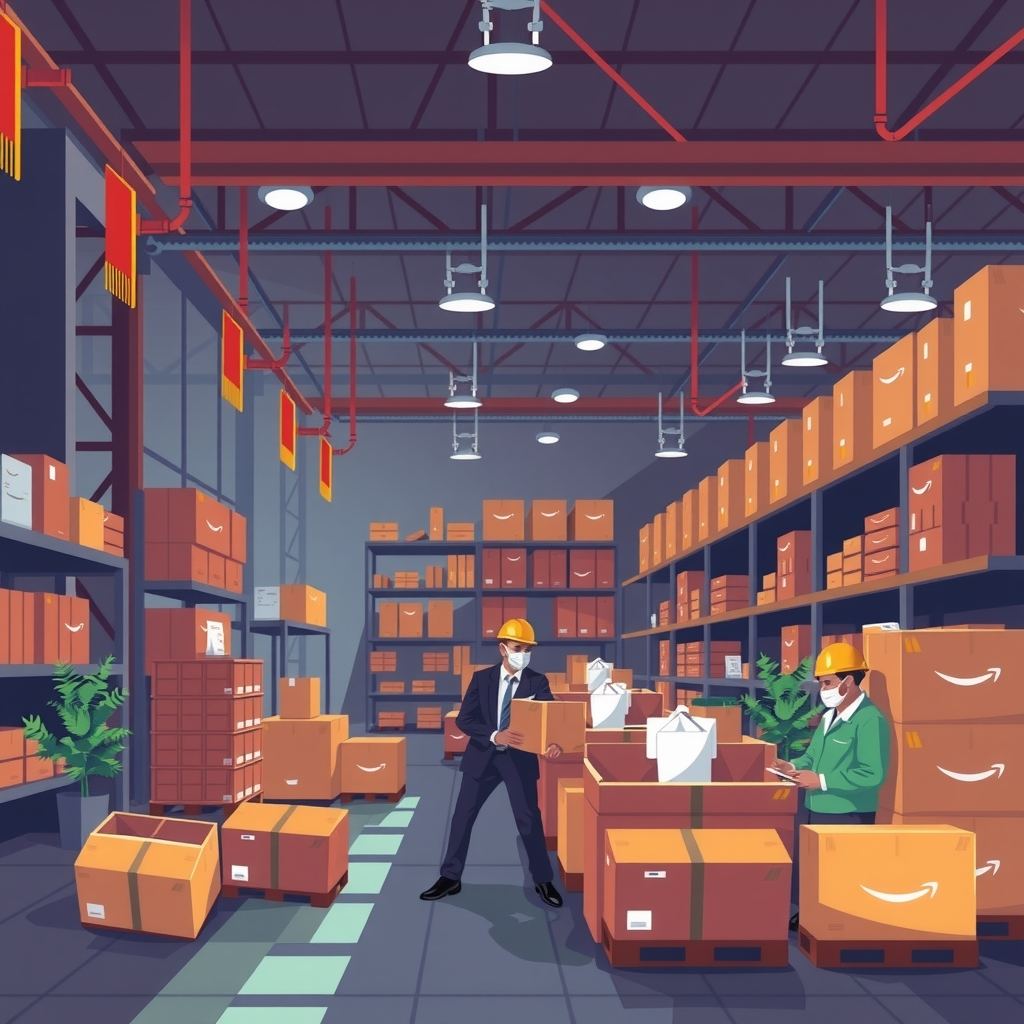
As the critical holiday shopping season approaches, e-commerce giant Amazon has announced a significant hike in its minimum starting hourly wage for full-time core operations employees in the United States. This move signals a major shift in the labor landscape for the world's largest retailer as it seeks to bolster its workforce and maintain its competitive edge.
Strategic Wage Hike Ahead of Holiday Season
Amazon has officially raised the minimum starting hourly wage for its U.S. full-time core operations employees—those responsible for critical tasks like packing and shipping orders—to $20 per hour. This increase, effective from September 27, represents a $1-per-hour raise across the board. With this adjustment, the average pay for these core workers will rise to nearly $24 per hour.
When accounting for the total compensation package, which includes various benefits, Amazon estimates the average value to be more than $32 per hour. This proactive measure comes at a time when retail giants are competing fiercely for reliable logistics and warehouse labor to handle the massive surge in consumer demand during the year-end festive period.
Expanding Employee Benefits and Financial Inclusion
Beyond direct wage increases, Amazon is introducing a suite of new benefits aimed at increasing employee retention and loyalty. Starting October 1, all U.S. employees will receive a 10% discount on eligible fresh groceries and everyday essentials via Amazon.com and Whole Foods Market online, as well as a 20% discount at physical Whole Foods stores. Notably, these discounts can be combined with existing Prime member benefits.
In a move that addresses financial security, Amazon is also rolling out access to First Tech Federal Credit Union for qualified employees and their families. This partnership provides low-cost banking services, including checking and savings accounts that require no credit history and offer no overdraft or monthly maintenance fees. This initiative aims to provide long-term financial stability for its workforce, a benefit that remains accessible even after employees leave the company.
The Battle of the Retail Titans: Amazon vs. Walmart
The move by Amazon places it in direct competition with its primary rival, Walmart, regarding labor costs and employee incentives. Last year, Walmart expanded its employee discount program to include nearly all grocery purchases, both in-store and online.
Currently, Walmart’s starting pay for hourly store workers is $14, with an average pay exceeding $18.50. However, Walmart maintains a strong presence in the logistics sector, with its warehouse and supply network workers earning an average of $27.50 per hour and a starting wage of $24.75. As both companies leverage higher wages and better benefits to secure talent, the cost of logistics and retail operations in the U.S. is likely to see upward pressure.
What It Means for India
- Impact on Global Supply Chains: As Amazon optimizes its U.S. operations through higher labor costs, it may seek further technological automation. This could shift the focus of global logistics tech development, impacting how Indian tech firms and supply chain partners integrate with global e-commerce ecosystems.
- Corporate Benchmarking for Indian E-commerce: The shift in labor strategy by global giants provides a blueprint for Indian e-commerce players like Flipkart and Amazon India. As India's gig economy and logistics sectors mature, the debate over minimum wages and employee benefits will become increasingly central to domestic policy.
- Investment and Economic Sentiment: Changes in the operational costs of major U.S. corporations influence global market sentiment. For Indian investors and stakeholders in the tech and retail sectors, these shifts reflect the broader trend of rising labor costs in developed economies, necessitating more efficient, tech-driven operational models.
Automation pressure and the cost question
What Indian stakeholders should watch
- Dynamiek van de wereldwijde toeleveringsketen – Hogere arbeidskosten in de Verenigde Staten kunnen Amazon ertoe aanzetten om meer op automatisering te vertrouwen, wat invloed heeft op de soorten technologie die Indiase logistieke bedrijven ontwikkelen en exporteren.
- Benchmarking voor binnenlandse e-commerce – Bedrijven zoals Flipkart en Amazon India kunnen de druk voelen om hun eigen loonstructuren te herzien, nu Indiase werknemers lokale lonen vergelijken met de Amerikaanse standaarden.
- Sentiment van investeerders – Stijgende operationele kosten voor een grote Amerikaanse retailer kunnen doorwerken in de wereldwijde markten, wat invloed heeft op Indiase investeringsstromen in tech en retail die verbonden zijn aan de prestaties van multinationale e-commerceplatforms.
De kern
Het minimumloon van $20 bij Amazon is een duidelijk signaal dat de strijd om talent in magazijnen intensiveert, precies op het moment dat het winkelseizoen rond de feestdagen aanbreekt. De loonsverhoging, gecombineerd met uitgebreide kortingen en bankvoordelen, heeft als doel een stabiele beroepsbevolking vast te houden, terwijl er tegelijkertijd erkenning wordt gegeven aan de stijgende kosten van levensonderhoud voor werknemers. Tegelijkertijd intensiveert deze stap de loonconcurrentie met Walmart en kan het de drang van Amazon naar meer automatisering versnellen. Voor retailers, investeerders en toeleveringsketenpartners wereldwijd — inclusief die in India — is de loonsverhoging een herinnering dat arbeidskosten een centrale hefboom worden in de strijd om snelheid, prijs en klantloyaliteit.