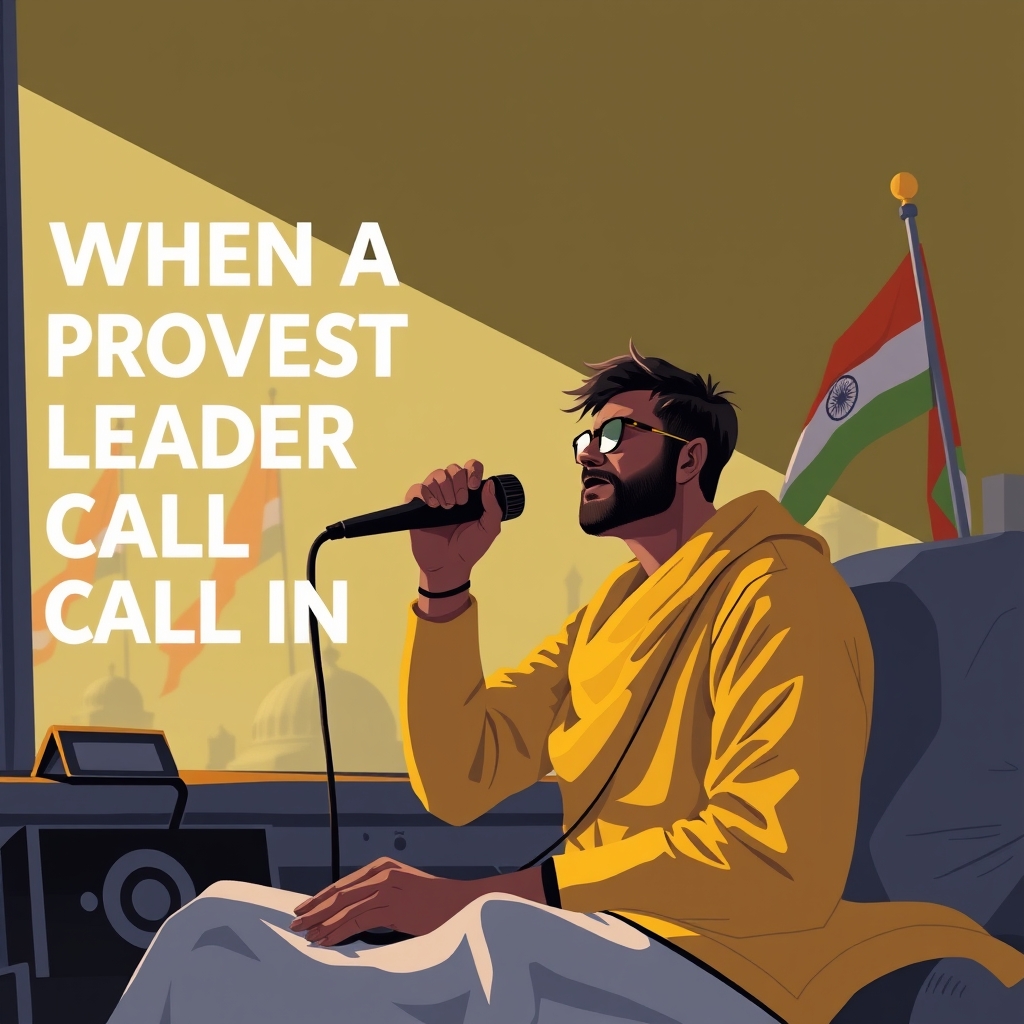
When a Protest Leader Calls In Sick
Abhijeet Dipke had been leading from the front at Jantar Mantar. Then his body said no. The CJP leader told supporters he was stepping away from the protest because of fever and body pain. He promised to return by evening. What should have been a routine health update became something else entirely.
Within hours, the announcement tore through social media. Some users wished him a quick recovery. Others called the timing suspicious. A man said he was unwell, and the internet turned it into a loyalty test. Dipke’s brief absence became a referendum on commitment, sacrifice, and what we expect from the people who carry our banners.
The Moment and the Backlash
Jantar Mantar has seen every kind of protest. Crowds swell, voices strain under the Delhi sun, and leaders are expected to be immovable fixtures. Dipke was holding that space until fever and aching joints forced him to pause. He did not vanish. He did not quit. He said he would be back the same evening.
That small window of rest was enough to crack public opinion wide open. One camp argued that a sick leader is an ineffective leader, and that resting is a tactical necessity. The other camp treated the leave as a betrayal of the cause, as if illness were a choice made in bad faith. The divide was sharp, personal, and entirely predictable.
We have seen this script before. A public servant catches a cold during a crisis and gets mocked online. An activist misses a rally for a family emergency and faces conspiracy theories. The standard we hold leaders to is not just high; it is often inhuman. Rest is framed as weakness. Stamina is treated as the only credential that matters.
Why the Timing Feels Loaded
Protests run on momentum. Every empty chair is a gift to the opposition. Every missing face risks demoralizing the crowd. Dipke’s supporters probably felt that pressure acutely. If the leader steps back, even for a few hours, does the story shift from the cause to the chair?
Critics seized on exactly that fragility. They asked why the sickness could not wait. Some suggested he should have pushed through, kept his feet on the pavement, and his mouth shut about the fever. It is an easy thing to say from an air-conditioned room. Standing for hours in a public square while your body temperature climbs is a different experience entirely. Heat exhaustion at Indian protests is common. Dehydration is routine. A leader who collapses becomes a liability, not a symbol.
The logic is not complicated. A protest is a marathon. Marathon runners hydrate. They slow down when their muscles cramp. Movements that burn out their leaders in the first week do not last. Yet the internet rarely rewards this kind of long-term thinking. It rewards optics. It wants the image of the tireless saint who never sleeps, never eats, and certainly never takes medicine.
The Internet as Judge and Jury
Social media strips away context before it strips away nuance. Dipke’s post about his health was likely a routine update. Online, it became evidence. Supporters built a case for compassion. Detractors built a case for suspicion. Neither side had much to go on beyond a few lines of text and a photograph.
This is the modern public square. Leaders no longer communicate with a crowd; they communicate with millions of individual prosecutors, each armed with a phone and an opinion. The cost of visibility is the loss of privacy, even in something as private as illness. Your fever becomes content. Your absence becomes a trend. Your body becomes a talking point.
The irony is that many of the same voices demanding authenticity from politicians refuse to tolerate human frailty. We say we want leaders who are real. Then we punish them for being mammalian.
What Movements Actually Need
If there is a lesson in Dipke’s sick leave, it is about sustainability, not spectacle. Grassroots movements are powered by people. People get sick. They need food, water,