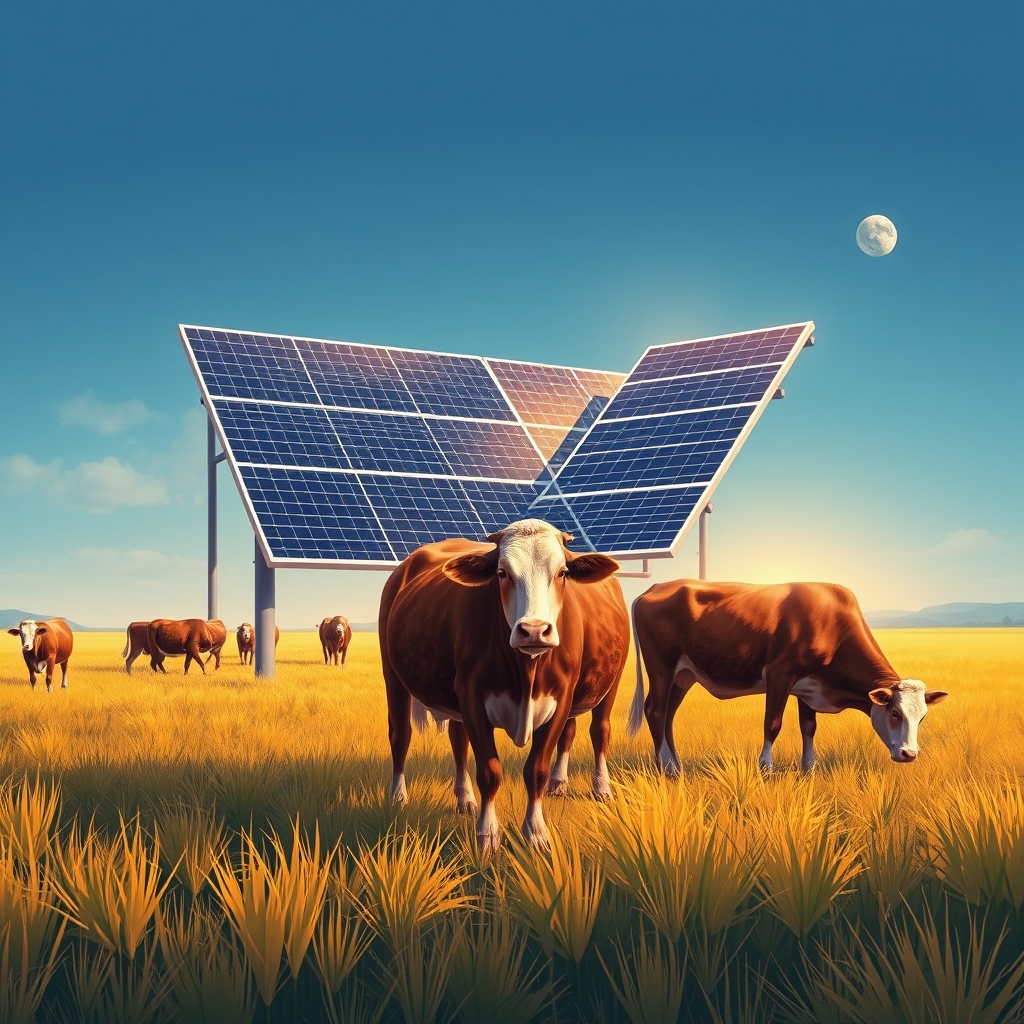
مع اشتداد السباق العالمي نحو الطاقة المتجددة، تُجري تجربة رائدة في نيوجيرسي اختبار فرضية حيوية: وهي إمكانية التعايش بين الطاقة الشمسية وتربية الماشية في نفس قطعة الأرض. ومن خلال دمج الألواح الشمسية الرأسية مع المراعي، يسعى الباحثون لإيجاد حل للتوتر المتزايد بين البنية التحتية للطاقة النظيفة والإنتاجية الزراعية.
تجربة نيوجيرسي: الأبقار والطاقة الخالية من الكربون
تُجري محطة تجارب نيوجيرسي الزراعية بجامعة روتجرز حاليًا دراسة متطورة ضمن برنامج الزراعة الكهروضوئية (Agrivoltaics Program). وخلافًا لمزارع الطاقة الشمسية التقليدية التي تستخدم مصفوفات مائلة وتغطي مساحات شاسعة من الأراضي، يستخدم هذا المشروع ألواحًا شمسية رأسية ثنائية الوجه (bifacial). صُممت هذه الألواح لالتقاط ضوء الشمس من كلا الجانبين، ويسمح توجيهها الرأسي بوجود مساحات عريضة من المراعي بين الصفوف.
تتضمن الدراسة مجموعة محددة من الماشية، بما في ذلك أبقار Angus (Ideal، Queen، Fizzle، وBlossom) وأبقار Herefords (Misty وFlurry)، والتي تعمل كعناصر حية في هذه التجربة العلمية. ويستخدم الباحثون مراقبة بالكاميرات عالية التردد — حيث يتم التقاط صور كل خمس دقائق — لتتبع سلوك الحيوانات. والهدف هو تحديد ما إذا كانت الماشية تفضل الظل الذي توفره الألواح، أم أن الألواح تعيق أنماط الرعي والراحة الطبيعية لديها.
الهندسة للمناظر الطبيعية متعددة الاستخدامات
لا يقتصر المشروع على مجرد ترك الحيوانات تتجول؛ بل هو اختبار هندسي وبيولوجي محكم للغاية. ينقسم الموقع التجريبي إلى ثلاث كتل مكررة، مما يسمح للعلماء بمقارنة تخطيطات شمسية مختلفة مع مراعي "ضابطة" (control) لا تحتوي على أي ألواح على الإطلاق.
تشمل المتغيرات التي يتم اختبارها ما يلي:
- تباعد الألواح: كيف تؤثر المسافة بين الصفوف على حركة الماشية وإمكانية وصول الآلات الزراعية.
- الخلوص الأرضي: تحديد مقدار المساحة المطلوبة أسفل الألواح لمنع أي عوائق.
- صحة الغطاء النباتي: مراقبة كيفية تأثير نطاقات الظل المتغيرة على رطوبة التربة، ودرجة الحرارة، والقيمة الغذائية للأعشاب العلفية.
إذا أثبتت الدراسة أن جودة المراعي تظل مرتفعة تحت ظل الألواح الرأسية، فإن ذلك سيوفر مخططًا لـ "الزراعة الكهروضوئية" (agrivoltaics) — وهو نموذج لا تعود فيه الأرض لعبة صفرية بين مطوري الطاقة والمزارعين.
مواجهة المنافسة العالمية على الأراضي
التوتر الجوهري الذي تعالجه هذه الأبحاث هو المنافسة المتزايدة على الأراضي المنتجة. ومع انتقال الدول إلى الطاقة الخضراء، غالبًا ما تتطلب منشآت الطاقة الشمسية الضخمة تحويل التربة الزراعية الخصبة، مما يهدد الأمن الغذائي وسبل عيش المجتمعات الريفية. وتوفر الزراعة الكهروضوئية تدخلًا تكنولوجيًا "رابحًا للطرفين"، مما يسمح بإنتاج الطاقة اللامركزي دون التضحية بالقدرة على إطعام سكان العالم المتزايدين.
ماذا يعني ذلك بالنسبة للهند
بالنسبة لبلد مثل الهند، التي تواجه تحديًا مزدوجًا يتمثل في تلبية أهداف الطاقة المتجددة الضخمة مع حماية قاعدتها الزراعية الواسعة، فإن هذا التطور يحمل تداعيات استراتيجية كبيرة:
- حماية الأمن الغذائي: مع توسع الهند في قدرتها الشمسية لتحقيق الأهداف المناخية، يمكن لاعتماد نماذج الزراعة الكهروضوئية أن يمنع نزوح المزارعين ويضمن عدم فقدان أراضي الرعي والمحاصيل المنتجة لصالح البنية التحتية للطاقة.
- تحسين استخدام الأراضي في الولايات ذات الكثافة السكانية العالية: في الولايات التي تتميز بكثافة سكانية عالية وتوافر محدود للأراضي، يمكن لتقنيات الطاقة الشمسية الرأسية وثنائية الوجه أن تسمح بسياسات "الاستخدام المزدوج" للأراضي، مما يعظم الناتج الاقتصادي لكل هكتار.
- المرونة المناخية للمزارعين: يمكن للظل الذي توفره الألواح الشمسية أن يخلق مناخات دقيقة (microclimates) تقلل من تبخر التربة والإجهاد الحراري للماشية، مما يوفر وسيلة لاستقرار المحاصيل الزراعية في مواجهة ارتفاع درجات الحرارة في الهند.
قام باحثو جامعة روتجرز بتركيب صفوف من الألواح الشمسية الرأسية ثنائية الوجه في مرعى عامل في نيوجيرسي، وهم يراقبون قطيعًا صغيرًا من أبقار Angus وHereford بينما تولد الألواح الكهرباء. وتكتسب هذه التجربة أهمية كبرى لأنها تختبر ما إذا كانت البنية التحتية للطاقة المتجددة يمكن أن تتعايش مع رعي الماشية — وهو سؤال قد يشكل كيفية حماية الاقتصادات سريعة النمو لكل من توليد الطاقة وإنتاج الغذاء.
لماذا تعتبر هذه التجربة مهمة الآن
Governments worldwide are racing to add gigawatts of solar capacity, but large-scale farms often have to give up productive soil to accommodate tilted arrays. That trade-off threatens food security and the livelihoods of rural communities. Agrivoltaics—placing solar collectors among crops or pasture—offers a way to keep the land “working” for both energy and agriculture.
The New Jersey field test
The New Jersey Agricultural Experiment Station’s Agrivoltaics Program set up three replicated blocks on a research farm. Each block contains a different configuration of upright panels, while a fourth “control” block has no panels at all. The panels stand on steel frames, face both north-south sides, and leave wide strips of grass between rows for cows to move freely.
A handful of cattle—four Angus cows named Ideal, Queen, Fizzle and Blossom, plus two Herefords called Misty and Flurry—are the living test subjects. High-frequency cameras snap a picture every five minutes, feeding data on grazing patterns, shade use, and resting behavior into a central analytics platform. Researchers are also measuring:
- Panel spacing – how the distance between rows influences cattle movement and the ability of tractors to pass.
- Ground clearance – the minimum height needed under the panels to avoid trampling or obstruction.
- Vegetation health – soil moisture, temperature, and the nutritional value of the forage in shaded versus sun-exposed strips.
By comparing the three panel layouts with the control pasture, the team hopes to isolate the design that maximizes power output while keeping forage quality and animal welfare intact.
The broader stakes
- Energy security – Vertical bifacial panels generate power from both sides.
- Food security – Keeping grazing land in production avoids the need to convert cropland or pasture into solar fields, a critical concern for regions where arable land is already scarce.
Counter-points and challenges
Critics point out that shading can lower photosynthesis, potentially reducing grass growth if panels are too dense. Maintenance crews also face the logistical hurdle of servicing tall, upright arrays in a working pasture. Scaling the model beyond a research farm will require clear answers to these cost-benefit questions.
What India could learn
India plans to install hundreds of gigawatts of solar capacity over the next decade, yet the country’s agricultural sector still employs a large share of the workforce and occupies the majority of its land surface. Policy frameworks would need to address financing, land-lease agreements, and training for farmers to manage hybrid installations.
What to watch next
- Full-season results – The Rutgers team plans to publish a comprehensive dataset after one full grazing cycle, covering power output, forage quality, and animal health metrics.
- Cost analysis – A detailed life-cycle cost comparison between vertical agrivoltaics and conventional solar farms will clarify economic viability.
- Policy pilots – Early adopters in regions with tight land constraints may launch pilot programs, using Rutgers data as a technical template.
- Technology refinements – Improvements in panel materials, tracking systems, and livestock-monitoring sensors could lower costs and increase adoption speed.
If the vertical agrivoltaics model proves that cows can graze comfortably under a power-producing canopy, it would offer a concrete pathway for countries like India to meet renewable-energy targets without sacrificing the land that feeds their people. The experiment in New Jersey could become the blueprint for a new class of farms that generate clean electricity and sustain food production on the same plot of earth.