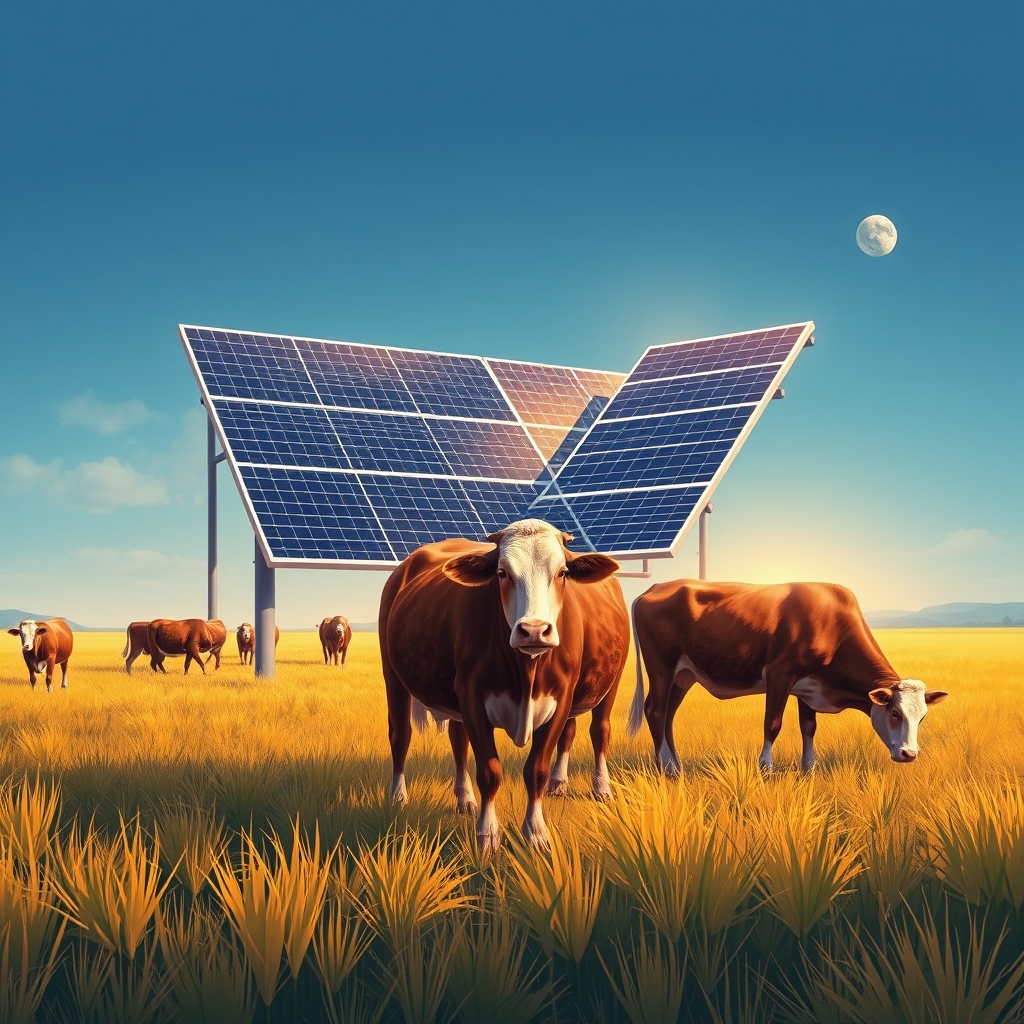
בעוד המרוץ העולמי לאנרגיה מתחדשת מתגבר, ניסוי פורץ דרך בניו ג'רזי בוחן השערה חיונית: שניתן לשלב בין אנרגיה סולארית לבין גידול בעלי חיים באותה חלקה. באמצעות שילוב של פאנלים סולאריים אנכיים עם מרעה, חוקרים מחפשים דרך לפתור את המתח הגובר בין תשתיות אנרגיה נקייה לבין פריון חקלאי.
הניסוי בניו ג'רזי: פרות ואנרגיה ללא פחמן
תחנת הניסוי החקלאית של ניו ג'רזי באוניברסיטת רטגרס (Rutgers University) עורכת כעת מחקר מתוחכם במסגרת תוכנית האגרי-וולטאיקה (Agrivoltaics) שלה. בניגוד חוות סולאריות מסורתיות המשתמשות במערכים מוטים ותופסות שטחים עצומים של אדמה, פרויקט זה משתמש בפאנלים סולאריים אנכיים ודו-צדדיים (bifacial). פאנלים אלו תוכננו לקלוט אור שמש משני צדדיהם, והתקנתם האנכית מאפשרת רצועות רחבות של מרעה בין השורות.
המחקר כולל קבוצה ספציפית של בקר, הכוללת פרות אנגוס (Ideal, Queen, Fizzle, and Blossom) והריפורד (Misty and Flurry), המשמשים כנבדקים חיים בניסוי מדעי זה. החוקרים משתמשים בניטור מצלמות בתדירות גבוהה — צילום כל חמש דקות — כדי לעקוב אחר התנהגות בעלי החיים. המטרה היא לקבוע אם הבקר מעדיף את הצל שמספקים הפאנלים, או אם הפאנלים מפריעים לדפוסי המרעה והמנוחה הטבעיים שלהם.
הנדסה לנופים רב-תכליתיים
הפרויקט אינו עוסק רק במתן אפשרות לבעלי חיים לשוטט בחופשיות; מדובר במבחן הנדסי וביולוגי מבוקר מאוד. האתר הניסויי מחולק לשלושה בלוקים משוכפלים, המאפשרים למדענים להשוות פריסות סולאריות שונות מול מרעים "ביקורת" שבהם אין פאנלים כלל.
המשתנים הנבדקים כוללים:
- מרווח בין הפאנלים: כיצד המרחק בין השורות משפיע על תנועת הבקר ועל הגישה למכונות חקלאיות.
- מרווח מהקרקע: קביעת כמות המרחב הדרושה מתחת לפאנלים כדי למנוע חסימות.
- בריאות הצמחייה: ניטור האופן שבו רצועות הצל המשתנות משפיעות על לחות הקרקע, הטמפרטורה והערך התזונתי של עשב המרעה.
אם המחקר יוכיח שאיכות המרעה נשארת גבוהה תחת צל הפאנלים האנכיים, הוא יספק מודל ל"אגרי-וולטאיקה" — מודל שבו הקרקע אינה מהווה עוד משחק סכום אפס בין מפתחי אנרגיה לחקלאים.
ניווט בתחרות העולמית על קרקע
המתח המרכזי שבו עוסק מחקר זה הוא התחרות הגוברת על קרק
Governments worldwide are racing to add gigawatts of solar capacity, but large-scale farms often have to give up productive soil to accommodate tilted arrays. That trade-off threatens food security and the livelihoods of rural communities. Agrivoltaics—placing solar collectors among crops or pasture—offers a way to keep the land “working” for both energy and agriculture.
The New Jersey field test
The New Jersey Agricultural Experiment Station’s Agrivoltaics Program set up three replicated blocks on a research farm. Each block contains a different configuration of upright panels, while a fourth “control” block has no panels at all. The panels stand on steel frames, face both north-south sides, and leave wide strips of grass between rows for cows to move freely.
A handful of cattle—four Angus cows named Ideal, Queen, Fizzle and Blossom, plus two Herefords called Misty and Flurry—are the living test subjects. High-frequency cameras snap a picture every five minutes, feeding data on grazing patterns, shade use, and resting behavior into a central analytics platform. Researchers are also measuring:
- Panel spacing – how the distance between rows influences cattle movement and the ability of tractors to pass.
- Ground clearance – the minimum height needed under the panels to avoid trampling or obstruction.
- Vegetation health – soil moisture, temperature, and the nutritional value of the forage in shaded versus sun-exposed strips.
By comparing the three panel layouts with the control pasture, the team hopes to isolate the design that maximizes power output while keeping forage quality and animal welfare intact.
The broader stakes
- Energy security – Vertical bifacial panels generate power from both sides.
- Food security – Keeping grazing land in production avoids the need to convert cropland or pasture into solar fields, a critical concern for regions where arable land is already scarce.
Counter-points and challenges
Critics point out that shading can lower photosynthesis, potentially reducing grass growth if panels are too dense. Maintenance crews also face the logistical hurdle of servicing tall, upright arrays in a working pasture. Scaling the model beyond a research farm will require clear answers to these cost-benefit questions.
What India could learn
India plans to install hundreds of gigawatts of solar capacity over the next decade, yet the country’s agricultural sector still employs a large share of the workforce and occupies the majority of its land surface. Policy frameworks would need to address financing, land-lease agreements, and training for farmers to manage hybrid installations.
What to watch next
- Full-season results – The Rutgers team plans to publish a comprehensive dataset after one full grazing cycle, covering power output, forage quality, and animal health metrics.
- Cost analysis – A detailed life-cycle cost comparison between vertical agrivoltaics and conventional solar farms will clarify economic viability.
- Policy pilots – Early adopters in regions with tight land constraints may launch pilot programs, using Rutgers data as a technical template.
- Technology refinements – Improvements in panel materials, tracking systems, and livestock-monitoring sensors could lower costs and increase adoption speed.
If the vertical agrivoltaics model proves that cows can graze comfortably under a power-producing canopy, it would offer a concrete pathway for countries like India to meet renewable-energy targets without sacrificing the land that feeds their people. The experiment in New Jersey could become the blueprint for a new class of farms that generate clean electricity and sustain food production on the same plot of earth.