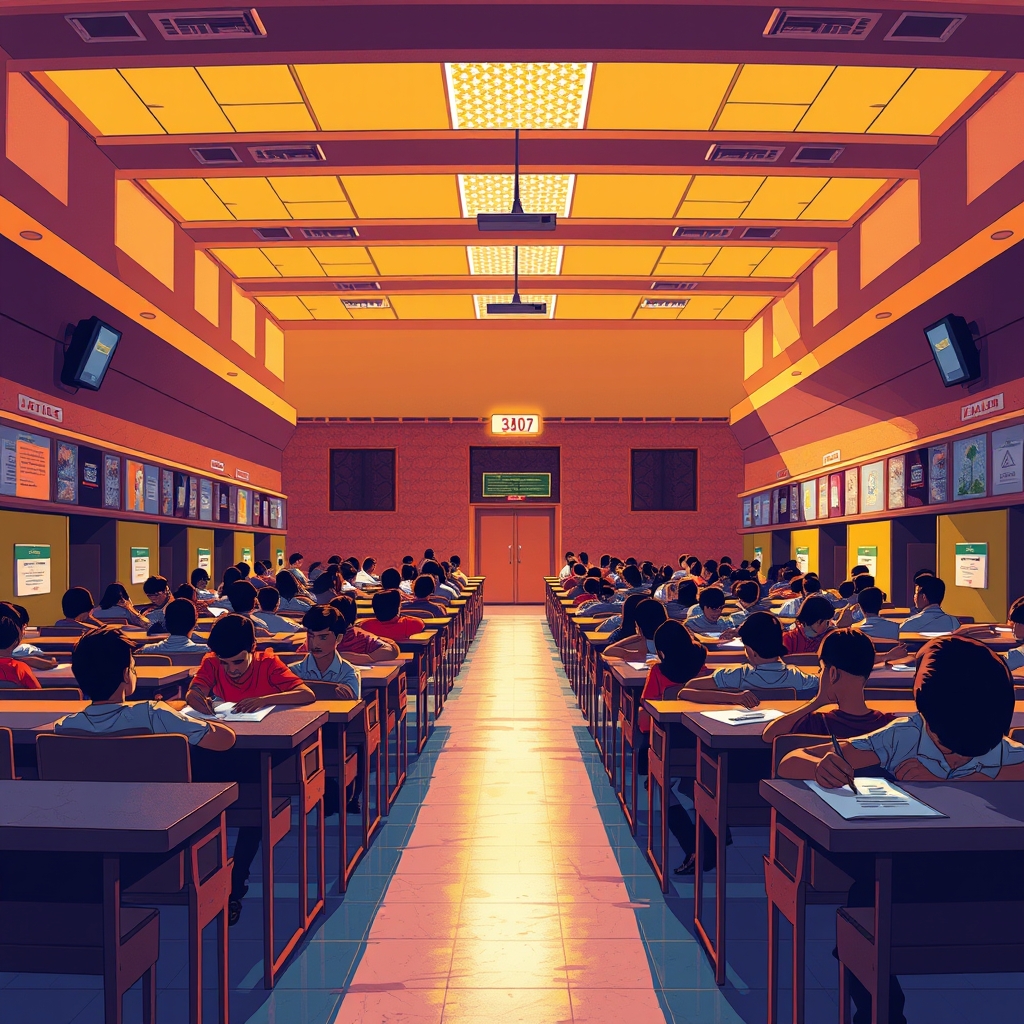
India's examination halls are meant to be sanctuaries of merit. Lately, they feel more like crime scenes. The NEET paper leak and the mass protests that followed tore the bandage off a deep, festering wound. Thousands of students who had spent years grinding through exhaustive syllabi woke up to discover that the race had been fixed before the starting gun ever fired. Senior advocate Harish Salve is right to call this a crisis. He has argued forcefully that India needs a dedicated legal framework to tackle paper leaks, and a sweeping overhaul of the systems that allow them to happen. The message is simple: the current playbook is broken, and patching it with half-measures insults every honest candidate.
インドの試験会場は、本来、実力が正当に評価される聖域であるべきだ。しかし最近では、まるで犯罪現場のように感じられる。NEETの試験問題流出と、それに続く大規模な抗議活動は、深く膿んだ傷口の包帯を剥ぎ取った。膨大なシラバスを何年もかけて必死に勉強してきた何千人もの学生たちは、号砲が鳴る前に、すでにレースが操作されていたことを知って愕然とした。シニア弁護士のハリシュ・サルヴェ氏が、これを「危機」と呼ぶのは正しい。彼は、試験問題の流出に対処するための専用の法的枠組みと、流出を許してしまうシステム自体の抜本的な改革が必要であると力説してきた。メッセージは単純だ。現在のやり方は破綻しており、付け焼刃の対策で済ませることは、誠実な受験生全員に対する侮辱である。
The Price Students Pay
When a paper leaks, the damage is never just administrative. Years of hard work vanish in an instant. Families pour their savings into coaching centers. Teenagers trade sleep, hobbies, and mental health for a shot at a medical or engineering seat. Then comes the leak, and the ground shifts beneath them. The mass protests we see are not tantrums; they are the sound of a generation watching its future get auctioned to the highest bidder.
学生たちが支払う代償
試験問題が流出すると、その被害は単なる事務的な問題にとどまらない。長年の努力が一瞬にして消え去るのだ。家族は貯金をすべて塾に注ぎ込む。若者たちは、医学部や工学部の席を勝ち取るために、睡眠や趣味、そして心の健康を犠牲にする。そこに流出が起き、彼らの足元が崩れ去る。現在起きている大規模な抗議活動は、単なるわがままではない。それは、自分たちの未来が最高入札者に競り落とされるのを目の当たりにしている世代の叫びなのだ。
Fairness here is not an abstract ideal. It is the difference between a secured seat and a closed door. When question papers are compromised, merit becomes a joke. Even the announcement of a retest offers little comfort. Students must recalibrate their preparation, revisit the trauma of competition, and stomach the fact that their original effort was rendered meaningless through no fault of their own. Without a clean exam, the entire social contract of competitive testing collapses.
ここでの公平性は、抽象的な理想ではない。それは、確保された席か、閉ざされた扉かの違いである。問題が漏洩すれば、実力は冗談のようになってしまう。再試験の発表があったとしても、ほとんど慰めにはならない。学生たちは準備をやり直し、競争によるトラウマと向き合い、自分たちの落ち度がないにもかかわらず、当初の努力が無意味になったという事実を飲み込まなければならない。クリーンな試験がなければ、競争試験という社会契約そのものが崩壊してしまう。
Why the Existing Legal Toolkit Fails
Under the present system, paper leaks are usually prosecuted under general criminal laws. Prosecutors reach for provisions covering criminal breach of trust, cheating, or conspiracy. These statutes were never drafted with competitive examinations in mind. A student caught copying from a chit faces the same legal vocabulary as a mastermind who bribes officials and runs a solver gang across five states.
なぜ既存の法的手段では不十分なのか
現在のシステムでは、試験問題の流出は通常、一般的な刑法に基づいて訴追される。検察官は、背任、詐欺、または共謀をカバーする規定を持ち出す。しかし、これらの法律は、競争試験を念頭に置いて作成されたものではない。カンニングペーパーを使っていた学生は、役人に賄賂を贈り、5つの州にまたがって解答提供グループを運営する黒幕と同じ法的語彙で裁かれることになる。
Because there is no specialized framework, the law fails to capture the full scope of the damage. Existing regulations do not adequately punish the ecosystem that surrounds a leak. They rarely reach the paper setter who tips off a coaching center, the guard at a printing press who photographs the mathematics section, or the broker who sells answers by the hour. Evidence collection becomes a nightmare because there is no standardized protocol for sealing servers, confiscating devices, or auditing custody chains.
専門的な枠組みが存在しないため、法律は被害の全容を捉えきれていない。既存の規制は、流出を取り巻くエコシステムを十分に罰することができない。塾に情報を流す問題作成者、印刷所の数学セクションを撮影する警備員、あるいは時間単位で解答を売るブローカーにまで手が及ぶことは稀である。サーバーの封印、デバイスの押収、あるいは保管チェーンの監査に関する標準化されたプロトコルがないため、証拠収集は悪夢となる。
The courts, already overloaded, struggle to prioritize these cases. By the time a verdict limps through, the academic year is lost and the accused have often moved on to the next examination cycle. Salve’s assessment that current regulations are not strict enough is, if anything, an understatement. They are structurally mismatched to the industrial scale at which these leaks now operate.
すでに過負荷状態にある裁判所は、これらの事件の優先順位をつけることに苦慮している。判決が出る頃には、学年度は失われ、被告はすでに次の試験サイクルへと移っていることも少なくない。現在の規制は厳格さが足りないというサルヴェ氏の評価は、控えめな表現ですらある。現在の流出が産業規模で行われている現状に対し、既存の規制は構造的に適合していないのである。
What a Dedicated Law Should Look Like
Separate legislation could fix much of this by treating the leak of a competitive exam paper as a distinct offense with its own logic and penalties.
専門的な法律はどうあるべきか
独立した立法によって、競争試験の問題流出を、独自の論理と罰則を持つ独自の犯罪として扱うことで、多くの問題が解決できる可能性がある。
Define the offense precisely. A paper leak law should criminalize not merely the act of leaking, but the intent to access, transmit, or profit from confidential exam material before the scheduled time.
Punish the entire chain. Harsh penalties should target the kingpins who finance leaks. Separate, clear penalties should apply to institutional enablers—government officials, board employees, or tech vendors with custody of the paper. Negligent failure to secure a database or a physical paper trunk should carry consequences too.
Fast-track timelines. The law should mandate strict investigation deadlines and designate specific courts or benches to ensure trials conclude within months, not years. Justice delayed in these cases means admission lists that are poisoned forever.
Mandate forensic audits. Any leak above a certain scale should trigger an automatic, independent forensic audit of the entire supply chain, from question setting to last-mile delivery. The findings should be made public.
Shield whistleblowers. Students and staff who report irregularities need guaranteed anonymity and protection from retaliation. Fear of reprisal keeps most leaks hidden until it is too late.
犯罪の定義を明確にする。 試験問題流出法は、単に流出させる行為だけでなく、予定時刻前に機密性の高い試験資料にアクセスしたり、送信したり、あるいはそれらから利益を得ようとしたりする意図をも犯罪とすべきである。
全ての連鎖を罰する。 流出に資金を提供する黒幕を標的とした厳しい罰則を設けるべきである。また、政府関係者、試験委員会の職員、あるいは問題の管理権を持つ技術ベンダーといった、組織的な加担者に対しても、個別の明確な罰則を適用すべきである。データベースや物理的な問題保管箱の管理を怠った過失についても、責任を問われるべきである。
迅速なタイムラインを義務付ける。 法律によって厳格な捜査期限を定め、裁判が数年ではなく数ヶ月以内に終了するように、特定の裁判所や法廷を指定すべきである。これらのケースにおける「裁判の遅延」は、入学許可リストが永遠に汚染されることを意味する。
フォレンジック監査の義務付け。 一定の規模を超える流出が発生した場合は、問題作成から最終的な配布に至るまでのサプライチェーン全体に対して、自動的かつ独立したフォレンジック監査を実施すべきである。その結果は公表されるべきである。
内部告発者を保護する。 不正を報告する学生や職員には、匿名性の保証と報復からの保護が必要である。報復への恐れが、ほとんどの流出を手遅れになるまで隠蔽させているのである。
Reform Cannot End at the Statute Book
改革は法律の制定だけで終わってはならない
Laws are necessary, but they are not sufficient. Salve has also called for a complete overhaul of the examination system, and that means rethinking every physical and digital touchpoint. Question papers can be encrypted and released only hours before the exam, with decryption keys split between independent custodians so no single person holds un