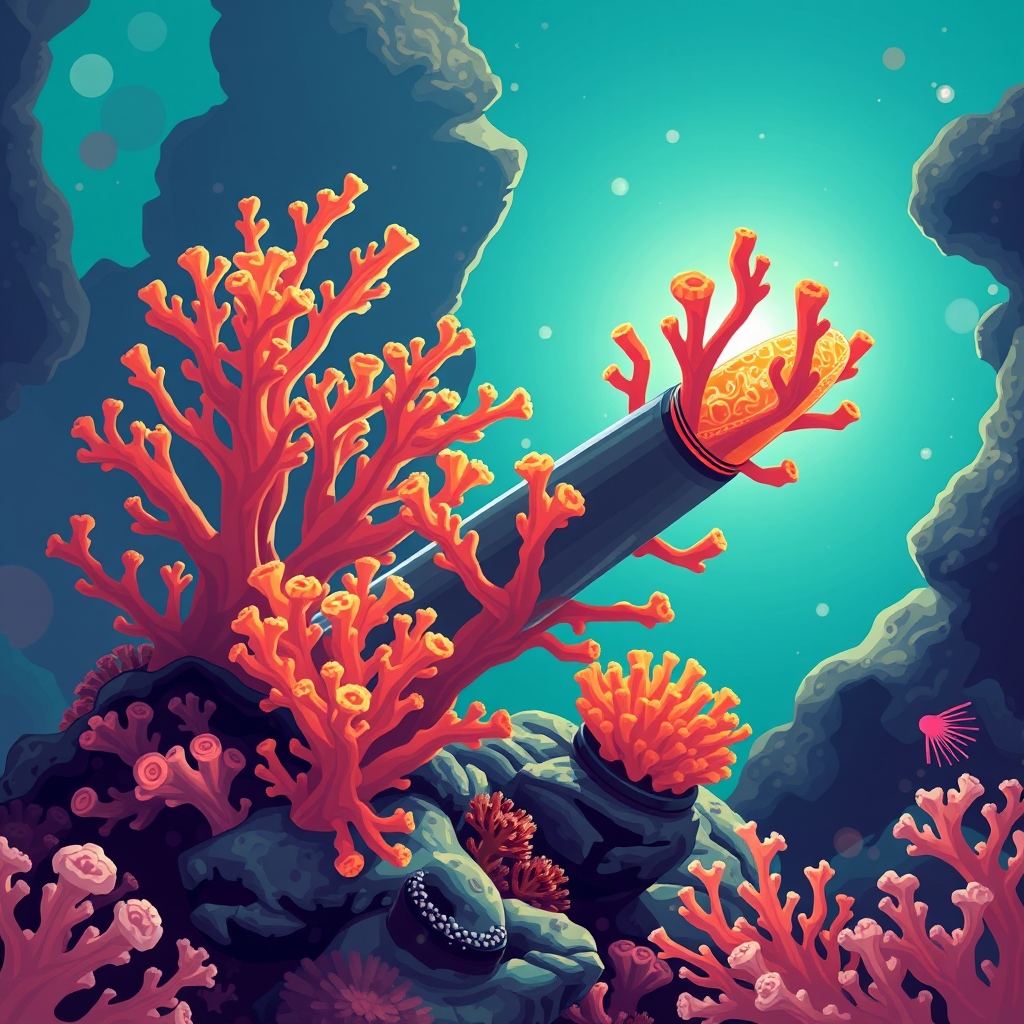
Sixteen years after the Deepwater Horizon oil spill, NOAA scientists are using new technology to replant lab-grown corals in the Gulf of Mexico. The mission moves past damage assessment and into active ecosystem reconstruction.
The Legacy of the Deepwater Horizon Disaster
The April 2010 explosion released massive oil that devastated the Gulf. The spill injured mesophotic and deep benthic habitats—zones that receive little or no sunlight and sit hundreds of feet below the surface. These habitats form the structural backbone for many fish, offering breeding and feeding grounds. Because they lay out of reach of traditional diving gear, they went unmonitored for more than a decade, leaving seafloor damage largely ignored.
Technological Breakthroughs in Deep-Sea Restoration
On the NOAA Ship Nancy Foster, researchers went beyond observation. They cultured Swiftia exserta, Muricea pendula and Thesea nivea in labs since 2021, mastering their reproduction and spawning. That knowledge allowed mass propagation of new colonies.
The biggest hurdle was delivering fragile specimens to the seafloor. Biologists abandoned bulky “coral elevators” for a prototype called the “coral torpedo.” The torpedo slides down a tether and drops a coral fragment into a diver’s hand. Technical divers, equipped with closed-circuit rebreathers, retrieved the pieces and outplanted 26 corals onto concrete domes at about 66 m (217 ft). This was the first deep-sea coral-planting mission to use rebreathers.
Mapping and Monitoring the Benthic Frontier
The 2026 expedition also surveyed the seafloor. The team mapped more than 14 square nautical miles and reached 72.5 m depth to collect biological and sediment samples. The work supports NOAA’s Deepwater Horizon Mesophotic and Deep Benthic Communities Restoration project, a partnership with the U.S. Department of the Interior aimed at creating a scalable habitat-reconstruction model for deep-sea environments worldwide.
What It Means for India
India’s “Blue Economy” and deep-sea mining plans intersect with the Gulf’s lessons:
- Blue Economy resilience – As India pursues offshore energy and mineral extraction, adopting similar restoration tools will help mitigate environmental risks.
- Technological sovereignty – The coral torpedo and rebreather system show why India should develop its own deep-sea robotics and hyperbaric expertise.
- Environmental diplomacy – Demonstrating a working restoration model lets India push for stricter global standards that require active habitat repair, not just impact assessments.
NOAA’s Nancy Foster dropped a prototype coral torpedo in 2026, letting rebreather divers plant 26 lab-grown colonies on concrete domes at 66 m depth. The operation turns a decade-long damage-assessment effort into a concrete attempt to rebuild habitats scarred by the 2010 spill—and offers India a ready-made model as it expands offshore activities.
From catastrophe to a restoration agenda
The 2010 explosion smothered surface waters and, crucially, the mesophotic and deep-benthic zones hundreds of feet below. Those zones host three-dimensional reef structures built by soft corals, which serve as breeding and feeding grounds for fish and invertebrates. Because they lie beyond conventional diving limits, they remained largely unseen for more than ten years, creating a blind spot in Gulf recovery.
The hardware that turned a “look-only” mission into a “plant-and-grow” effort
Researchers have cultured Swiftia exserta, Muricea pendula and Thesea nivea in tanks since 2021. Mastering their reproductive cycles produced dozens of healthy fragments ready for outplanting. The challenge was delivering those fragile pieces without crushing them.
Enter the coral torpedo: a streamlined, weighted capsule that slides down a tether and releases a coral fragment into a diver’s hand. It replaces bulky “coral elevators” that required multiple lifts and exposed specimens to turbulence. Once the torpedo reached the bottom, a pair of technical divers, breathing from closed-circuit rebreathers, retrieved the coral and secured it onto pre-positioned concrete domes. Rebreathers recycle exhaled gas, scrubbing carbon dioxide and adding oxygen, extending bottom time far beyond typical open-circuit limits—essential for precise placement at depth.
Tijdens de expeditie heeft het team 26 kolonies geplant. Deze inspanning is onderdeel van het Deepwater Horizon Mesophotic and Deep Benthic Communities Restoration-project van NOAA, een gezamenlijk initiatief met het Amerikaanse Department of the Interior om een schaalbare restauratie-template te ontwikkelen voor diepzee-ecosystemen wereldwijd.
Waarom het experiment in de Golf belangrijk is voor India
De "Blue Economy"-routekaart van India voorziet in offshore energie en diepzeemijnbouwactiviteiten die dezelfde lichtarme habitats onder hoge druk zullen verstoren die de missie in de Golf probeert te herstellen. De ervaring in de Golf wijst op drie strategische lessen:
- Operationeel handboek voor habitatherstel – De combinatie van de torpedo en de rebreather laat zien dat kwetsbare zachte koralen op grote diepte zonder schade kunnen worden behandeld, en dat betonnen substraten toekomstige rifstructuren kunnen verankeren. Indiase instituten zouden deze workflow kunnen overnemen voor het herstellen van beschadigde onderzeese bergen of gemeenschappen langs troggen na mijnbouw- of boorincidenten.
- Ontwikkeling van eigen technologie – De hardware was een prototype. Het binnenlands repliceren of verbeteren van het ontwerp zou de afhankelijkheid van buitenlandse leveranciers verminderen en een lokaal ecosysteem van diepzeerobotica, hyperbare geneeskunde en mariene biotechnologie stimuleren.
- Beleidsmatige invloed in internationale fora – Door een werkend restauratiemodel te tonen, kan India aandringen op strengere milieubescherming in de opkomende wereldwijde standaarden voor diepzeemijnbouw, met het argument dat mitigatie actieve habitatreconstructie moet omvatten en niet slechts een impactanalyse.
Tegenargumenten en praktische hindernissen
De groeisnelheid van zachte koralen is traag, en de waterchemie van de Golf — die nog steeds herstelt van olieresten — verschilt van die van de Indische Oceaan.
Waar de komende twee jaar op te letten
- Vervolgmissies van NOAA
- Indiase beleidsontwerpen
- Internationale standaardisatie
- Commerciële interesse
Conclusie
De eerste diepzee-koraalplantmissie in de Golf van Mexico bewijst dat kwetsbare, lichtarme riffen op grote diepte kunnen worden getransplanteerd met behulp van speciaal ontwikkelde leveringsapparaten en rebreather-duikers. Voor India is de les duidelijk: naarmate het land zich beweegt richting offshore energie en diepzeemijnbouw, moet het ambitie combineren met een technologisch gereed en beleidsmatig ondersteund restauratie-instrumentarium, om te voorkomen dat het dezelfde ecologische blinde vlek krijgt als na de Deepwater Horizon-ramp.