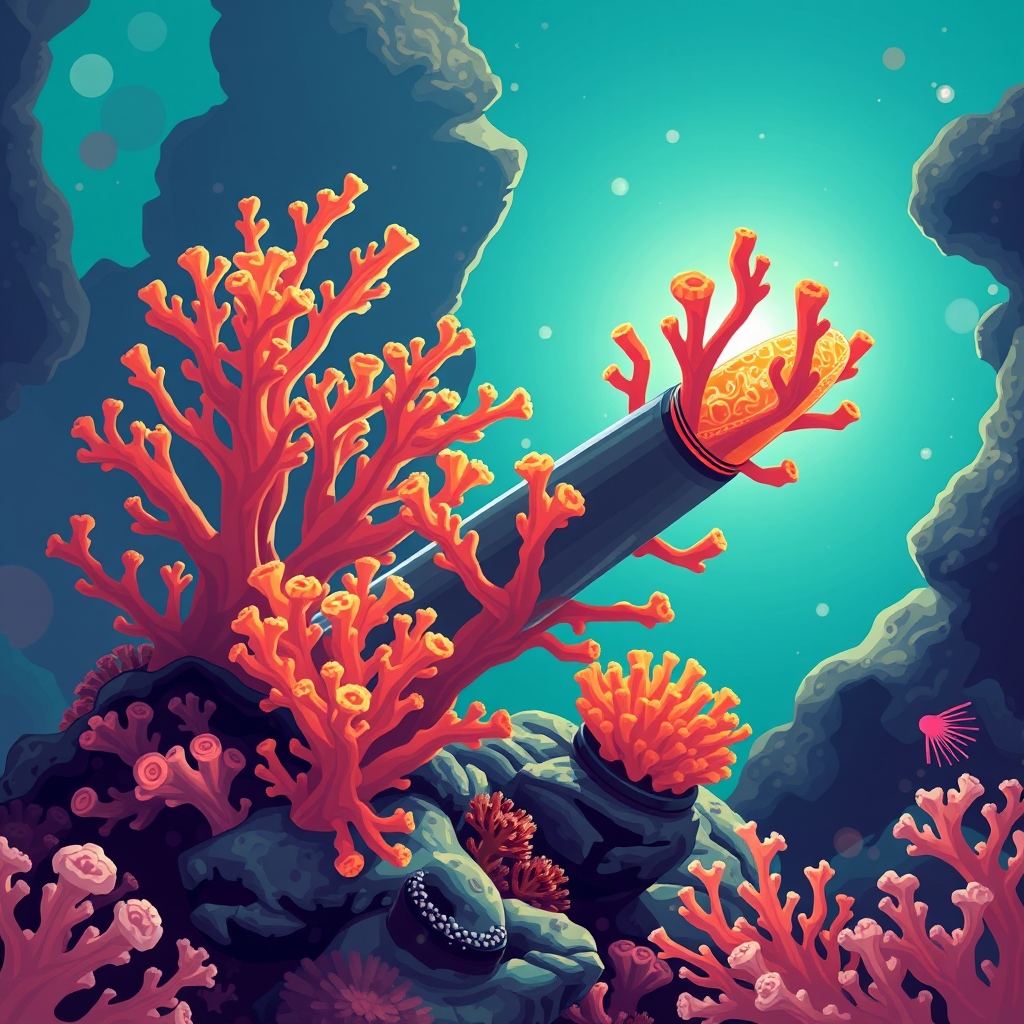
Sixteen years after the Deepwater Horizon oil spill, NOAA scientists are using new technology to replant lab-grown corals in the Gulf of Mexico. The mission moves past damage assessment and into active ecosystem reconstruction.
The Legacy of the Deepwater Horizon Disaster
The April 2010 explosion released massive oil that devastated the Gulf. The spill injured mesophotic and deep benthic habitats—zones that receive little or no sunlight and sit hundreds of feet below the surface. These habitats form the structural backbone for many fish, offering breeding and feeding grounds. Because they lay out of reach of traditional diving gear, they went unmonitored for more than a decade, leaving seafloor damage largely ignored.
Technological Breakthroughs in Deep-Sea Restoration
On the NOAA Ship Nancy Foster, researchers went beyond observation. They cultured Swiftia exserta, Muricea pendula and Thesea nivea in labs since 2021, mastering their reproduction and spawning. That knowledge allowed mass propagation of new colonies.
The biggest hurdle was delivering fragile specimens to the seafloor. Biologists abandoned bulky “coral elevators” for a prototype called the “coral torpedo.” The torpedo slides down a tether and drops a coral fragment into a diver’s hand. Technical divers, equipped with closed-circuit rebreathers, retrieved the pieces and outplanted 26 corals onto concrete domes at about 66 m (217 ft). This was the first deep-sea coral-planting mission to use rebreathers.
Mapping and Monitoring the Benthic Frontier
The 2026 expedition also surveyed the seafloor. The team mapped more than 14 square nautical miles and reached 72.5 m depth to collect biological and sediment samples. The work supports NOAA’s Deepwater Horizon Mesophotic and Deep Benthic Communities Restoration project, a partnership with the U.S. Department of the Interior aimed at creating a scalable habitat-reconstruction model for deep-sea environments worldwide.
What It Means for India
India’s “Blue Economy” and deep-sea mining plans intersect with the Gulf’s lessons:
- Blue Economy resilience – As India pursues offshore energy and mineral extraction, adopting similar restoration tools will help mitigate environmental risks.
- Technological sovereignty – The coral torpedo and rebreather system show why India should develop its own deep-sea robotics and hyperbaric expertise.
- Environmental diplomacy – Demonstrating a working restoration model lets India push for stricter global standards that require active habitat repair, not just impact assessments.
NOAA’s Nancy Foster dropped a prototype coral torpedo in 2026, letting rebreather divers plant 26 lab-grown colonies on concrete domes at 66 m depth. The operation turns a decade-long damage-assessment effort into a concrete attempt to rebuild habitats scarred by the 2010 spill—and offers India a ready-made model as it expands offshore activities.
From catastrophe to a restoration agenda
The 2010 explosion smothered surface waters and, crucially, the mesophotic and deep-benthic zones hundreds of feet below. Those zones host three-dimensional reef structures built by soft corals, which serve as breeding and feeding grounds for fish and invertebrates. Because they lie beyond conventional diving limits, they remained largely unseen for more than ten years, creating a blind spot in Gulf recovery.
The hardware that turned a “look-only” mission into a “plant-and-grow” effort
Researchers have cultured Swiftia exserta, Muricea pendula and Thesea nivea in tanks since 2021. Mastering their reproductive cycles produced dozens of healthy fragments ready for outplanting. The challenge was delivering those fragile pieces without crushing them.
Enter the coral torpedo: a streamlined, weighted capsule that slides down a tether and releases a coral fragment into a diver’s hand. It replaces bulky “coral elevators” that required multiple lifts and exposed specimens to turbulence. Once the torpedo reached the bottom, a pair of technical divers, breathing from closed-circuit rebreathers, retrieved the coral and secured it onto pre-positioned concrete domes. Rebreathers recycle exhaled gas, scrubbing carbon dioxide and adding oxygen, extending bottom time far beyond typical open-circuit limits—essential for precise placement at depth.
Podczas ekspedycji zespół posadził 26 kolonii. Działania te są częścią projektu NOAA Deepwater Horizon Mesophotic and Deep Benthic Communities Restoration, wspólnego przedsięwzięcia z Departamentem Wnętrza USA, mającego na celu opracowanie skalowalnego modelu restauracji ekosystemów głębinowych na całym świecie.
Dlaczego eksperyment w Zatoce ma znaczenie dla Indii
Indyjska mapa drogowa „Błękitnej Gospodarki” (Blue Economy) przewiduje rozwój energii offshore oraz działalności wydobywczej na dnie oceanów, co będzie zakłócać te same niedoświetlone, wysokociśnieniowe siedliska, które misja w Zatoce stara się przywrócić. Doświadczenie z Zatoki wskazuje na trzy strategiczne wnioski:
- Operacyjny podręcznik naprawy siedlisk – połączenie torpedy i rebreathera pokazuje, że kruchym miękkim koralowcom można operować na dużych głębokościach bez uszkodzeń, a betonowe podłoża mogą służyć jako kotwice dla przyszłych struktur rafowych. Indyjskie instytuty mogłyby przyjąć ten model pracy w celu przywracania zniszczonych podwodnych gór lub społeczności przy rowach oceanicznych po incydentach związanych z górnictwem lub wierceniami.
- Rozwój rodzimej technologii – sprzęt był prototypem. Replikacja lub ulepszenie projektu na miejscu zmniejszyłaby zależność od zagranicznych dostawców i wsparła lokalny ekosystem robotyki głębinowej, medycyny hiperbarycznej oraz biotechnologii morskiej.
- Wpływ na politykę w forach międzynarodowych – zaprezentowanie działającego modelu restauracji pozwoli Indii zabiegać o surowsze zabezpieczenia środowiskowe w powstających globalnych standardach górnictwa głębinowego, argumentując, że łagodzenie skutków musi obejmować aktywną rekonstrukcję siedlisk, a nie tylko ocenę wpływu.
Kontrargumenty i praktyczne przeszkody
Tempo wzrostu miękkich koralowców jest powolne, a skład chemiczny wody w Zatoce – wciąż regenerującej się po pozostałościach ropy naftowej – różni się od tego w Oceanie Indyjskim.
Na co zwrócić uwagę w ciągu najbliższych dwóch lat
- Dalsze misje NOAA
- Indyjskie projekty polityk
- Ustalanie standardów międzynarodowych
- Zainteresowanie komercyjne
Podsumowanie
Pierwsza misja sadzenia koralowców głębinowych w Zatoce Meksykańskiej dowodzi, że kruche, niedoświetlone rafy mogą być przeszczepiane na dużych głębokościach przy użyciu specjalistycznych urządzeń transportowych i nurków wyposażonych w rebreathery. Dla Indii lekcja jest jasna: w miarę jak kraj zmierza w stronę energii offshore i wydobycia minerałów z dna oceanów, musi połączyć ambicję z gotowym technologicznie i wspieranym politycznie zestawem narzędzi do restauracji, w przeciwnym razie ryzykuje powtórzenie błędu ekologicznego, który nastąpił po katastrofie Deepwater Horizon.