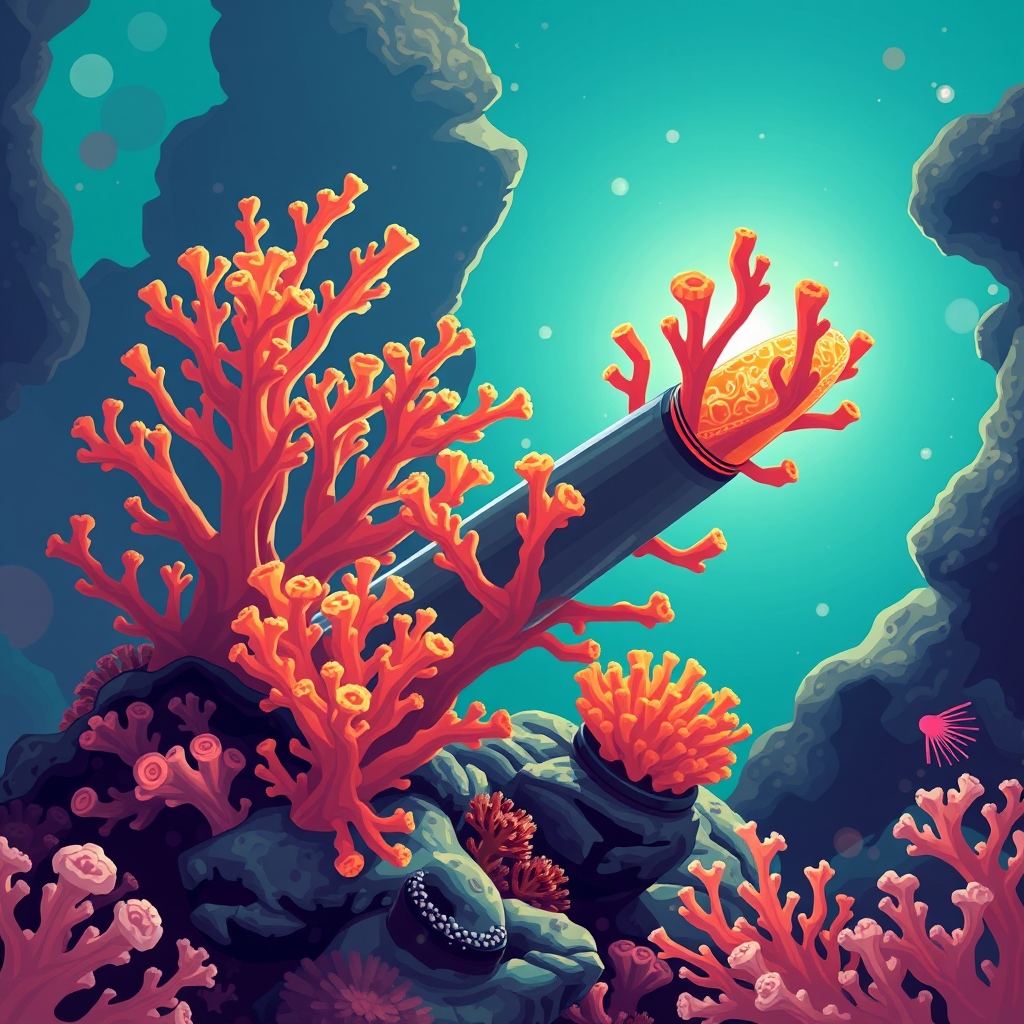
Sixteen years after the Deepwater Horizon oil spill, NOAA scientists are using new technology to replant lab-grown corals in the Gulf of Mexico. The mission moves past damage assessment and into active ecosystem reconstruction.
The Legacy of the Deepwater Horizon Disaster
The April 2010 explosion released massive oil that devastated the Gulf. The spill injured mesophotic and deep benthic habitats—zones that receive little or no sunlight and sit hundreds of feet below the surface. These habitats form the structural backbone for many fish, offering breeding and feeding grounds. Because they lay out of reach of traditional diving gear, they went unmonitored for more than a decade, leaving seafloor damage largely ignored.
Technological Breakthroughs in Deep-Sea Restoration
On the NOAA Ship Nancy Foster, researchers went beyond observation. They cultured Swiftia exserta, Muricea pendula and Thesea nivea in labs since 2021, mastering their reproduction and spawning. That knowledge allowed mass propagation of new colonies.
The biggest hurdle was delivering fragile specimens to the seafloor. Biologists abandoned bulky “coral elevators” for a prototype called the “coral torpedo.” The torpedo slides down a tether and drops a coral fragment into a diver’s hand. Technical divers, equipped with closed-circuit rebreathers, retrieved the pieces and outplanted 26 corals onto concrete domes at about 66 m (217 ft). This was the first deep-sea coral-planting mission to use rebreathers.
Mapping and Monitoring the Benthic Frontier
The 2026 expedition also surveyed the seafloor. The team mapped more than 14 square nautical miles and reached 72.5 m depth to collect biological and sediment samples. The work supports NOAA’s Deepwater Horizon Mesophotic and Deep Benthic Communities Restoration project, a partnership with the U.S. Department of the Interior aimed at creating a scalable habitat-reconstruction model for deep-sea environments worldwide.
What It Means for India
India’s “Blue Economy” and deep-sea mining plans intersect with the Gulf’s lessons:
- Blue Economy resilience – As India pursues offshore energy and mineral extraction, adopting similar restoration tools will help mitigate environmental risks.
- Technological sovereignty – The coral torpedo and rebreather system show why India should develop its own deep-sea robotics and hyperbaric expertise.
- Environmental diplomacy – Demonstrating a working restoration model lets India push for stricter global standards that require active habitat repair, not just impact assessments.
NOAA’s Nancy Foster dropped a prototype coral torpedo in 2026, letting rebreather divers plant 26 lab-grown colonies on concrete domes at 66 m depth. The operation turns a decade-long damage-assessment effort into a concrete attempt to rebuild habitats scarred by the 2010 spill—and offers India a ready-made model as it expands offshore activities.
From catastrophe to a restoration agenda
The 2010 explosion smothered surface waters and, crucially, the mesophotic and deep-benthic zones hundreds of feet below. Those zones host three-dimensional reef structures built by soft corals, which serve as breeding and feeding grounds for fish and invertebrates. Because they lie beyond conventional diving limits, they remained largely unseen for more than ten years, creating a blind spot in Gulf recovery.
The hardware that turned a “look-only” mission into a “plant-and-grow” effort
Researchers have cultured Swiftia exserta, Muricea pendula and Thesea nivea in tanks since 2021. Mastering their reproductive cycles produced dozens of healthy fragments ready for outplanting. The challenge was delivering those fragile pieces without crushing them.
Enter the coral torpedo: a streamlined, weighted capsule that slides down a tether and releases a coral fragment into a diver’s hand. It replaces bulky “coral elevators” that required multiple lifts and exposed specimens to turbulence. Once the torpedo reached the bottom, a pair of technical divers, breathing from closed-circuit rebreathers, retrieved the coral and secured it onto pre-positioned concrete domes. Rebreathers recycle exhaled gas, scrubbing carbon dioxide and adding oxygen, extending bottom time far beyond typical open-circuit limits—essential for precise placement at depth.
この調査において、チームは26のコロニーを植え付けた。この取り組みは、世界中の深海生態系に向けた拡張可能な修復テンプレートを開発するため、米国内務省との共同事業として行われている、NOAAの「Deepwater Horizon 中光層および深海底生物群集修復プロジェクト」の一環である。
メキシコ湾での実験がインドにとって重要な理由
インドの「ブルーエコノミー」ロードマップは、沖合エネルギーや深海鉱物資源活動を想定しているが、これらはメキシコ湾のミッションが再生を目指しているものと同じ、光の届かない高圧の生息地を乱す可能性がある。メキシコ湾での経験は、以下の3つの戦略的な教訓を示唆している。
- 生息地修復のための運用プレイブック – 魚雷型リブリーザーの組み合わせにより、脆弱なソフトコーラルを深海で損傷させることなく取り扱えること、そしてコンクリート基質が将来の礁構造を固定できることが示された。インドの研究機関は、採掘や掘削事故の後に損傷した海山や海溝沿いの生物群集を修復するために、このワークフローを採用できる可能性がある。
- 国産技術の開発 – 使用されたハードウェアは試作機であった。この設計を国内で複製または改良することで、海外サプライヤーへの依存を減らし、深海ロボティクス、高圧医学、海洋バイオテクノロジーのローカルなエコシステムを育成することができる。
- 国際的なフォーラムにおける政策的レバレッジ – 実用的な修復モデルを提示することで、インドは深海採掘に関する新たな国際標準において、より厳格な環境保護策を求めることができる。その際、緩和策には単なる影響評価だけでなく、積極的な生息地の再構築を含めるべきだと主張することが可能になる。
反論と実務的な障壁
ソフトコーラルの成長速度は遅く、またメキシコ湾の水質化学(油分の残留から依然として回復過程にある)は、インド洋のそれとは異なる。
今後2年間に注目すべき点
- NOAAによる追跡展開
- インドの政策草案
- 国際的な標準策定
- 商業的関心
まとめ
メキシコ湾における初の深海サンゴ植え付けミッションは、専用の搬送装置とリブリーザーダイバーを用いることで、光の届かない脆弱な礁を深海へ移植できることを証明した。インドにとっての教訓は明白である。同国が沖合エネルギーや深海鉱物資源の抽出へと進むにあたっては、その野心に対し、技術的に準備され、政策に裏打ちされた修復ツールボックスを組み合わせなければならない。さもなければ、ディープウォーター・ホライゾン事故の後に生じた生態学的な盲点を繰り返すリスクを負うことになる。