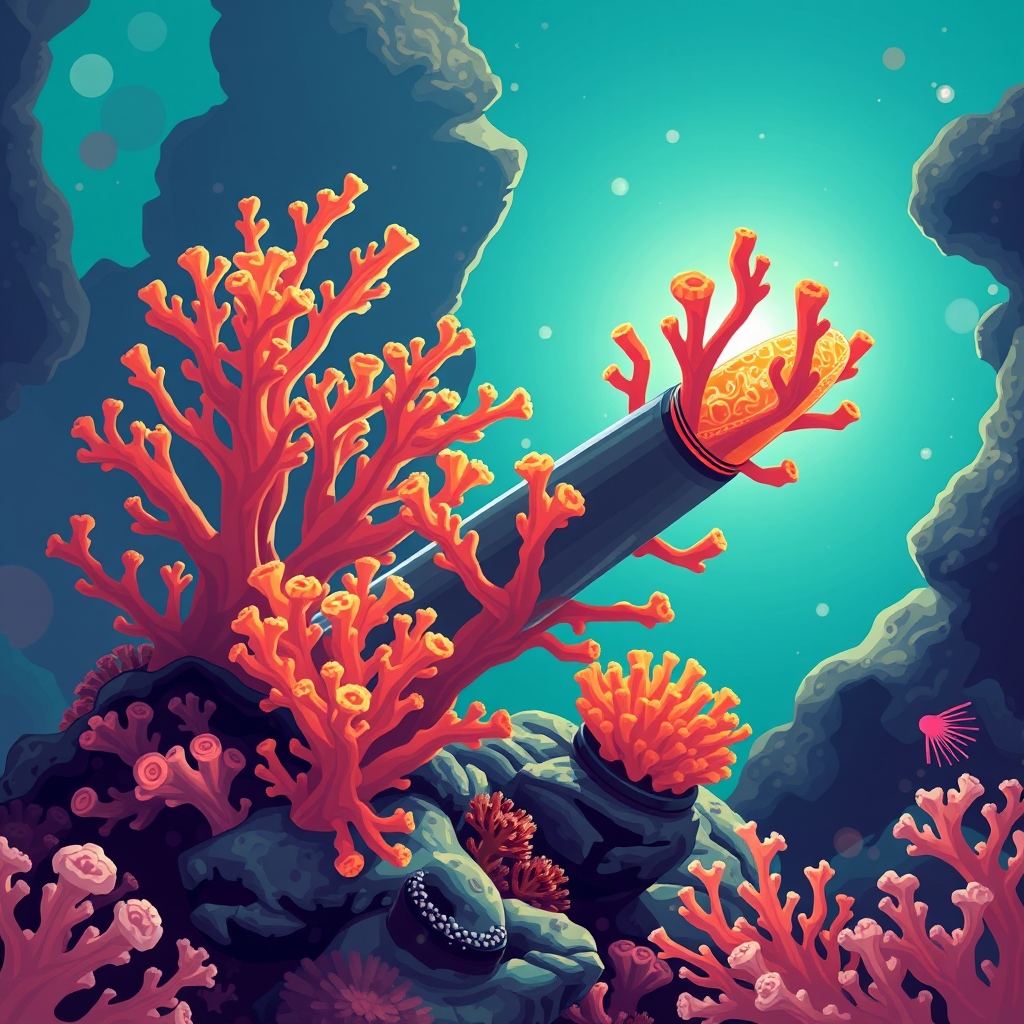
Sixteen years after the Deepwater Horizon oil spill, NOAA scientists are using new technology to replant lab-grown corals in the Gulf of Mexico. The mission moves past damage assessment and into active ecosystem reconstruction.
The Legacy of the Deepwater Horizon Disaster
The April 2010 explosion released massive oil that devastated the Gulf. The spill injured mesophotic and deep benthic habitats—zones that receive little or no sunlight and sit hundreds of feet below the surface. These habitats form the structural backbone for many fish, offering breeding and feeding grounds. Because they lay out of reach of traditional diving gear, they went unmonitored for more than a decade, leaving seafloor damage largely ignored.
Technological Breakthroughs in Deep-Sea Restoration
On the NOAA Ship Nancy Foster, researchers went beyond observation. They cultured Swiftia exserta, Muricea pendula and Thesea nivea in labs since 2021, mastering their reproduction and spawning. That knowledge allowed mass propagation of new colonies.
The biggest hurdle was delivering fragile specimens to the seafloor. Biologists abandoned bulky “coral elevators” for a prototype called the “coral torpedo.” The torpedo slides down a tether and drops a coral fragment into a diver’s hand. Technical divers, equipped with closed-circuit rebreathers, retrieved the pieces and outplanted 26 corals onto concrete domes at about 66 m (217 ft). This was the first deep-sea coral-planting mission to use rebreathers.
Mapping and Monitoring the Benthic Frontier
The 2026 expedition also surveyed the seafloor. The team mapped more than 14 square nautical miles and reached 72.5 m depth to collect biological and sediment samples. The work supports NOAA’s Deepwater Horizon Mesophotic and Deep Benthic Communities Restoration project, a partnership with the U.S. Department of the Interior aimed at creating a scalable habitat-reconstruction model for deep-sea environments worldwide.
What It Means for India
India’s “Blue Economy” and deep-sea mining plans intersect with the Gulf’s lessons:
- Blue Economy resilience – As India pursues offshore energy and mineral extraction, adopting similar restoration tools will help mitigate environmental risks.
- Technological sovereignty – The coral torpedo and rebreather system show why India should develop its own deep-sea robotics and hyperbaric expertise.
- Environmental diplomacy – Demonstrating a working restoration model lets India push for stricter global standards that require active habitat repair, not just impact assessments.
NOAA’s Nancy Foster dropped a prototype coral torpedo in 2026, letting rebreather divers plant 26 lab-grown colonies on concrete domes at 66 m depth. The operation turns a decade-long damage-assessment effort into a concrete attempt to rebuild habitats scarred by the 2010 spill—and offers India a ready-made model as it expands offshore activities.
From catastrophe to a restoration agenda
The 2010 explosion smothered surface waters and, crucially, the mesophotic and deep-benthic zones hundreds of feet below. Those zones host three-dimensional reef structures built by soft corals, which serve as breeding and feeding grounds for fish and invertebrates. Because they lie beyond conventional diving limits, they remained largely unseen for more than ten years, creating a blind spot in Gulf recovery.
The hardware that turned a “look-only” mission into a “plant-and-grow” effort
Researchers have cultured Swiftia exserta, Muricea pendula and Thesea nivea in tanks since 2021. Mastering their reproductive cycles produced dozens of healthy fragments ready for outplanting. The challenge was delivering those fragile pieces without crushing them.
Enter the coral torpedo: a streamlined, weighted capsule that slides down a tether and releases a coral fragment into a diver’s hand. It replaces bulky “coral elevators” that required multiple lifts and exposed specimens to turbulence. Once the torpedo reached the bottom, a pair of technical divers, breathing from closed-circuit rebreathers, retrieved the coral and secured it onto pre-positioned concrete domes. Rebreathers recycle exhaled gas, scrubbing carbon dioxide and adding oxygen, extending bottom time far beyond typical open-circuit limits—essential for precise placement at depth.
Durante la spedizione, il team ha piantato 26 colonie. L'iniziativa fa parte del progetto "Deepwater Horizon Mesophotic and Deep Benthic Communities Restoration" della NOAA, un'impresa congiunta con il Dipartimento degli Interni degli Stati Uniti per sviluppare un modello di ripristino scalabile per gli ecosistemi di acque profonde in tutto il mondo.
Perché l'esperimento nel Golfo è importante per l'India
La tabella di marcia per la "Blue Economy" dell'India prevede attività di energia offshore e di estrazione mineraria in acque profonde che disturberanno gli stessi habitat privi di luce e ad alta pressione che la missione nel Golfo mira a ripristinare. L'esperienza nel Golfo suggerisce tre punti chiave strategici:
- Manuale operativo per il ripristino degli habitat – La combinazione siluro-rebreather dimostra che i fragili coralli molli possono essere manipolati in profondità senza subire danni e che i substrati in cemento possono ancorare le future strutture coralline. Gli istituti indiani potrebbero adottare questo flusso di lavoro per ripristinare i monti sottomarini danneggiati o le comunità lungo le fosse dopo incidenti legati all'estrazione mineraria o alla perforazione.
- Sviluppo di tecnologie nazionali – L'hardware era un prototipo. Replicare o migliorare il design a livello nazionale ridurrebbe la dipendenza dai fornitori stranieri e favorirebbe un ecosistema locale di robotica per acque profonde, medicina iperbarica e biotecnologia marina.
- Influenza politica nei forum internazionali – Mostrare un modello di ripristino funzionante consente all'India di spingere per salvaguardie ambientali più rigorose nei nuovi standard globali per l'estrazione mineraria in acque profonde, sostenendo che la mitigazione debba includere la ricostruzione attiva dell'habitat e non solo la valutazione dell'impatto.
Controargomentazioni e ostacoli pratici
I tassi di crescita dei coralli molli sono lenti e la chimica dell'acqua del Golfo — ancora in fase di recupero dai residui di petrolio — differisce da quella dell'Oceano Indiano.
Cosa osservare nei prossimi due anni
- Prossimi dispiegamenti della NOAA
- Bozze di politiche indiane
- Definizione di standard internazionali
- Interesse commerciale
In sintesi
La prima missione di impianto di coralli in acque profonde nel Golfo del Messico dimostra che le barriere coralline fragili e prive di luce possono essere trapiantate in profondità utilizzando dispositivi di distribuzione progettati ad hoc e subacquei con rebreather. Per l'India, la lezione è chiara: mentre la nazione avanza verso l'energia offshore e l'estrazione mineraria in acque profonde, deve affiancare l'ambizione a un set di strumenti per il ripristino tecnologicamente avanzato e supportato da politiche mirate, pena il rischio di ripetere il punto cieco ecologico che seguì il disastro della Deepwater Horizon.