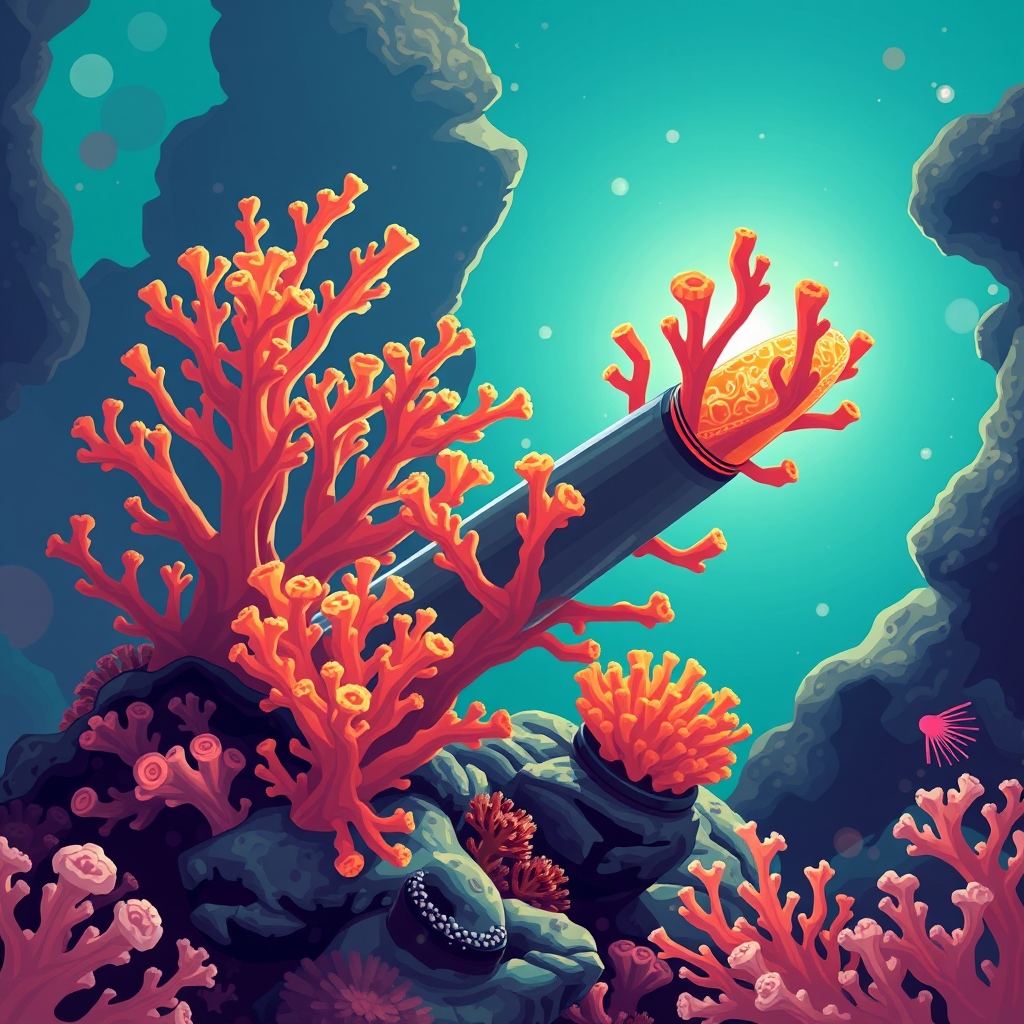
Sixteen years after the Deepwater Horizon oil spill, NOAA scientists are using new technology to replant lab-grown corals in the Gulf of Mexico. The mission moves past damage assessment and into active ecosystem reconstruction.
The Legacy of the Deepwater Horizon Disaster
The April 2010 explosion released massive oil that devastated the Gulf. The spill injured mesophotic and deep benthic habitats—zones that receive little or no sunlight and sit hundreds of feet below the surface. These habitats form the structural backbone for many fish, offering breeding and feeding grounds. Because they lay out of reach of traditional diving gear, they went unmonitored for more than a decade, leaving seafloor damage largely ignored.
Technological Breakthroughs in Deep-Sea Restoration
On the NOAA Ship Nancy Foster, researchers went beyond observation. They cultured Swiftia exserta, Muricea pendula and Thesea nivea in labs since 2021, mastering their reproduction and spawning. That knowledge allowed mass propagation of new colonies.
The biggest hurdle was delivering fragile specimens to the seafloor. Biologists abandoned bulky “coral elevators” for a prototype called the “coral torpedo.” The torpedo slides down a tether and drops a coral fragment into a diver’s hand. Technical divers, equipped with closed-circuit rebreathers, retrieved the pieces and outplanted 26 corals onto concrete domes at about 66 m (217 ft). This was the first deep-sea coral-planting mission to use rebreathers.
Mapping and Monitoring the Benthic Frontier
The 2026 expedition also surveyed the seafloor. The team mapped more than 14 square nautical miles and reached 72.5 m depth to collect biological and sediment samples. The work supports NOAA’s Deepwater Horizon Mesophotic and Deep Benthic Communities Restoration project, a partnership with the U.S. Department of the Interior aimed at creating a scalable habitat-reconstruction model for deep-sea environments worldwide.
What It Means for India
India’s “Blue Economy” and deep-sea mining plans intersect with the Gulf’s lessons:
- Blue Economy resilience – As India pursues offshore energy and mineral extraction, adopting similar restoration tools will help mitigate environmental risks.
- Technological sovereignty – The coral torpedo and rebreather system show why India should develop its own deep-sea robotics and hyperbaric expertise.
- Environmental diplomacy – Demonstrating a working restoration model lets India push for stricter global standards that require active habitat repair, not just impact assessments.
NOAA’s Nancy Foster dropped a prototype coral torpedo in 2026, letting rebreather divers plant 26 lab-grown colonies on concrete domes at 66 m depth. The operation turns a decade-long damage-assessment effort into a concrete attempt to rebuild habitats scarred by the 2010 spill—and offers India a ready-made model as it expands offshore activities.
From catastrophe to a restoration agenda
The 2010 explosion smothered surface waters and, crucially, the mesophotic and deep-benthic zones hundreds of feet below. Those zones host three-dimensional reef structures built by soft corals, which serve as breeding and feeding grounds for fish and invertebrates. Because they lie beyond conventional diving limits, they remained largely unseen for more than ten years, creating a blind spot in Gulf recovery.
The hardware that turned a “look-only” mission into a “plant-and-grow” effort
Researchers have cultured Swiftia exserta, Muricea pendula and Thesea nivea in tanks since 2021. Mastering their reproductive cycles produced dozens of healthy fragments ready for outplanting. The challenge was delivering those fragile pieces without crushing them.
Enter the coral torpedo: a streamlined, weighted capsule that slides down a tether and releases a coral fragment into a diver’s hand. It replaces bulky “coral elevators” that required multiple lifts and exposed specimens to turbulence. Once the torpedo reached the bottom, a pair of technical divers, breathing from closed-circuit rebreathers, retrieved the coral and secured it onto pre-positioned concrete domes. Rebreathers recycle exhaled gas, scrubbing carbon dioxide and adding oxygen, extending bottom time far beyond typical open-circuit limits—essential for precise placement at depth.
Trong suốt chuyến thám hiểm, nhóm nghiên cứu đã trồng được 26 quần thể. Nỗ lực này là một phần của dự án Phục hồi Cộng đồng Mesophotic và Đáy biển sâu Deepwater Horizon của NOAA, một liên doanh với Bộ Nội vụ Hoa Kỳ nhằm phát triển một khuôn mẫu phục hồi có khả năng mở rộng cho các hệ sinh thái biển sâu trên toàn thế giới.
Tại sao thí nghiệm tại Vịnh lại quan trọng đối với Ấn Độ
Lộ trình "Kinh tế Xanh" của Ấn Độ hình dung các hoạt động năng lượng ngoài khơi và khai thác khoáng sản biển sâu, những hoạt động sẽ gây xáo trộn các môi trường sống thiếu ánh sáng và có áp suất cao tương tự như những nơi mà sứ mệnh tại Vịnh đang tìm cách phục hồi. Kinh nghiệm từ Vịnh đưa ra ba bài học chiến lược:
- Sách lược vận hành để sửa chữa môi trường sống – Sự kết hợp giữa ngư lôi và thiết bị tái thở (rebreather) cho thấy các rạn san hô mềm mỏng manh có thể được xử lý ở độ sâu lớn mà không bị hư hại, và các giá thể bê tông có thể làm điểm neo cho các cấu trúc rạn san hô trong tương lai. Các viện nghiên cứu của Ấn Độ có thể áp dụng quy trình làm việc này để phục hồi các núi ngầm bị hư hại hoặc các cộng đồng ven rãnh đại dương sau các sự cố khai thác mỏ hoặc khoan dầu.
- Phát triển công nghệ nội địa – Các thiết bị phần cứng chỉ là nguyên mẫu. Việc sao chép hoặc cải tiến thiết kế trong nước sẽ giúp giảm bớt sự phụ thuộc vào các nhà cung cấp nước ngoài và nuôi dưỡng một hệ sinh thái địa phương về robot biển sâu, y học áp suất cao và công nghệ sinh học biển.
- Đòn bẩy chính sách tại các diễn đàn quốc tế – Việc trình diễn một mô hình phục hồi đang hoạt động cho phép Ấn Độ thúc đẩy các biện pháp bảo vệ môi trường nghiêm ngặt hơn trong các tiêu chuẩn toàn cầu mới nổi về khai thác biển sâu, với lập luận rằng việc giảm thiểu tác động phải bao gồm cả việc tái thiết lập môi trường sống một cách chủ động, chứ không chỉ dừng lại ở việc đánh giá tác động.
Các quan điểm trái chiều và rào cản thực tế
Tốc độ tăng trưởng của san hô mềm rất chậm, và đặc tính hóa học của nước ở Vịnh — vốn vẫn đang trong quá trình phục hồi sau các dư lượng dầu — khác với đặc tính của Ấn Độ Dương.
Những điều cần theo dõi trong hai năm tới
- Các đợt triển khai tiếp theo của NOAA
- Các dự thảo chính sách của Ấn Độ
- Việc thiết lập các tiêu chuẩn quốc tế
- Sự quan tâm từ thương mại
Bài học rút ra
Sứ mệnh trồng san hô biển sâu đầu tiên tại Vịnh Mexico chứng minh rằng các rạn san hô mỏng manh, thiếu ánh sáng có thể được cấy ghép ở độ sâu lớn bằng cách sử dụng các thiết bị vận chuyển chuyên dụng và thợ lặn sử dụng thiết bị tái thở. Đối với Ấn Độ, bài học đã rõ ràng: khi quốc gia này tiến tới năng lượng ngoài khơi và khai thác khoáng sản biển sâu, họ phải kết hợp tham vọng với một bộ công cụ phục hồi sẵn sàng về công nghệ và được hỗ trợ bởi chính sách, nếu không sẽ có nguy cơ lặp lại sai lầm về điểm mù sinh thái đã xảy ra sau thảm họa Deepwater Horizon.