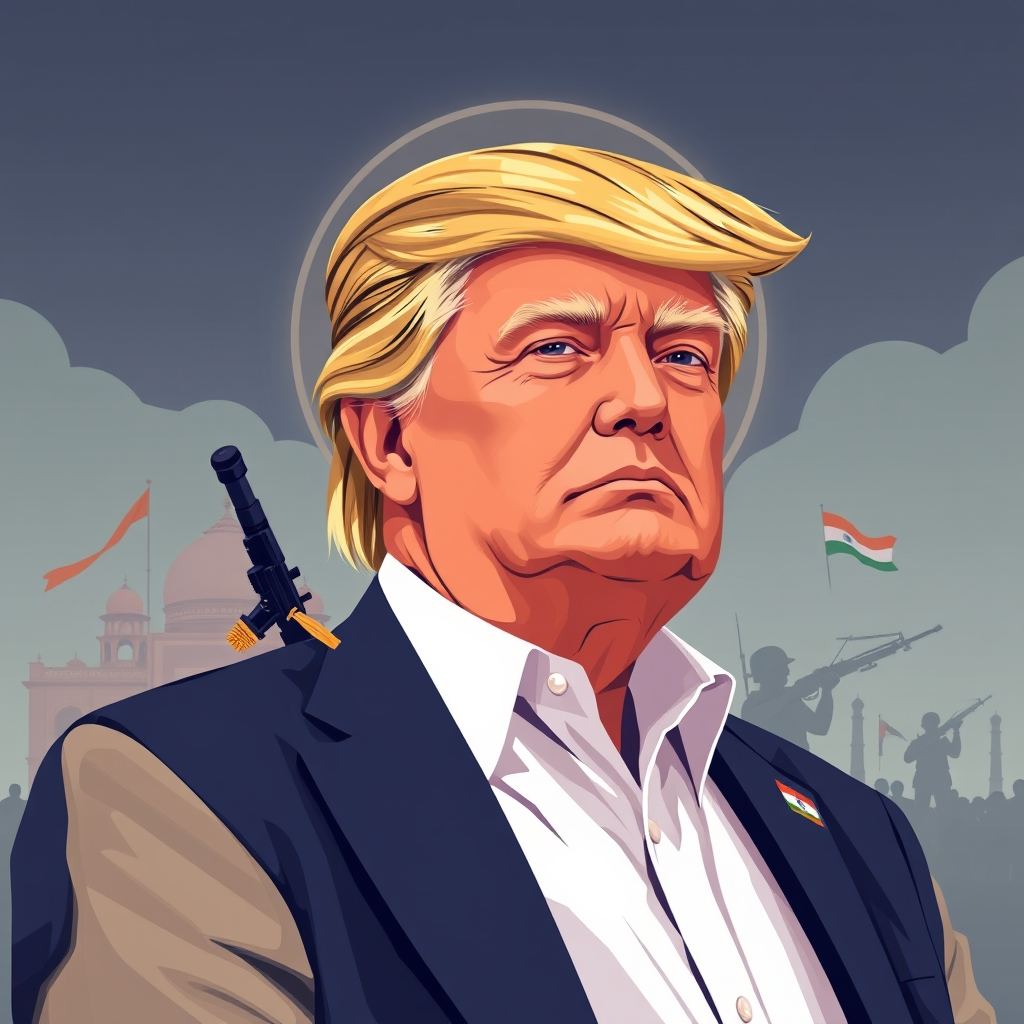
Trump Rejects JD Vance’s Proposal to Use Indian Troops in Ukraine
The prospect of Indian soldiers serving as a peacekeeping force in the Russia-Ukraine conflict has met a significant roadblock in the United States. Former President Donald Trump has reportedly dismissed a strategic proposal suggested by his running mate, JD Vance, regarding India's potential role in stabilizing the war-torn region.
The Vance Proposal and Trump’s Rejection
During recent discussions regarding a potential exit strategy for the Russia-Ukraine war, JD Vance floated a concept that would involve deploying a neutral peacekeeping force to establish a buffer zone and enforce a ceasefire. A key element of this suggestion was the inclusion of Indian troops, leveraging India’s long-standing tradition of neutrality and its significant diplomatic standing with both Moscow and Kyiv.
However, reports indicate that Donald Trump has "shot down" this specific idea. While the Trump campaign has consistently advocated for an immediate end to the conflict to reduce US expenditure and avoid further escalation, the idea of involving third-party military personnel—specifically from a non-NATO power like India—appears to lack support within the inner circle of the former President. This rejection marks a departure from the nuanced diplomatic maneuvering that many expected from a "transactional" foreign policy approach.
India’s Strategic Neutrality and the Peacekeeping Logic
The logic behind suggesting Indian troops was rooted in New Delhi's unique geopolitical position. Unlike Western powers, India has maintained a robust relationship with Russia while simultaneously strengthening its strategic partnership with the United States and the European Union. For many analysts, India represents a "bridge power" capable of projecting stability without the baggage of NATO expansionism or Cold War-era legacies.
By proposing Indian peacekeepers, Vance was attempting to solve two problems at once: ending the kinetic warfare in Ukraine and finding a way to achieve peace that does not look like a total Western capitulation. Using Indian troops would have provided a layer of legitimacy to a ceasefire, making it harder for either Russia or Ukraine to claim the settlement was a Western-imposed dictate.
The Geopolitical Implications of the Rejection
Trump's dismissal of the plan suggests that the incoming Republican foreign policy platform may favor a more isolationist or "America First" approach that avoids complex multilateral military entanglements. Instead of leveraging regional powers like India to manage global security crises, the Trump doctrine appears more inclined toward bilateral pressure and direct negotiations, potentially bypassing the need for complex peacekeeping architectures.
For the international community, this signals that the "middle powers" strategy—whereby countries like India are used to anchor global security frameworks—might not be the primary tool of the next US administration. This could lead to a more fragmented approach to resolving the conflict, where peace is dictated by direct superpower negotiation rather than mediated through neutral third parties.
What It Means for India
- Preservation of Strategic Autonomy: The rejection of this plan is a relief for New Delhi, as India has consistently maintained that it will not involve its military in conflicts that do not directly threaten its own national security or territorial integrity.
- Avoidance of Bloc Politics: By not being part of a proposed peacekeeping force, India avoids the risk of being caught in a "no-win" situation where any perceived alignment with either Russia or Ukraine could damage its bilateral relations.
- Focus on Diplomatic Rather than Military Roles: The outcome reinforces that India's role in the Ukraine crisis is best suited for high-level diplomacy and humanitarian assistance, rather than being drawn into active or peacekeeping military deployments in Europe.