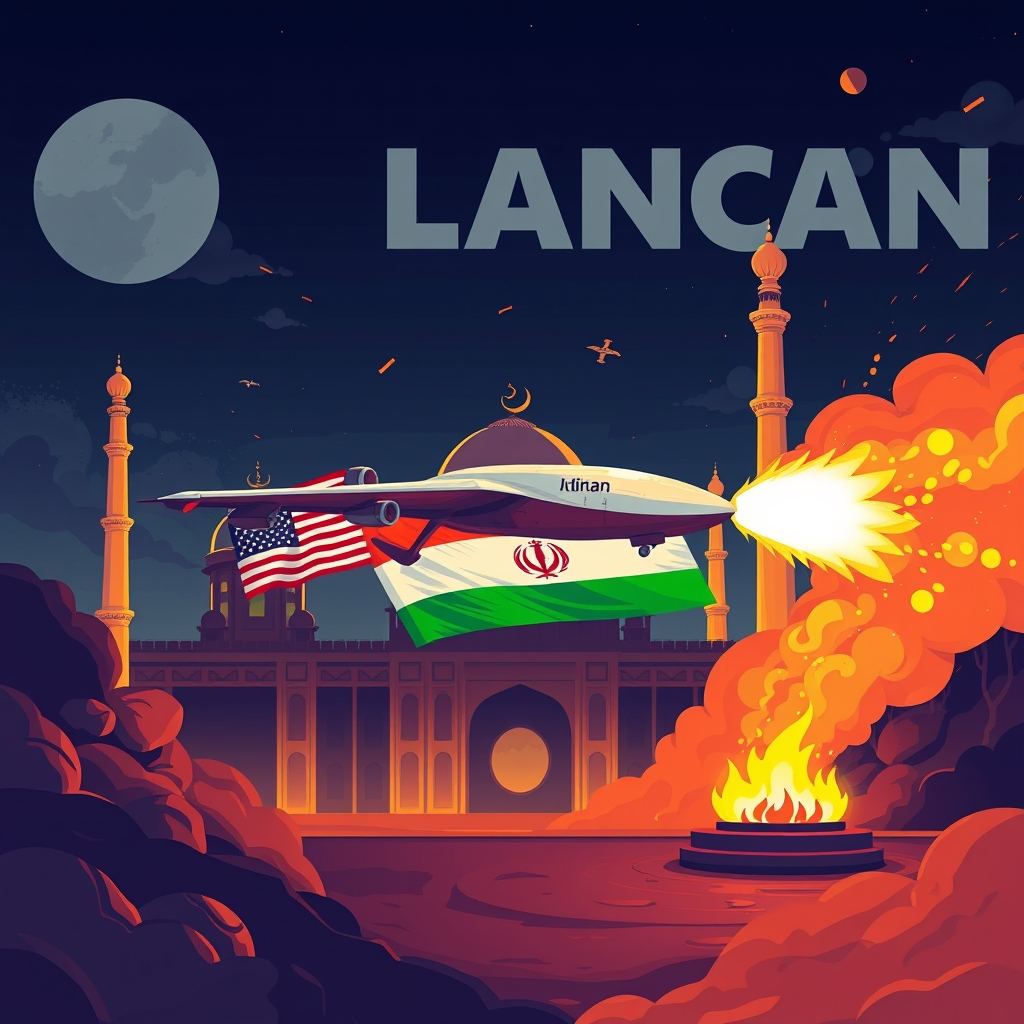
The United States and Iran have entered a direct, kinetic phase of their conflict. Iranian kamikaze drones struck U.S. communication nodes and fuel tanks at Jordan’s Azraq base. U.S. forces answered with precision air raids on Iranian missile sites in Semnan province and coastal defenses on Greater Tunb Island. At the same time, the U.S. Navy began enforcing a naval blockade in the Strait of Hormuz, disabling a Curacao-flagged tanker that ignored warnings—a move that threatens oil flow through the world’s most important chokepoint.
Escalation of Direct Military Strikes
Until now the two powers largely fought through proxies. Thursday’s drone attacks on the Azraq installation pushed the war onto Jordanian soil, expanding the conflict’s geography. The drones, described as “suicide” or kamikaze models, hit communications infrastructure and fuel storage, signaling an intent to cripple U.S. operational capacity in the region.
U.S. Central Command (CENTCOM) launched a night-time campaign that struck Iranian command centres, air-defence installations and missile-launch facilities. The Semnan strikes hit a hub for Iran’s ballistic-missile and space programmes, while a 90-minute wave of attacks on Greater Tunb Island and the port city of Bandar Abbas targeted coastal defence and cruise-missile sites.
Blockade in the Strait of Hormuz
The Strait of Hormuz is a global energy artery. CENTCOM decided to enforce a naval blockade to protect commercial shipping. The M/T Belma, a Curacao-flagged tanker heading toward Iran’s Kharg Island, was hit by Hellfire missiles after it ignored repeated warnings.
Iran responded by increasing aerial incursions across the Gulf. Kuwait reported drone interceptions; Bahrain issued air-raid alerts. In Iraq, Prime Minister Ali al-Zaidi condemned drone attacks that violated Erbil’s airspace, underscoring how the conflict is spilling beyond the immediate Iran-U.S. front.
Regional Realignment and Arms Sales
Amid the escalation, Washington approved a $1.96 billion weapons package for Saudi Arabia. The sale, covering air-defence and precision-strike systems, deepens the security pact between the United States and Gulf monarchies that fear spill-over from the Iran-U.S. combat zone.
What It Means for India
- Energy-security risk – The Strait of Hormuz carries much of the oil India imports. A prolonged blockade or any disruption to tanker traffic could spike global oil prices, widen India’s trade deficit and feed domestic inflation.
- Diaspora exposure – Large Indian communities live in Jordan, Kuwait, Bahrain and the broader Gulf. Combat operations in these countries raise the probability of civilian casualties, evacuation challenges and insurance-claim surges.
- Strategic balancing act – New Delhi has long pursued “strategic autonomy,” keeping ties with both Washington and Tehran while protecting its commercial routes. The current environment forces India to walk a diplomatic tightrope: it must condemn attacks on its citizens, cooperate where its interests align with the U.S., yet avoid alienating Iran, a key energy supplier and partner in the India-Middle East-Europe Economic Corridor (IMEC).
Counter-Perspective
What to Watch Next
- Diplomatic overtures – Back-channel talks involving regional powers, including India, could open a path to a cease-fire or cement the stalemate.
- Oil-price volatility – Market analysts will monitor tanker movements through Hormuz and spot-price swings; a sharp rise could trigger policy responses in oil-importing nations.
The United States’ direct strikes and the nascent Hormuz blockade have turned a proxy war into a front-line confrontation. The ripple effects are already being felt far beyond the Middle East. For India, securing oil supplies and protecting its diaspora will test the country’s diplomatic agility in the weeks ahead.