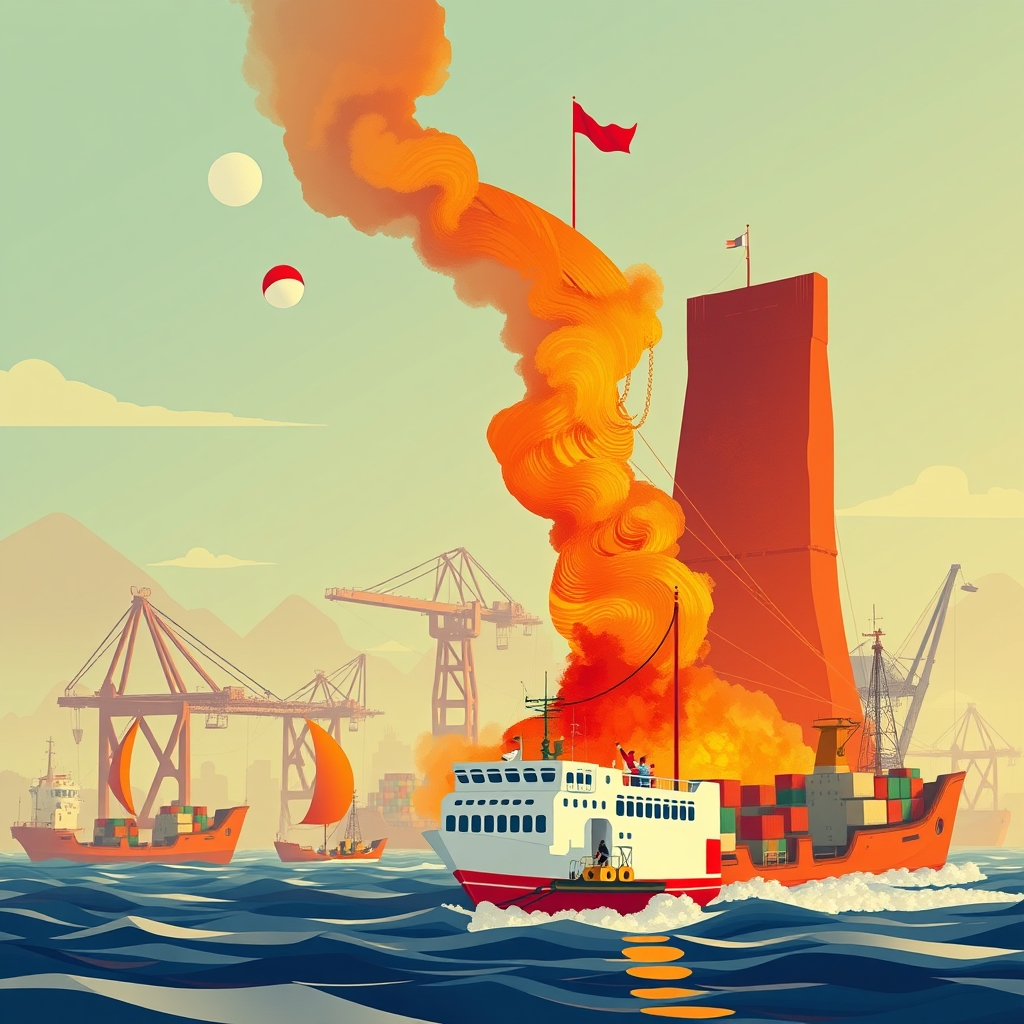
Red Sea Crisis Escalates: Houthi Attacks and US Strikes Threaten Global Trade
The maritime security landscape in West Asia has reached a breaking point following Houthi rebel attacks on Saudi oil tankers and intensified US military strikes against Iran. As vital shipping chokepoints face potential blockades, the escalating conflict threatens to destabilize global energy markets and disrupt the flow of international commerce.
Houthi Blockade and Attacks in the Bab el-Mandeb
On July 23, 2026, Iran-backed Houthi rebels confirmed they had struck two Saudi-linked oil tankers, the Encelia and the Layla, in the Red Sea. The attacks, which caused fires on the vessels, mark the first major escalation since the Houthis announced a blockade of Saudi-linked shipping through the Bab el-Mandeb Strait.
The Bab el-Mandeb is a critical maritime artery, facilitating approximately 12% of global trade and a quarter of all container traffic. The Houthis have explicitly stated that this blockade will remain in effect until the long-standing Saudi blockade against Yemen is lifted. This move transforms a localized regional conflict into a systemic threat to the global supply chain, specifically targeting the link between Asia and Europe via the Suez Canal.
US-Iran Standoff over the Strait of Hormuz
While the Red Sea faces instability, a parallel and even more volatile confrontation is unfolding at the Strait of Hormuz. US President Donald Trump has adopted a hardline stance, warning that any Iranian attempt to obstruct shipping through the strait—whether via missiles, drones, or rockets—will result in the US destroying Iranian civilian infrastructure, such as bridges or power plants.
In response, the US has conducted its 12th consecutive night of strikes against Iranian targets, aiming to degrade Tehran's ability to threaten commercial vessels. US Defense Secretary Pete Hegseth reported that the US has already spent $37.5 billion on this military campaign. Conversely, Iran has signaled it will not return to pre-war norms regarding the strait, with Iranian officials adopting an "eye for an eye" doctrine, targeting energy and desalination infrastructure in neighboring Gulf countries.
Escalation and the Failure of Diplomacy
Despite mediation efforts, such as recent meetings in Pakistan, diplomatic channels appear to be failing. The conflict has expanded beyond maritime skirmishes into direct strikes on land; US missiles have reportedly hit locations near Ahvaz and Ramshir in western Iran, while Iranian-linked drone aggression has been reported in Kuwait.
The threat of targeting under-construction Iranian nuclear sites further underscores the high stakes of this confrontation. As both sides dig in, the "eye for an eye" approach threatens to turn the Middle East's vital waterways into permanent zones of conflict, with the global economy bearing the brunt of rising fuel prices and shipping delays.
What It Means for India
- Energy Security Vulnerability: As a major importer of crude oil and refined petroleum from the Middle East, any prolonged disruption in the Bab el-Mandeb or the Strait of Hormuz will lead to immediate inflationary pressures and energy shortages in the Indian domestic market.
- Trade Disruption and Costs: A significant portion of India’s trade with Europe and the US passes through these chokepoints. Forced rerouting around the Cape of Good Hope will increase freight costs, insurance premiums, and transit times, impacting India's export competitiveness.
- Strategic Balancing Act: India faces a complex geopolitical challenge in maintaining its strategic autonomy. It must navigate the escalating US-Iran confrontation while ensuring that its growing economic interests in the Gulf and its security partnerships in the Indo-Pacific are not compromised by regional volatility.