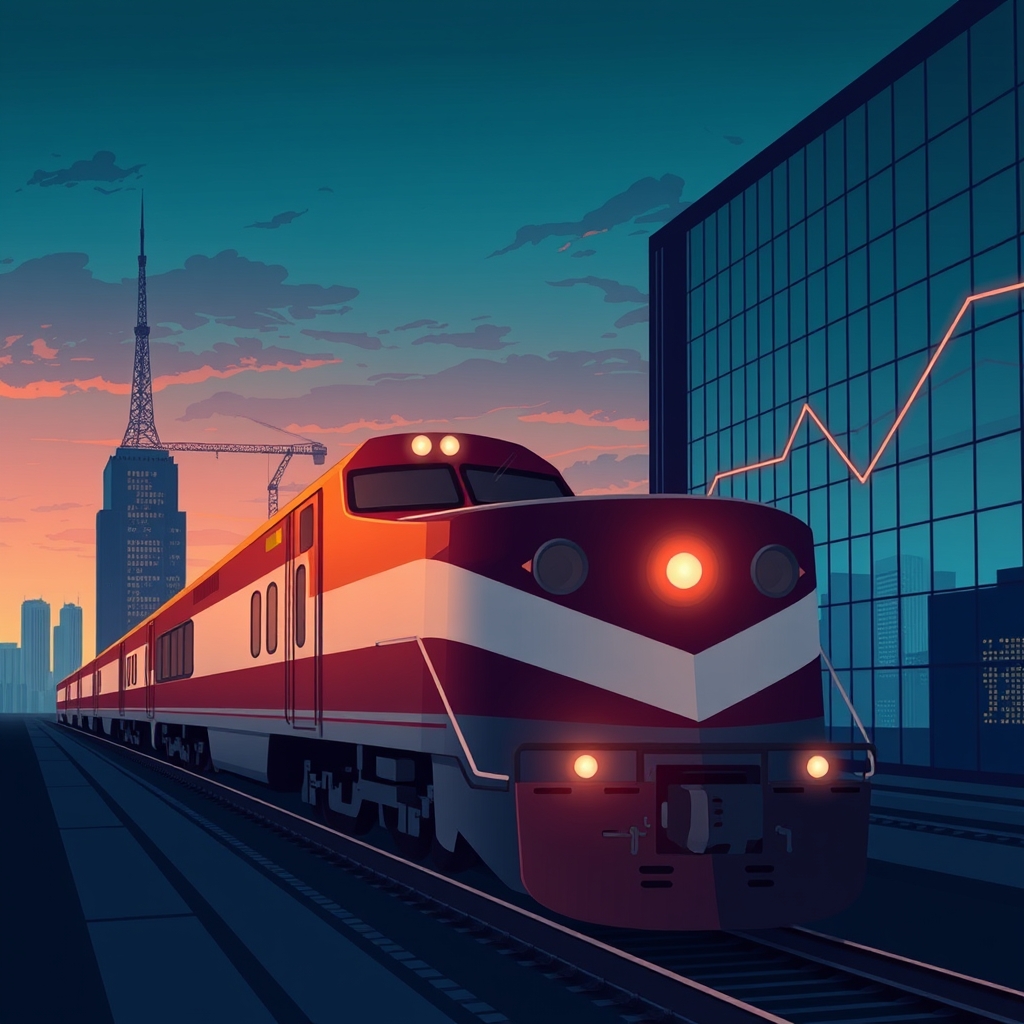
A New Kind of Train on the Northern Plains
Indian Railways moves over thirteen million passengers every single day. For nearly all of them, the journey means either the familiar hum of an electric locomotive drawing power from overhead catenary, or the heavier rumble of a diesel engine burning fuel in a combustion chamber. A third option has never existed at commercial scale in the country. That changed when India’s first hydrogen fuel cell passenger train entered regular service on the Jind-Sonipat route in Haryana. During its first five days of commercial operation, the train covered roughly 900 kilometers. Those numbers mark more than a milestone. They represent the beginning of a live, revenue-earning experiment to see whether hydrogen can replace diesel on tracks that may never see overhead wires.
What Sets This Train Apart
From the platform, the train might not look revolutionary. It is a ten-coach consist with room for 2,600 passengers. Fares stay firmly within reach of everyday travelers, ranging between Rs 10 and Rs 25 depending on distance. Its design speed reaches 110 kmph, though for now it operates at a more conservative 75 kmph while crews monitor performance and passenger comfort during these early runs.
The real difference sits under the floor. Instead of a conventional diesel powerpack, the train draws propulsion from two 1,200-kilowatt hydrogen-electric systems. Each unit contains fuel cell stacks that convert chemical energy directly into electrical energy without combustion. Stored hydrogen reacts with oxygen pulled from the surrounding air. That electrochemical reaction generates electricity to drive the traction motors, and when the process is complete the only exhaust is water vapor and heat. There is no smoke, no diesel particulate matter, and no carbon dioxide streaming out of a tailpipe.
Because there is no internal combustion, the drivetrain carries far fewer moving parts than a diesel-electric equivalent. Noise and vibration drop noticeably. For crews, that means a quieter cab. For passengers, it means a smoother ride and cleaner platform air.
A dedicated hydrogen storage and refuelling facility stands at Jind. Keeping a fuel cell train in daily service requires compressed hydrogen, specialized handling protocols, and trained staff. Indian Railways has chosen to build that capability at one end of the route, allowing the train to refuel and turn back without straying far from its supply base.
Why Hydrogen Makes Sense for India
Indian Railways has spent decades extending overhead electric lines across its vast network, yet full electrification remains a distant target. Thousands of route kilometers cross terrain where erecting catenary poles is geologically difficult, economically marginal, or culturally sensitive. Remote hill sections, desert stretches, and heritage corridors all pose the same problem: travelers expect reliable service, but the infrastructure needed to hang wires and build traction substations can cost more than the traffic justifies.
Hydrogen offers a way to serve these lines without committing to massive civil works. A fuel cell train can run on existing track with minimal changes to the right-of-way. You do not need to string thousands of tons of copper and steel cable overhead. You need a refuelling point, which takes up a fraction of the footprint required for full electrification.
The Jind-Sonipat pilot tests that logic on flat, forgiving terrain before the technology graduates to harder environments. Haryana’s geography is not dramatic, but it is practical. Engineers can collect real-world data on fuel consumption, reliability, braking, and scheduling without the complications of steep gradients or tight curves.
Diesel multiple units currently handle thousands of kilometers of suburban and rural services across the country. They emit nitrogen oxides and particulates near populated stations. Hydrogen trains eliminate those local emissions entirely, shifting the environmental question upstream to how the hydrogen itself is produced.
The Global Context
India no está entrando en territorio desconocido. Alemania ya ha puesto en servicio comercial trenes de pasajeros propulsados por hidrógeno, reemplazando unidades diésel en redes regionales donde las autoridades decidieron no electrificar. Japón ha probado conceptos ferroviarios de hidrógeno como parte de su visión más amplia de una sociedad del hidrógeno, estudiando cómo la tecnología encaja en una estrategia nacional de seguridad energética. China ha realizado pruebas en varias líneas, explorando cómo funcionan las pilas de combustible en diferentes climas y patrones operativos