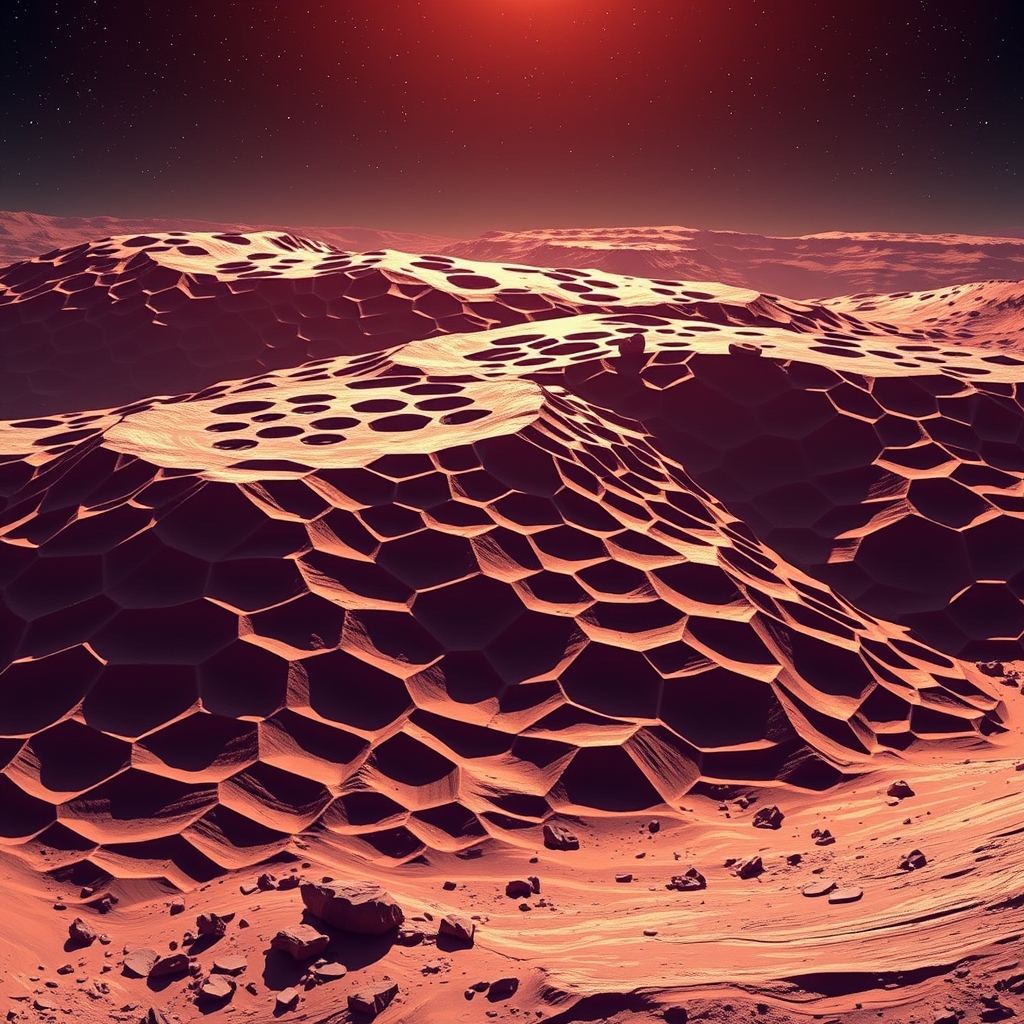
NASA’s veteran Curiosity rover has captured striking images of a honeycomb-like geological formation within the Gale Crater, sparking intense scientific debate. This discovery, made 14 years into the mission, presents a complex puzzle involving polygonal ridges and mysterious dark-toned rocks that challenge our current understanding of Martian evolution.
חידה גיאולוגית במכתש גייל
במהלך חקירת פני השטח של מאדים, נתקל רכב החקר Curiosity ביחידה מכוסה במבנים פוליגונליים הדומים באופן יוצא דופן לחלת דבש ענקית. דפוסים גיאומטריים אלו היו מובחנים באופן בלתי צפוי בהשוואה לנתונים אורביטליים קודמים, מה שהפתיע את מדעני המשימה של NASA. ככל שהרכב התקדם עמוק יותר לתוך היחידה, הרכסים נראו שחוקים יותר, וביניהם היו פזורים סלעים כהים בגדלים הנעים בין חצץ לאבני נחל.
מקור המבנים הללו נותר שאלה מדעית מרכזית. בכדור הארץ, דפוסים פוליגונליים דומים נוצרים לעיתים קרובות כתוצאה מבוץ מתייבש, התגבשות מינרלים, או מחזרות של קיפאון והפשרה של הקרקע. בהתחשב בהיסטוריה של התפרצויות וולקניות, זרימת מים ומשקעים משתנים במאדים, חוקרים בודקים האם תהליכים סביבתיים דומים עיצבו את הנוף הזה או שמא מדובר במנגנון אקזוטי יותר.
המסתורין של הסלעים הכהים
תוספת של מורכבות לתגלית חלת הדבש היא אבני הנחל הכהות הפזורות בשטח. מדעני NASA משתמשים כעת במכשירים מתקדמים, כולל ה-Alpha Particle X-ray Spectrometer (APXS) וה-Mars Hand Lens Imager (MAHLI), כדי לנתח מאפיינים אלו.
נקודה קריטית בחקירה היא האם הסלעים הכהים הללו הם מקומיים למאדים או בעלי מוצא חוץ-ארצי. תיאוריה אחת נפוצה היא שהם עשויים להיות מטאוריטים שנפלו על פני השטח של מאדים לפני מיליוני שנים. משימות קודמות זיהו על מאדים סלעים כהים המכילים ניקל — יסוד הנפוץ במטאוריטים אך נדיר בקרום של מאדים — מה שמהווה תקדים לאפשרות זו. תיאוריות אחרות מציעות שהסלעים עשויים להיזרק מפגיעות מרוחקות או להתגלגל ממעטפות גיאולוגיות גבוהות יותר בתוך מכתש גייל.
פענוח הסביבה המאריאנית
המיקוד הנוכחי של המשימה כולל שימוש ב-ChemCam LIBS ו-RMI כדי להתמקד ברכסים ספציפיים ובאבן ה-"Cortadera" כדי לקבוע את ההרכב הכימי של מאפיינים אלו. הבנת הקשר בין דפוסי חלת הדבש לבין הסלעים הכהים, או האם הם מייצגים אירועים גיאולוגיים נפרדים, היא חיונית. אם מבנים אלו נוצרו על ידי מים או תהליכים המונעים על ידי אקלים כמו קיפאון והפשרה, הם מספקים ראיות עקיפות לתנאים הסביבתיים שהיו קיימים בעבר בכוכב האדום, מה שעשוי לגעת בשאיפה ארוכת השנים למצוא ראיות לחיים מיקרוביאליים עתיקים.
המשמעות עבור הודו
בעוד הודו מאיצה את שאיפות החלל שלה באמצעות ISRO, להתפתחויות בחקר החלל העמוק יש משקל רב למסלול האסטרטגי והמדעי של המדינה:
- בנצ'מרק טכנולוגי: עבור מגזר החלל הצומח של הודו, אורך החיים וההצלחה של משימת Curiosity משמשים כנקודת ייחוס טכנית לתפעול רכבי חקר אוטונומיים ולחקירה פלנטרית ארוכת טווח.
- הזדמנויות לשיתוף פעולה מדעי: ככל שחקירת מאדים נכנסת לשלב חדש של ניתוח נתונים ברזולוציה גבוהה, גוברות ההזדמנויות עבור מדענים ומוסדות אקדמיים הודיים להשתתף בשיתוף נתונים גלובלי ובפרויקטים של מחקר שיתופי.
- שאיפות חלל אסטרטגיות: הצלחות בגיאולוגיה של מאדים מדגישות את החשיבות של השקעה בחישה מרחוק מתקדמת וברובוטיקה אוטונומית — תחומים קריטיים בעוד הודו נעה לעבר משימות בין-כוכביות מורכבות יותר ומחזקת את מעמדה בכלכלה העולמית של החלל.
ההפתעה ששברה את השגרה
הנסיעה האחרונה של רכב החקר חשפה משטח עטוף ברכסים משושים וחדים שנראים כמו כוורת ענקית. מתוך מסלול (אורביט), האזור נראה חסר צבע; רק מקרוב הופיעה הרשת הפוליגונלית. הרכסים רכים יותר בשל שחיקה, וביניהם שוכנות אבני נחל כהות בגדלים הנעים בין חצץ לאבני נחל. השפע הבלתי צפוי שלהם והניגוד החריף בין הרכסים הבהירים לסלעים הכהים הפתיעו את הצוות המדעי.
אנלוגים של כדור הארץ: כיצד נוצרים דפוסים דומים
On our planet, polygonal crusts arise in three main ways. First, when wet mud dries it can crack into a regular grid. Second, mineral crystals that grow outward from a central point sometimes produce a honeycomb texture. Third, repeated freezing and thawing of saturated soil—known as thermal contraction cracking—splits the ground into similar shapes. Each process leaves a distinct chemical fingerprint, so identifying which, if any, operated on Mars will require more than photographs.
What Mars might have done
Mars has a record of volcanic eruptions, flowing water, and shifting sediments. Any of these could have set the stage for polygon formation. A drying lakebed could have left mud that cracked as the climate dried. Alternatively, mineral-rich brines might have precipitated crystals that later eroded into the observed ridges. Freeze-thaw cycles are plausible if the region once experienced temperature swings around the freezing point of water or carbon dioxide ice.
The dark cobbles: meteorites or local debris?
Scattered among the polygons are dark rocks that could be either native Martian material or foreign meteoritic fragments. The rover’s Alpha Particle X-ray Spectrometer (APXS) and Mars Hand Lens Imager (MAHLI) are currently measuring elemental composition and surface texture. A meteorite hypothesis gains traction because previous Martian missions have found dark stones enriched in nickel—a metal abundant in meteorites but scarce in the planet’s crust. Yet an alternative view holds that the cobbles were ripped from higher strata within Gale Crater during ancient landslides, or ejected from distant impacts and later deposited here. The instruments will soon reveal whether the chemistry aligns with known meteorite signatures or matches local basaltic rocks.
Turning pictures into chemistry
To untangle the mystery, Curiosity is firing its ChemCam laser-induced breakdown spectroscopy (LIBS) system at both ridge tops and the largest dark cobble, nicknamed “Cortadera.” LIBS vaporizes a tiny spot of material and reads the resulting light spectrum, delivering a rapid elemental readout. The Remote Micro-Imager (RMI) simultaneously records high-resolution context images, linking chemistry to morphology. Together these tools let scientists test whether the ridges share a common composition with the cobbles or represent separate geological episodes.
Why Indian scientists should care
- Technical benchmark – Curiosity’s ability to operate autonomously for over a decade provides a reference point for India’s own rover development plans.
- Collaboration doors – The flood of high-resolution data invites Indian universities and research institutes to join international analysis teams, offering access to cutting-edge planetary datasets.
- Strategic relevance – Understanding Martian surface processes informs the design of future Indian interplanetary probes, especially those that will need to navigate or sample complex terrains.
Open questions and next steps
The rover will continue to map the honeycomb field, probing deeper layers to see if the pattern persists below the surface. It.