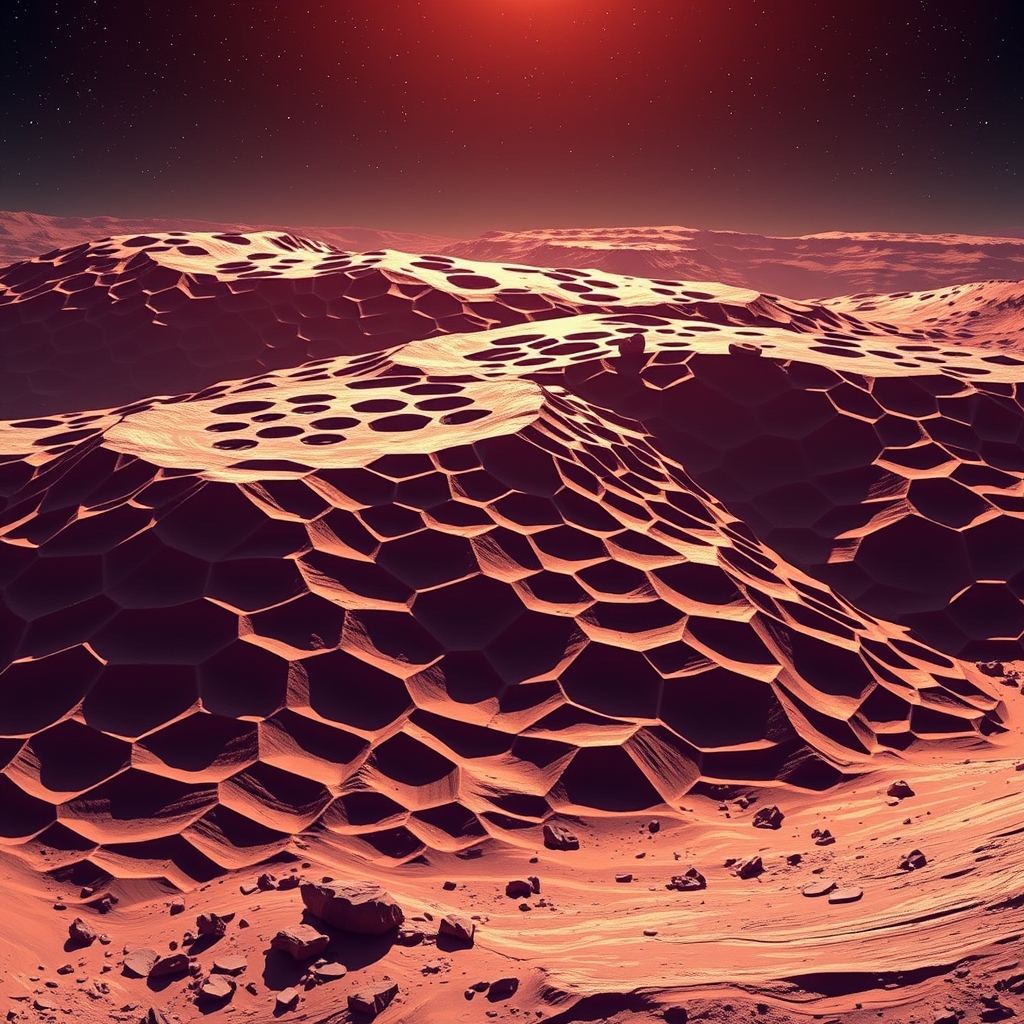
NASA’s veteran Curiosity rover has captured striking images of a honeycomb-like geological formation within the Gale Crater, sparking intense scientific debate. This discovery, made 14 years into the mission, presents a complex puzzle involving polygonal ridges and mysterious dark-toned rocks that challenge our current understanding of Martian evolution.
A Geological Enigma in Gale Crater
While exploring the Martian surface, the Curiosity rover encountered a unit covered in polygonal structures that bear a remarkable resemblance to a giant honeycomb. These geometric patterns were unexpectedly distinct when compared to previous orbital data, catching NASA mission scientists off guard. As the rover moved deeper into the unit, the ridges appeared more eroded, interspersed with dark-toned rocks ranging from pebble to cobble size.
The origin of these structures remains a primary scientific question. On Earth, similar polygonal patterns often result from drying mud, mineral crystallization, or the repeated freezing and thawing of soil. Given Mars' history of volcanic eruptions, flowing water, and shifting sediments, researchers are investigating whether similar environmental processes shaped this landscape or if a more exotic mechanism is at play.
The Mystery of the Dark-Toned Rocks
Adding a layer of complexity to the honeycomb discovery are the dark-toned cobbles scattered across the terrain. NASA scientists are currently using advanced instruments, including the Alpha Particle X-ray Spectrometer (APXS) and the Mars Hand Lens Imager (MAHLI), to analyze these features.
A critical point of investigation is whether these dark rocks are indigenous to Mars or extraterrestrial in origin. One prevailing theory is that they could be meteorites that fell on the Martian surface millions of years ago. Previous missions have identified dark rocks on Mars containing nickel—an element common in meteorites but rare in Martian crust—providing a precedent for this possibility. Other theories suggest the rocks may have been ejected from distant impacts or rolled down from higher geological strata within the Gale Crater.
Decoding the Martian Environment
The mission's current focus involves using ChemCam LIBS and RMI to target specific ridges and the "Cortadera" cobble to determine the chemical composition of these features. Understanding whether the honeycomb patterns and the dark rocks are linked or represent separate geological events is vital. If these structures were formed by water or climate-driven processes like freezing and thawing, they provide indirect evidence of the environmental conditions that once existed on the Red Planet, potentially touching upon the long-standing quest to find evidence of ancient microbial life.
What It Means for India
As India accelerates its own space ambitions through ISRO, developments in deep-space exploration carry significant weight for the nation’s strategic and scientific trajectory:
- Technological Benchmarking: For India’s burgeoning space sector, the longevity and success of the Curiosity mission serve as a technical benchmark for autonomous rover operations and long-term planetary exploration.
- Scientific Collaboration Opportunities: As Mars exploration enters a new phase of high-resolution data analysis, there are increasing opportunities for Indian scientists and academic institutions to participate in global data-sharing and collaborative research projects.
- Strategic Space Aspirations: Successes in Martian geology underscore the importance of investing in advanced remote sensing and autonomous robotics—areas that are critical as India moves toward more complex interplanetary missions and strengthens its position in the global space economy.
The surprise that broke the routine
The rover’s latest drive exposed a surface draped in crisp, hexagonal ridges that look like a giant beehive. From orbit the area appeared bland; only up close did the polygonal network emerge. The ridges are softened by erosion, and between them lie dark-toned cobbles ranging from pebble to cobble size. Their unexpected abundance and the stark contrast between light ridges and dark rocks caught the science team off guard.
Earth analogues: how similar patterns form
നമ്മുടെ ഗ്രഹത്തിൽ, ബഹുഭുജ ആവരണങ്ങൾ (polygonal crusts) പ്രധാനമായും മൂന്ന് രീതികളിലാണ് രൂപപ്പെടുന്നത്. ഒന്നാമതായി, നനഞ്ഞ ചെളി ഉണങ്ങുമ്പോൾ അത് ഒരു ക്രമബദ്ധമായ ഗ്രിഡായി വിള്ളൽ വീഴാം. രണ്ടാമതായി, ഒരു കേന്ദ്രബിന്ദുവിൽ നിന്ന് പുറത്തേക്ക് വളരുന്ന ധാതു സ്ഫടികങ്ങൾ ചിലപ്പോൾ തേൻകൂട് പോലുള്ള ഘടന ഉണ്ടാക്കുന്നു. മൂന്നാമതായി, സംതൃപ്തമായ മണ്ണിലെ (saturated soil) ആവർത്തിച്ചുള്ള മരവിപ്പും ഉരുകലും—ഇതിനെ 'thermal contraction cracking' എന്ന് വിളിക്കുന്നു—ഭൂമിയെ സമാനമായ രൂപങ്ങളായി വിഭജിക്കുന്നു. ഓരോ പ്രക്രിയയും ഒരു പ്രത്യേക രാസപരമായ അടയാളം അവശേഷിപ്പിക്കുന്നു, അതിനാൽ ചൊവ്വയിൽ ഇവയിൽ ഏതെങ്കിലും സംഭവിച്ചിട്ടുണ്ടോ എന്ന് തിരിച്ചറിയാൻ ഫോട്ടോകൾ മാത്രം മതിയാകില്ല.
ചൊവ്വയിൽ എന്തായിരിക്കാം സംഭവിച്ചത്
അഗ്നിപർവ്വത സ്ഫോടനങ്ങൾ, ഒഴുകുന്ന വെള്ളം, മാറിക്കൊണ്ടിരിക്കുന്ന അവസാദങ്ങൾ എന്നിവയുടെ ചരിത്രം ചൊവ്വയ്ക്കുണ്ട്. ഇവയിൽ ഏതൊന്നിനും ബഹുഭുജ രൂപങ്ങൾ (polygon formation) ഉണ്ടാകാൻ കാരണമായേക്കാം. കാലാവസ്ഥ ഉണങ്ങുന്നതിനനുസരിച്ച്, ഉണങ്ങുന്ന ഒരു തടാകത്തട്ട് വിള്ളൽ വീണ ചെളി അവശേഷിപ്പിച്ചേക്കാം. അല്ലെങ്കിൽ, ധാതുസമ്പന്നമായ ഉപ്പുവെള്ളം (brines) സ്ഫടികങ്ങൾ രൂപപ്പെടുത്തുകയും, അവ പിന്നീട് കണ്ട് കാണുന്ന കുന്നുകൾ പോലെ രൂപപ്പെടുകയും ചെയ്തേക്കാം. വെള്ളത്തിന്റെയോ കാർബൺ ഡയോക്സൈഡ് ഐസിന്റെയോ മരവിപ്പ് നിലവിലുള്ള താപനിലയ്ക്ക് ചുറ്റും മാറ്റങ്ങൾ സംഭവിച്ചിട്ടുണ്ടെങ്കിൽ, മരവിപ്പും ഉരുകലും സംഭവിക്കുന്ന ചക്രം (freeze-thaw cycles) ഇതിന് കാരണമായേക്കാം.
കറുത്ത കല്ലുകൾ: ഉൽക്കകളോ അതോ പ്രാദേശിക അവശിഷ്ടങ്ങളോ?
ബഹുഭുജ രൂപങ്ങൾക്കിടയിൽ ചിതറിക്കിടക്കുന്ന കറുത്ത ശിലകൾ ചൊവ്വയുടെ തനതായ വസ്തുക്കളോ അല്ലെങ്കിൽ പുറത്തുനിന്നുള്ള ഉൽക്കയുടെ കഷണങ്ങളോ ആകാം. റോവറിലെ Alpha Particle X-ray Spectrometer (APXS), Mars Hand Lens Imager (MAHLI) എന്നിവ നിലവിൽ ഇവയുടെ മൂലക ഘടനയും ഉപരിതല ഘടനയും അളക്കുന്നുണ്ട്. മുൻപത്തെ ചൊവ്വാ ദൗത്യങ്ങളിൽ നിക്കൽ ധാതുക്കൾ അടങ്ങിയ കറുത്ത കല്ലുകൾ കണ്ടെത്തിയിട്ടുള്ളതിനാൽ, ഇവ ഉൽക്കകളാണെന്ന വാദം ശക്തമാണ്—നിക്കൽ ഉൽക്കകളിൽ ധാരാളമായി കാണപ്പെടുന്നുണ്ടെങ്കിലും ചൊവ്വയുടെ ഉപരിതലത്തിൽ കുറവാണ്. എന്നിരുന്നാലും, പുരാതനമായ മണ്ണിടിച്ചിലുകൾക്കിടയിൽ ഗെയ്ൽ ക്രേറ്ററിലെ (Gale Crater) ഉയർന്ന പാളികളിൽ നിന്ന് ഈ കല്ലുകൾ അടർന്നു വീണതാകാം, അല്ലെങ്കിൽ ദൂരെയുള്ള ആഘാതങ്ങളിൽ നിന്ന് തെറിച്ചു വന്ന് ഇവിടെ പതിച്ചതാകാം എന്ന മറ്റൊരു കാഴ്ചപ്പാടുമുണ്ട്. ഈ രാസഘടന അറിയപ്പെടുന്ന ഉൽക്കകളുടെ അടയാളങ്ങളുമായി പൊരുത്തപ്പെടുന്നുണ്ടോ അതോ പ്രാദേശികമായ ബാസൽറ്റിക് ശിലകളുമായോ എന്ന് ഉപകരണങ്ങൾ ഉടൻ വെളിപ്പെടുത്തും.
ചിത്രങ്ങളെ രാസവിജ്ഞാനമാക്കി മാറ്റുന്നു
ഈ രഹസ്യം അനാവരണം ചെയ്യാൻ, ക്യൂരിയോസിറ്റി (Curiosity) അതിന്റെ ChemCam laser-induced breakdown spectroscopy (LIBS) സംവിധാനം കുന്നിൻ മുകൾഭാഗങ്ങളിലും "കോർട്ടാഡെറ" (Cortadera) എന്ന് വിളിക്കപ്പെടുന്ന ഏറ്റവും വലിയ കറുത്ത കല്ലിലും പ്രയോഗിക്കുന്നുണ്ട്. LIBS പദാർത്ഥത്തിന്റെ ഒരു ചെറിയ ഭാഗം ബാഷ്പീകരിക്കുകയും resulting light spectrum വായിക്കുകയും ചെയ്യുന്നു, ഇത് വേഗത്തിലുള്ള മൂലക വിവരങ്ങൾ നൽകുന്നു. ഒപ്പം തന്നെ, Remote Micro-Imager (RMI) ഉയർന്ന റെസല്യൂഷനുള്ള ചിത്രങ്ങൾ പകർത്തി രാസഘടനയെ രൂപഘടനയുമായി (morphology) ബന്ധിപ്പിക്കുന്നു. ഈ ഉപകരണങ്ങൾ ഉപയോഗിച്ച്, കുന്നുകൾ കല്ലുകളുമായി ഒരേ ഘടന പങ്കിടുന്നുണ്ടോ അതോ അവ വ്യത്യസ്ത ഭൂമിശാസ്ത്രപരമായ സംഭവങ്ങളാണോ എന്ന് ശാസ്ത്രജ്ഞർക്ക് പരിശോധിക്കാൻ സാധിക്കും.
ഇന്ത്യൻ ശാസ്ത്രജ്ഞർ ഇത് ശ്രദ്ധിക്കേണ്ടത് എന്തുകൊണ്ട്
- സാങ്കേതിക മാനദണ്ഡം – ഒരു പതിറ്റാണ്ടിലധികം സ്വയം പ്രവർത്തിക്കാൻ ക്യൂരിയോസിറ്റിക്ക് കഴിയുന്നത് ഇന്ത്യയുടെ സ്വന്തം റോവർ വികസന പദ്ധതികൾക്ക് ഒരു റഫറൻസ് പോയിന്റ് നൽകുന്നു.
- സഹകരണത്തിനുള്ള അവസരങ്ങൾ – ഉയർന്ന റെസല്യൂഷനുള്ള ഡാറ്റയുടെ ലഭ്യത ഇന്ത്യൻ സർവ്വകലാശാലകളെയും ഗവേഷണ സ്ഥാപനങ്ങളെയും അന്താരാഷ്ട്ര വിശകലന സംഘങ്ങളിൽ ചേരാൻ പ്രേരിപ്പിക്കുന്നു, ഇത് അത്യാധുനിക ഗ്രഹ ഡാറ്റാസെറ്റുകൾ ഉപയോഗിക്കാൻ അവസരം നൽകുന്നു.
- തന്ത്രപരമായ പ്രസക്തി – ചൊവ്വയുടെ ഉപരിതല പ്രക്രിയകളെക്കുറിച്ചുള്ള അറിവ് ഭാവിയിലെ ഇന്ത്യൻ അന്തർഗ്രഹ പര്യവേക്ഷണ വാഹനങ്ങളുടെ (interplanetary probes) രൂപകൽപ്പനയെ സഹായിക്കുന്നു, പ്രത്യേകിച്ച് സങ്കീർണ്ണമായ ഭൂപ്രകൃതിയിലൂടെ സഞ്ചരിക്കേണ്ടവയ്ക്ക്.
തുറന്ന ചോദ്യങ്ങളും അടുത്ത ഘട്ടങ്ങളും
റോവർ ഈ തേൻകൂട് പോലുള്ള പാടം മാപ്പ് ചെയ്യുന്നത് തുടരും, ഈ പാറ്റേൺ ഉപരിതലത്തിന് താഴെയും നിലനിൽക്കുന്നുണ്ടോ എന്ന് കാണാൻ ആഴത്തിലുള്ള പാളികളെക്കുറിച്ച് കൂടുതൽ പഠിക്കും. അത്.