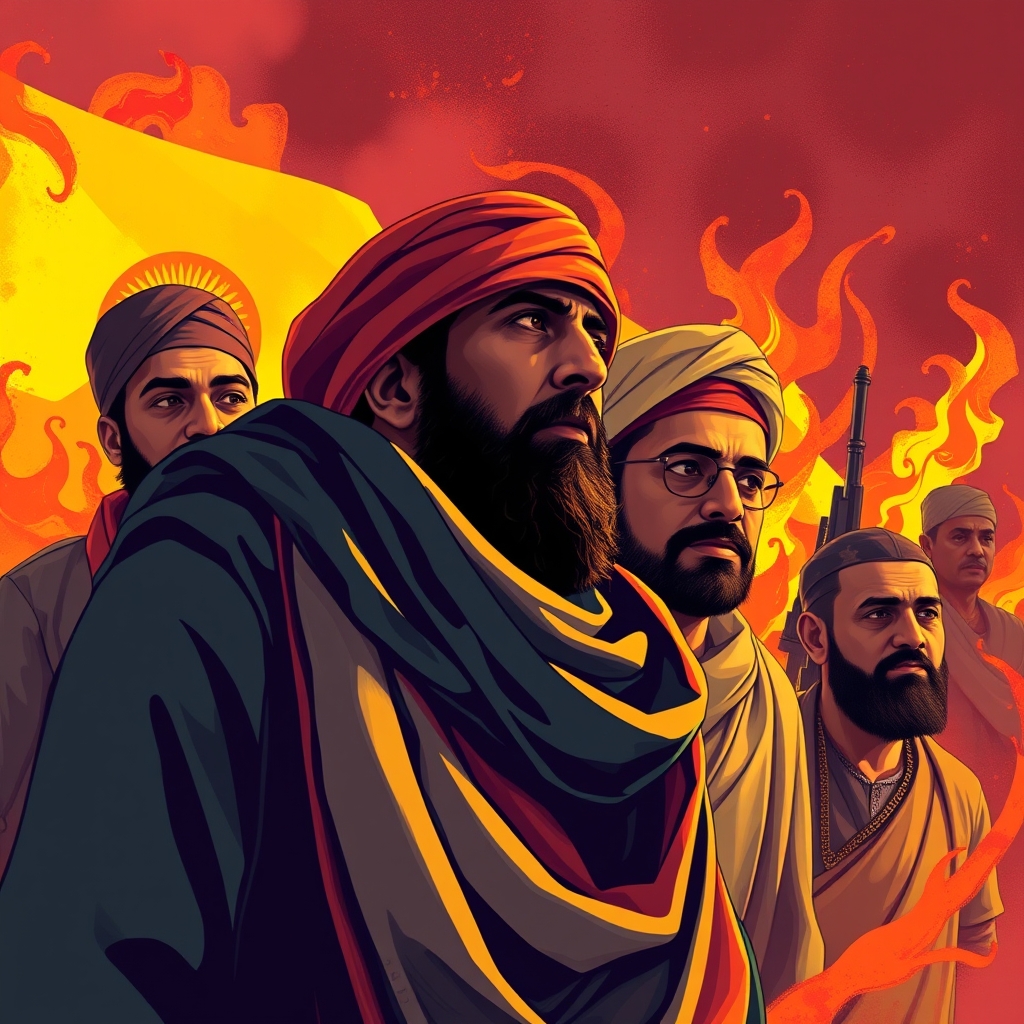
Hezbollah Rejects US-Israel-Lebanon Deal, Declaring It Null and Void
The fragile peace process in West Asia has hit a major roadblock as Hezbollah leader Naim Qassem officially condemned the newly brokered Washington framework agreement. While the U.S.-brokered deal aims to end decades of conflict through Lebanese military deployment and Hezbollah disarmament, the militant group's defiance threatens to reignite hostilities in the region.
The Washington Framework: A Roadmap to Ceasefire?
On June 27, 2026, a significant diplomatic breakthrough was announced in Washington following five intense rounds of negotiations. The agreement between the United States, Israel, and Lebanon seeks to conclusively end the state of war between the two nations.
A critical component of the deal is a pilot program where the Lebanese Armed Forces (LAF) will take control of two specific areas currently occupied by Israeli troops. The long-term objective of the framework is to allow the Lebanese state to restore sovereign authority over its entire territory, contingent upon the verified disarmament of non-state armed groups, specifically Hezbollah. Lebanese President Joseph Aoun has cautiously welcomed the deal, describing it as a "first step" toward reclaiming national sovereignty.
Hezbollah’s Defiance and the Iranian Factor
Despite the diplomatic momentum, Hezbollah leader Naim Qassem has launched a scathing critique of the agreement, labeling it "humiliating, shameful, and a surrender of sovereignty." Qassem declared the deal "null and void," insisting that the Lebanese government must instead adhere to the Iranian-American memorandum of understanding (MoU) reached last week.
The group's rejection stems from its long-standing refusal to engage in direct negotiations with Israel. Hezbollah views the current framework as a way to legitimize Israeli occupation and fears it could eventually lead to the annexation of Lebanese lands. The tension is further complicated by the involvement of Tehran; while Iran insists any regional peace deal must explicitly include Lebanon, the Lebanese government has attempted to navigate a separate diplomatic track to avoid being a mere pawn in the larger Iran-U.S. rivalry.
Escalation Risks: Netanyahu’s Ultimatum
The implementation of the deal faces a severe security challenge from the Israeli side. Prime Minister Benjamin Netanyahu has issued a stern warning, stating that Israeli forces will maintain their presence in occupied Lebanese territories "as long as Hezbollah has not disarmed."
This creates a precarious "chicken-and-egg" scenario: Israel demands disarmament before withdrawing, while Hezbollah views the presence of Israeli troops as the very reason for their continued existence. With Israel's Defence Minister threatening "force" against Iran if it interferes with the deal's implementation, the risk of a localized ceasefire collapsing into a broader regional conflagration remains extremely high.
What It Means for India
As a major stakeholder in West Asian stability and a significant energy importer, the volatility in Lebanon has direct implications for India’s strategic calculus:
- Energy Security and Trade Volatility: Any breakdown in this ceasefire could lead to renewed maritime instability in the Eastern Mediterranean and surrounding waters, potentially spiking global oil prices and disrupting critical trade routes that Indian exporters rely on.
- Diaspora Safety: India maintains a significant diaspora in the Levant and neighboring regions. Continued instability or a full-scale escalation between Israel and Hezbollah would heighten security risks for Indian nationals living in or near conflict zones.
- Geopolitical Balancing: As India navigates its "multi-aligned" foreign policy, the sharpening divide between U.S.-led frameworks and Iranian-backed resistance movements requires New Delhi to exercise extreme diplomatic caution to protect its interests in both the Middle East and its growing strategic partnership with Israel.