US Schools Pilot AI Humanoid Robots as Classroom Teaching Partners
The landscape of global education is witnessing a radical shift as US schools begin integrating advanced humanoid robots into their curricula. From San Diego to New York, experimental programs are testing whether artificial intelligence can move beyond a screen to become a physical presence in the classroom.
The Rise of Ameca and the San Diego Pilot
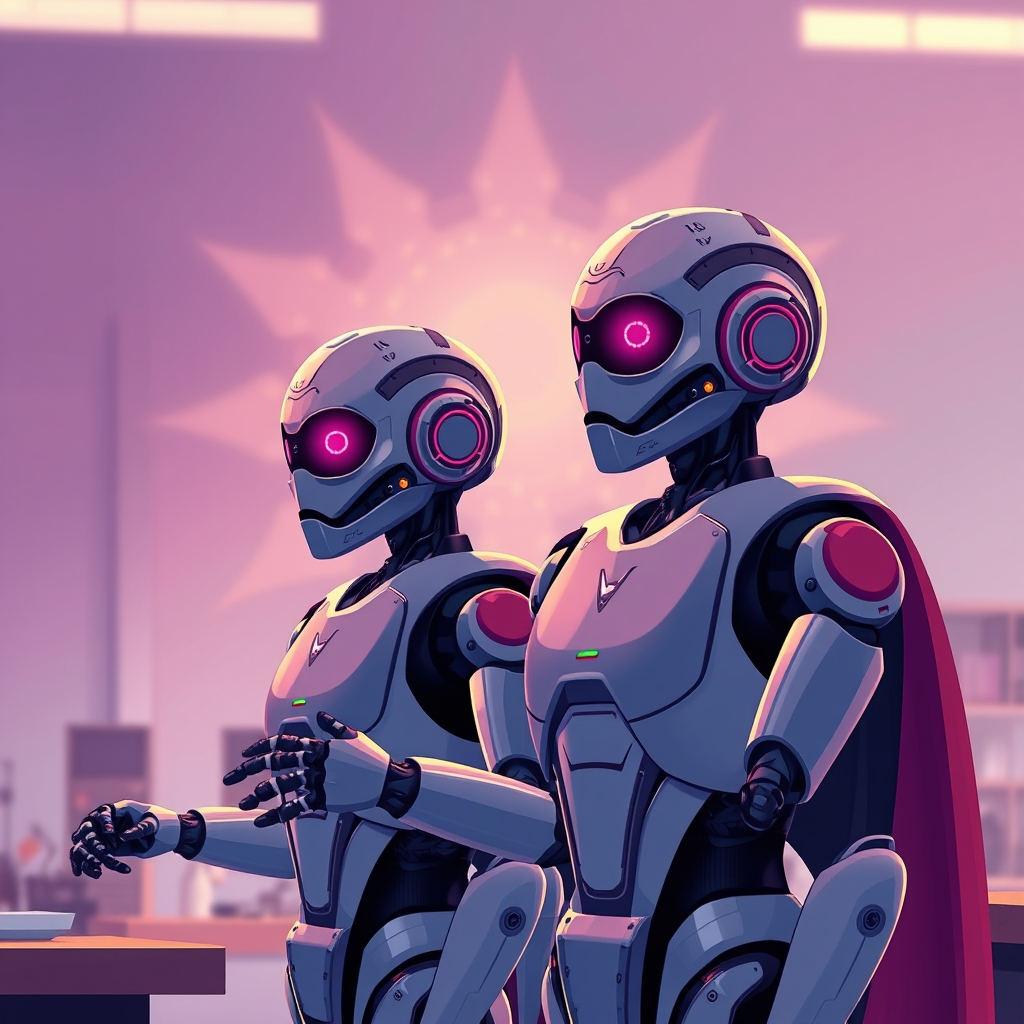
Altus Schools, a charter school network in San Diego, has made a significant $500,000 investment to introduce two ChatGPT-powered humanoid robots into their resource centres. The centerpiece of this experiment is Ameca, a 6-foot-2 advanced humanoid featuring a silicone face, expressive blue eyes, and a transparent skull with glowing purple lights.
Unlike traditional educational software, Ameca is designed to act as a multifaceted "teaching partner" through four distinct personas: Sage the Teacher, Remi the Wellness Coach, Ari the College and Career Planner, and Lexi the Translator. The goal is to provide one-on-one academic support for students working to recover credits and achieve graduation. This pilot represents a global first in researching the use of physical AI in a classroom setting.
Technological Expansion in New York
The push for AI-integrated education extends to the Salamanca City Central School District on the Seneca Nation Reservation in New York. Here, Realbotix Corp has introduced "Optio," an AI-based teaching assistant designed to bridge the gap between school hours and home learning.
Optio utilizes personalized AI avatars trained specifically on the district's curriculum. These avatars provide regulated educational support, concept revision, and round-the-clock tutoring in multiple languages. By pairing Optio with Realbotix M-Series humanoid robots, the district aims to foster interactive learning while promoting STEM (Science, Technology, Engineering, and Mathematics) education through hands-on robotics engagement.
Debates Over Safety and Efficacy
Despite the technological allure, the move has met with significant academic and ethical skepticism. Wayne Holmes, a professor of critical studies of AI and education at University College London, has cautioned that there is currently no independent, large-scale evidence to prove that these tools are safe, effective, or beneficial for students.
Critics point out that even industry leaders like OpenAI have not fully mastered the challenge of making AI chatbots entirely safe for children. The debate centers on whether the high cost of such "expensive experiments" is justified, or if the psychological and developmental impact of replacing human interaction with silicon-based personas remains an unknown risk.
What It Means for India
- Strategic Tech Leadership: As the US pioneers the physical integration of AI in education, India must accelerate its own R&D in humanoid robotics and "Physical AI" to ensure it remains a leader in the global STEM landscape rather than just a consumer of Western educational technology.
- Digital Divide Concerns: While US schools experiment with $500,000 robots, India faces the challenge of ensuring that AI-driven educational tools—when eventually deployed—do not widen the gap between elite private institutions and resource-constrained government schools.
- Human-Centric AI Policy: The concerns raised by US academics regarding safety and efficacy provide a roadmap for Indian policymakers. India will need to develop robust regulatory frameworks for "AI in Education" to protect students from algorithmic bias and ensure that AI serves as a supplement to, rather than a replacement for, human teachers.