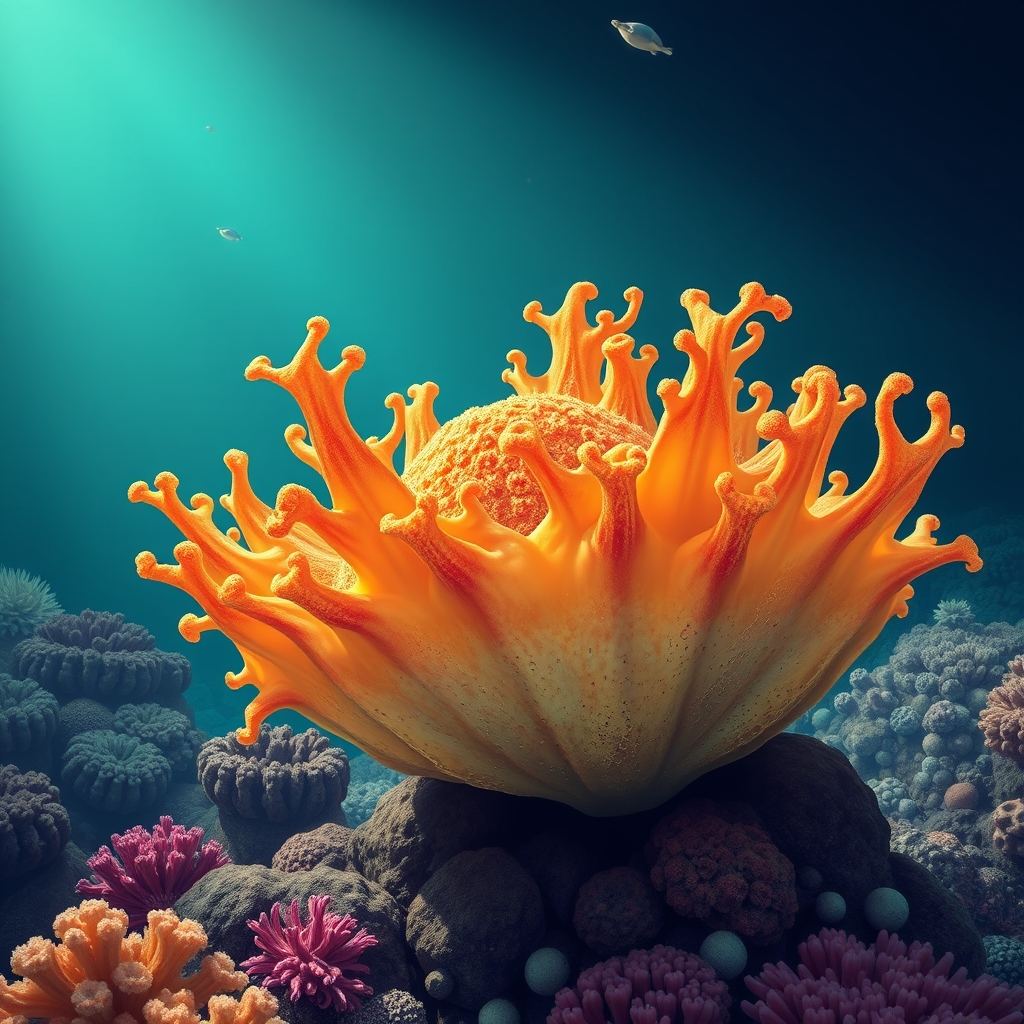
Ancient Caribbean Sponge Living for 2,300 Years Offers Ocean Secrets
A massive Caribbean sponge, potentially over 2,300 years old, has been identified by scientists, standing as one of the oldest documented animals on Earth. This biological marvel, which may have begun its life before the height of the Roman Empire, offers a living timeline of our planet's shifting oceanic conditions.
A Living Witness to Human History
The discovery of the giant barrel sponge (Xestospongia muta) in the Florida Keys has stunned the scientific community. Researchers suggest that this organism may have settled on the seabed as a microscopic larva around the time of the Carthaginian general Hannibal’s famous crossing of the Alps. Known as the "redwoods of the reef" due to their immense size and slow growth, these sponges expand by only a few millimeters to centimeters each year.
Unlike terrestrial trees, sponges do not possess annual growth rings. To estimate this staggering age, scientists utilized a complex combination of long-term growth measurements, mathematical modeling, and specialized radiocarbon dating techniques. If validated through further peer-reviewed research, this specimen would represent a rare instance of an animal surviving millennia of hurricanes, shifting sea levels, and changing ocean temperatures.
The "Redwoods of the Reef" and Ecological Vitality
Beyond its age, the giant barrel sponge plays a critical role in the health of marine ecosystems. These organisms act as natural filtration systems, pumping thousands of liters of seawater through intricate internal canal systems to extract food particles and oxygen. In doing so, they remove bacteria and recycle essential nutrients, which are fundamental to the survival of surrounding coral reef ecosystems.
Furthermore, marine biologists view these ancient sponges as biological archives. Because they reside in a fixed position on the seabed for centuries, their body structures preserve chemical signatures that reflect historical ocean temperatures, water chemistry, and long-term climate variability. They serve as a living record of the Earth's environmental evolution.
Resilience Amidst a Changing Climate
As global warming continues to threaten marine biodiversity, the survival of the Xestospongia muta provides a crucial case study in resilience. While many coral reefs are currently facing mass bleaching events due to rising temperatures, these sponges have demonstrated an extraordinary ability to endure environmental stress.
Understanding the biological mechanisms that allow such a slow-metabolizing organism to survive extreme ecological disturbances could provide scientists with vital clues for conservation efforts. By studying how these "redwoods" maintain stability amidst a warming ocean, researchers hope to develop better strategies for protecting the broader marine biosphere.
What It Means for India
While the discovery is centered in the Caribbean, its implications resonate deeply with India’s strategic and scientific interests:
- Blue Economy and Marine Research: As India expands its "Blue Economy" initiatives and strengthens its presence in the Indian Ocean Region (IOR), studying resilient marine organisms like the giant sponge can inform India's own coral reef conservation and sustainable fisheries management.
- Climate Change Intelligence: For a nation with a vast coastline and significant dependence on marine resources, the ability to use marine organisms as "environmental archives" is crucial for modeling long-term climate impacts on the Indian Ocean.
- Biodiversity Conservation: The resilience of these sponges provides a scientific benchmark for protecting India’s own diverse marine ecosystems, from the Lakshadweep islands to the Andaman and Nicobar archipelago, against the rising threat of ocean acidification and warming.