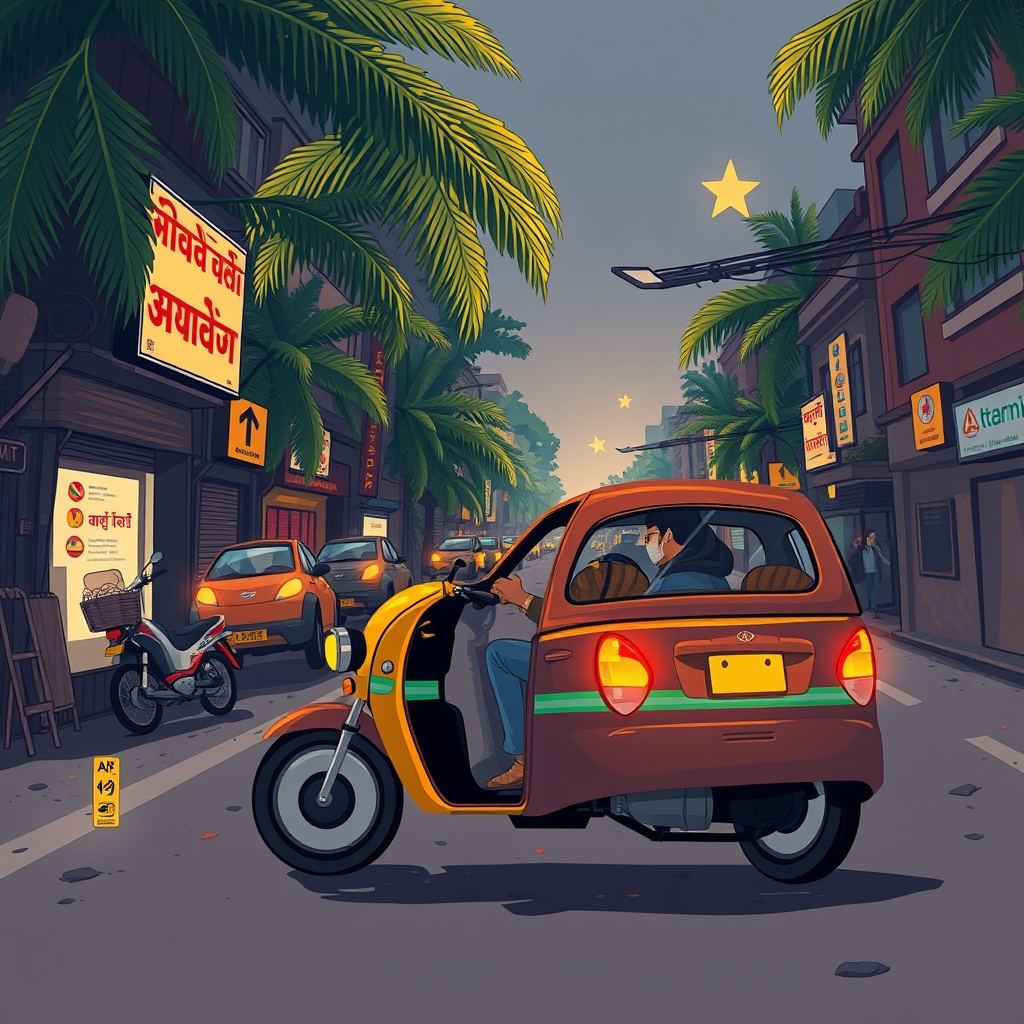
An American traveler in Bengaluru once asked an auto driver for a ride to Chickpet. The driver said no. That should have been the end of it—a routine refusal in a city where thousands of similar exchanges happen every hour. Instead of turning away or driving off, the two men stood there and talked. The traveler later shared the moment online, and it spread fast. People did not hit share because of outrage or spectacle. They shared it because the interaction felt rare, even though it should not be.
The episode offers a counter-narrative to the usual stories that emerge from Indian metros. Bengaluru generates plenty of headlines about traffic jams, metro delays, flooded underpasses, and the general stress of moving thirteen million people through insufficient roads. Those stories are real. But so is this one. A visitor and a local, separated by language and circumstance, finding a few minutes of genuine warmth on the pavement.
The Geography of a Refusal
Chickpet is not some suburban mall with wide driveways and valet parking. It is old Bengaluru—dense, commercial, and historically significant. The area is packed with wholesale cloth merchants, jewelry shops, and narrow lanes that have barely widened in decades. For an auto driver, agreeing to enter Chickpet during business hours often means sacrificing twenty minutes to move two hundred meters. Many refuse the fare simply because the destination is a time trap. The refusal itself is common.
What was uncommon was the manner. The driver did not wave his hand dismissively or pretend not to hear. He stopped. He explained, perhaps gestured toward the congestion ahead, and then stayed for the conversation. That pause is the entire story. In a gig economy where every minute unspent carrying a passenger is a minute losing money, choosing to chat with someone you have already declined to serve is an act of small but clear generosity. The American left without a ride but with a memory that outlasted the trip.
Why This Moment Traveled So Far
Social media feeds surrounding Bengaluru are often predictable. A video of a flooded street. A rant about an auto driver demanding triple the meter rate. A joke about the Silk Board junction that lands every time it rains. The algorithm rewards friction. So when a clip or post showed the opposite—an interaction built on patience rather than argument—it stood out immediately.
Viewers recognized something personal in the exchange. Many Bengaluru residents commented to say this is the side of their city that outsiders rarely see. Not the polished marketing of "India's Silicon Valley," but the ordinary civility of its streets. The viral reach did not depend on celebrity names or manufactured drama. It relied on something simpler: the shared recognition that a person can say no to your request and still say yes to your presence.
What Actually Happened There
The story is light on specifics, and that is part of its power. We do not know the exact words. We do not know how long they stood there. But we know enough to understand three things that rarely get discussed in travel blogs or city planning reports.
Small talk serves a purpose. Cities are held together by more than fiber optic cables and flyovers. They survive on micro-interactions. A nod to a neighbor. A brief complaint about heat with a shopkeeper. A two-minute conversation with a driver who cannot take your fare. These moments build what sociologists sometimes call "bridging capital"—the loose ties that make a place feel navigable. The traveler and the driver probably did not exchange life stories. They did not need to. The value was in the attempt to connect across obvious differences.
Kindness works outside the transaction. Travel reduces locals to providers and visitors to customers. Every request becomes a potential deal. When the driver refused the ride, the economic relationship ended. There was no service to render, no tip to earn, no review to chase. His decision to remain courteous afterward was not professional etiquette. It was personal choice. That distinction matters. In visit-after-visit itineraries where every human encounter is rated and reviewed, an interaction with zero commercial value can feel startlingly honest.
Local character often hides in plain sight. Visitors arrive with mental scripts. Some expect relentless hassle; others expect Bollywood color. Reality is usually quieter. The auto driver in this story was not performing for a camera. He was simply being himself in a city where people still treat strangers like temporary neighbors rather than background noise. That authenticity is what exceeded expectations.
Reading the City at Street Level
Bengaluru’s global image is anchored in glass office parks, startup pitch decks, and the pleasant irony of air-conditioned innovation centers built on top of garden-city roots. Infrastructure discourse dominates local media—rightly so, because the city groans under its growth. But infrastructure is only half the story. The other half is how people behave inside it.
Every visitor to an Indian metropolis learns quickly that auto negotiations are a rite of passage. You ask ten drivers before one agrees. You haggle, you walk away, you try again. It can be exhausting. It is also intimate. You see faces, hear accents, read moods. Most of the time, the system functions through blunt efficiency. Occasionally, it offers a reminder that the person behind the handlebars has a full interior life—opinions, patience, curiosity, a sense of humor.
This viral moment highlighted exactly that. It did not romanticize the job. Driving an auto in Bengaluru traffic is hard labor. It argued something more grounded: that even within the grind, people choose how they treat each other.
A Real Takeaway
You do not need a guided cultural tour or a three-hour workshop to understand a place. Sometimes a single refusal on a busy street teaches you more than a brochure. The American traveler did not record a transaction. He recorded an exception that should be the rule—two people acknowledging each other even when nothing was for sale.
For residents, the story is a nudge. Viral moments fade in forty-eight hours, but the behavior they celebrate can be repeated indefinitely. The next time you decline a request, how you decline it matters. For visitors, the lesson is to stay open to the unscripted encounter. The best travel memories rarely happen inside ticketed monuments. They happen on sidewalks, at bus stops, and in the passenger seat that never was.
The internet found a simple story about Bengaluru and clicked share. That act alone suggests people are hungry for proof that cities remain human at their core. Beneath the noise and the exhaust, the warmth is still there. You just have to stop for it.
Source: News18
Join our learning community: GyaanSetu Bharat on Telegram