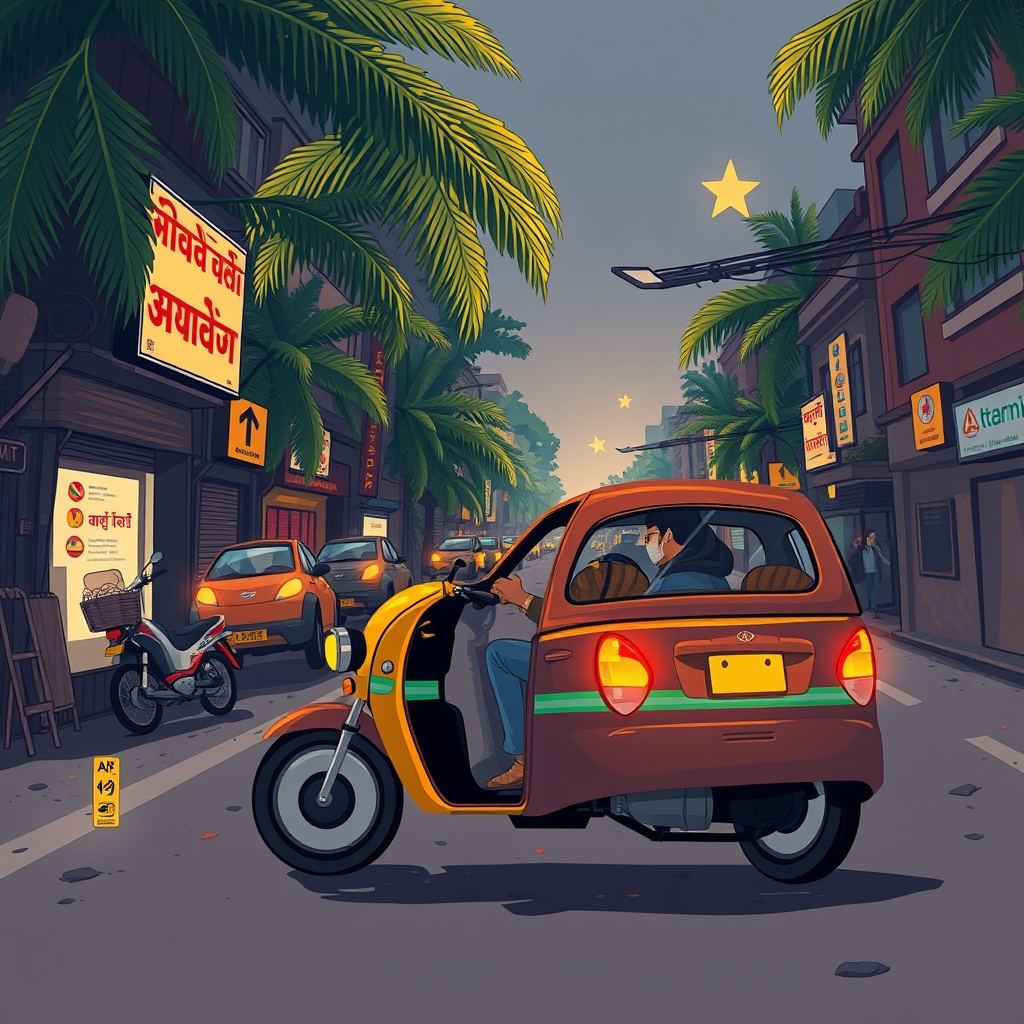
An American traveler in Bengaluru once asked an auto driver for a ride to Chickpet. The driver said no. That should have been the end of it—a routine refusal in a city where thousands of similar exchanges happen every hour. Instead of turning away or driving off, the two men stood there and talked. The traveler later shared the moment online, and it spread fast. People did not hit share because of outrage or spectacle. They shared it because the interaction felt rare, even though it should not be.
The episode offers a counter-narrative to the usual stories that emerge from Indian metros. Bengaluru generates plenty of headlines about traffic jams, metro delays, flooded underpasses, and the general stress of moving thirteen million people through insufficient roads. Those stories are real. But so is this one. A visitor and a local, separated by language and circumstance, finding a few minutes of genuine warmth on the pavement.
The Geography of a Refusal
Chickpet is not some suburban mall with wide driveways and valet parking. It is old Bengaluru—dense, commercial, and historically significant. The area is packed with wholesale cloth merchants, jewelry shops, and narrow lanes that have barely widened in decades. For an auto driver, agreeing to enter Chickpet during business hours often means sacrificing twenty minutes to move two hundred meters. Many refuse the fare simply because the destination is a time trap. The refusal itself is common.
What was uncommon was the manner. The driver did not wave his hand dismissively or pretend not to hear. He stopped. He explained, perhaps gestured toward the congestion ahead, and then stayed for the conversation. That pause is the entire story. In a gig economy where every minute unspent carrying a passenger is a minute losing money, choosing to chat with someone you have already declined to serve is an act of small but clear generosity. The American left without a ride but with a memory that outlasted the trip.
Why This Moment Traveled So Far
Social media feeds surrounding Bengaluru are often predictable. A video of a flooded street. A rant about an auto driver demanding triple the meter rate. A joke about the Silk Board junction that lands every time it rains. The algorithm rewards friction. So when a clip or post showed the opposite—an interaction built on patience rather than argument—it stood out immediately.
Viewers recognized something personal in the exchange. Many Bengaluru residents commented to say this is the side of their city that outsiders rarely see. Not the polished marketing of "India's Silicon Valley," but the ordinary civility of its streets. The viral reach did not depend on celebrity names or manufactured drama. It relied on something simpler: the shared recognition that a person can say no to your request and still say yes to your presence.
What Actually Happened There
The story is light on specifics, and that is part of its power. We do not know the exact words. We do not know how long they stood there. But we know enough to understand three things that rarely get discussed in travel blogs or city planning reports.
Small talk serves a purpose. Cities are held together by more than fiber optic cables and flyovers. They survive on micro-interactions. A nod to a neighbor. A brief complaint about heat with a shopkeeper. A two-minute conversation with a driver who cannot take your fare. These moments build what sociologists sometimes call "bridging capital"—the loose ties that make a place feel navigable. The traveler and the driver probably did not exchange life stories. They did not need to. The value was in the attempt to connect across obvious differences.
Kindness works outside the transaction. Travel reduces locals to providers and visitors to customers. Every request becomes a potential deal. When the driver refused the ride, the economic relationship ended. There was no service to render, no tip to earn, no review to chase. His decision to remain courteous afterward was not professional etiquette. It was personal choice. That distinction matters. In visit-after-visit itineraries where every human encounter is rated and reviewed, an interaction with zero commercial value can feel startlingly honest.
Lokale eigenheid verbergt zich vaak voor het blote oog. Bezoekers komen aan met mentale scripts. Sommigen verwachten constante ergernissen; anderen verwachten de kleuren van Bollywood. De realiteit is meestal rustiger. De auto-chauffeur in dit verhaal was niet aan het acteren voor een camera. Hij was gewoon zichzelf in een stad waar mensen vreemden nog steeds behandelen als tijdelijke buren in plaats van achtergrondruis. Die authenticiteit is wat de verwachtingen overtrof.
De stad lezen op straatniveau
Het wereldwijde imago van Bengaluru is verankerd in glazen kantoorparken, startup pitch decks en de aangename ironie van airconditioned innovatiecentra die zijn gebouwd op de wortels van een tuinstad. Het debat over infrastructuur domineert de lokale media — terecht, want de stad zucht onder haar eigen groei. Maar infrastructuur is slechts de helft van het verhaal. De andere helft is hoe mensen zich daarin gedragen.
Elke bezoeker van een Indiase metropool leert snel dat onderhandelingen met auto-chauffeurs een overgangsritueel zijn. Je vraagt het aan tien chauffeurs voordat er één instemt. Je onderhandelt, je loopt weg, je probeert het opnieuw. Het kan uitputtend zijn. Het is ook intiem. Je ziet gezichten, hoort accenten, leest stemmingen. Meestal functioneert het systeem via brute efficiëntie. Af en toe biedt het een herinnering dat de persoon achter het stuur een rijk innerlijk leven heeft — meningen, geduld, nieuwsgierigheid, een gevoel voor humor.
Dit virale moment belichtte precies dat. Het romantiseerde het werk niet. Een auto besturen in het verkeer van Bengaluru is zwaar werk. Het beargumenteerde iets fundamenteler: dat mensen, zelfs midden in de dagelijkse sleur, zelf kiezen hoe ze met elkaar omgaan.
Een echte les
Je hebt geen rondgeleide culturele tour of een workshop van drie uur nodig om een plek te begrijpen. Soms leert een enkele afwijzing in een drukke straat je meer dan een brochure. De Amerikaanse reiziger legde geen transactie vast. Hij legde een uitzondering vast die de regel zou moeten zijn — twee mensen die elkaar erkennen, zelfs wanneer er niets te koop is.
Voor inwoners is het verhaal een duwtje in de rug. Virale momenten vervagen binnen veertiocht acht uur, maar het gedrag dat ze vieren kan onbeperkt worden herhaald. De volgende keer dat je een verzoek afwijst, doet de manier waarop je dat doet ertoe. Voor bezoekers is de les om open te blijven staan voor onvoorziene ontmoetingen. De mooiste reisherinneringen ontstaan zelden in monumenten waarvoor je een kaartje moet kopen. Ze ontstaan op de stoep, bij bushaltes en op de passagiersstoel die er nooit was.
Het internet vond een simpel verhaal over Bengaluru en klikte op delen. Die handeling alleen al suggereert dat mensen hunkeren naar het bewijs dat steden in de kern menselijk blijven. Onder de herrie en de uitlaatgassen is de warmte er nog steeds. Je moet er alleen even voor stilstaan.
Bron: News18
Word lid van onze leercommunity: GyaanSetu Bharat op Telegram