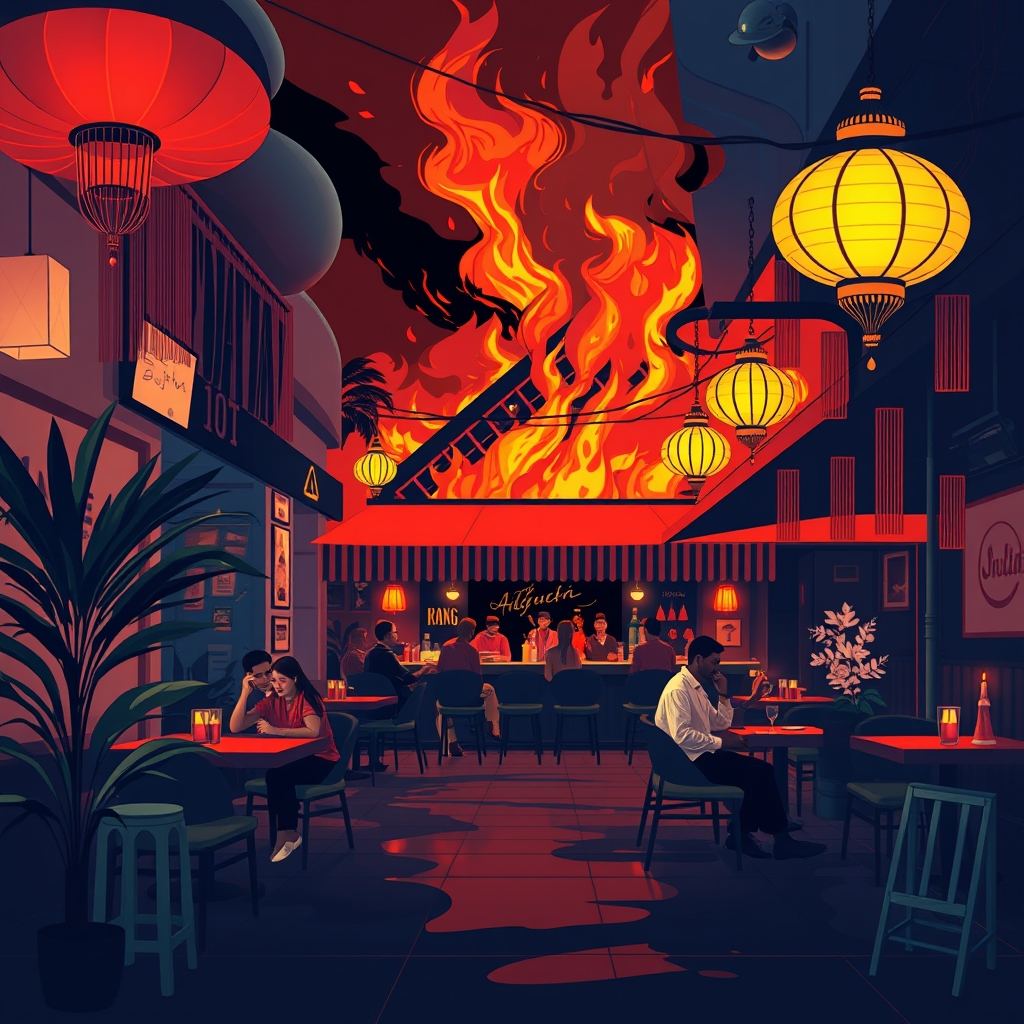
On the night of July 12, 2026, a fire tore through Rong Beer Na Lat Phrao, a restaurant and bar in Bangkok. Thirty people died. The blaze did not need to become a mass-casualty event. What turned it into one was not the fire itself, but the absence of nearly every system meant to slow it down and guide people out alive.
When the Alarms Stayed Silent
Wasawat Kitsiriteeraphak, former president of Thailand’s Building Inspector Association, surveyed the burned-out site alongside forensic police. His assessment was stark. The venue had no emergency exit signage. There was no emergency lighting. The fire alarm devices were not functional.
In a crowded room filled with live music, alcohol, and electrical equipment, these are not minor oversights. They are the difference between a controlled evacuation and a stampede in the dark. Smoke moves faster than people think—it can fill a room in under two minutes, and it kills visibility long before it kills by heat or toxic inhalation. Emergency exit signs are designed to cut through that blindness. They stay lit when the main power fails, pointing toward open air. Emergency lighting keeps staircases and doorways from becoming pits. A functional fire alarm buys time; even thirty seconds of warning can clear a small venue before the smoke becomes unbreathable.
At Rong Beer Na Lat Phrao, patrons were given none of these protections. The space was configured to host large crowds and loud performances, yet it offered them no audible warning and no visible path to safety once the lights went out.
Licensed as a Restaurant, Operated as a Nightclub
The legal paperwork told a different story than the reality on the ground. Rong Beer Na Lat Phrao was officially registered as a restaurant. Ansit Samphantarat, an official at Thailand’s Interior Ministry, confirmed that the establishment was functioning as an entertainment venue, complete with live music, alcohol sales, and dancing.
Bangkok’s zoning regulations exist precisely because these two types of spaces carry different risks. Designated entertainment zones, such as Silom and Royal City Avenue (RCA), are subject to strict building control regulations. Nightclubs in these areas must meet higher standards for fire suppression, exit width, structural fire resistance, and maximum occupancy. A restaurant license carries softer requirements because the assumption is seated dining, controlled food preparation, and limited crowd movement.
By operating in northeastern Bangkok under a mere restaurant permit, the owners sidestepped the costly, life-saving infrastructure required of entertainment venues. The building controls were calibrated for diners, not for standing crowds, stage lights, and sound systems loud enough to drown out a shout for help. It was a legal fiction that saved money in the short term and cost lives in the worst possible way.
A Pattern That Refuses to Break
This tragedy is not an isolated accident in Thailand’s history. In 2009, the Santika club blaze killed 67 people. In 2022, the Mountain B nightclub fire in Chonburi claimed another 25 lives. Again and again, investigators have found the same failures: exits chained or hidden, alarms disabled or absent, interiors lined with cheap, highly flammable soundproofing materials. The pattern points to a systemic problem, not a string of bad luck. When enforcement is inconsistent and penalties feel negotiable, business owners learn to gamble with other people’s lives.