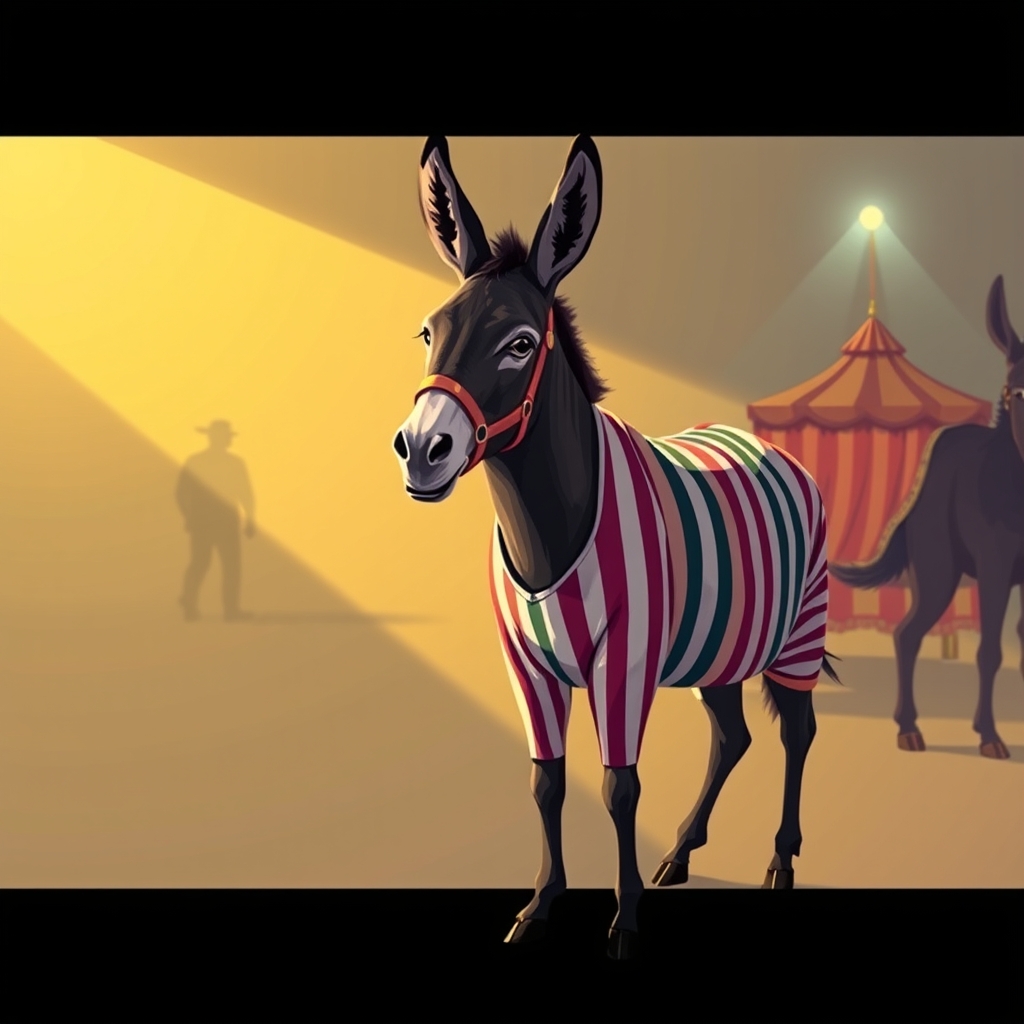
The sight of a donkey wearing striped pyjamas or a custom-tailored jumpsuit sounds like the setup for a village fair joke. But walk through paddocks in Devon or Dorset during a July heatwave and that is exactly what you will find. British farmers are not playing dress-up. They are responding to longer, hotter summers and the biting insects those summers bring. The garments have been nicknamed “don-gerees,” and they belong to a category of grassroots climate adaptation that is practical, slightly absurd, and entirely necessary.
Why UK Farmers Are Dressing Their Donkeys
Donkeys have always dealt with flies. What has changed is the intensity. Rising summer temperatures in the United Kingdom have lengthened the breeding season for midges, horseflies, and other biting pests. These insects do not simply annoy the animals. They cause allergic dermatitis, open sores, and significant distress that can lead to weight loss or secondary infection. Certain breeds carry additional risk because of thin coats and skin sensitivities that make them vulnerable to both insect bites and ultraviolet exposure.
Standard solutions are falling short. Topical repellents wash away with sweat or rain. Keeping animals inside stables during peak insect hours creates its own problems: respiratory stress, reduced foraging, and the mental strain of confinement for animals that evolved to roam and graze. Stable fans help, but electricity costs have climbed, and air movement alone does not stop a determined cloud of midges.
The “don-geree” emerged from this gap. It is essentially a lightweight, breathable suit tailored to the donkey’s body. Makers use fine mesh or soft cotton blends that block insects while allowing airflow. The garments fasten with velcro, clips, or buckles placed to avoid chafing at the withers or chest. A good design covers the torso, neck, and belly; some include tail flaps and leg wraps for full coverage. Because the material doubles as a sun shield, it also prevents sunburn on pink-skinned or lightly coated animals. Owners who use them report calmer animals, fewer weeping sores, and a lower risk of fly-strike. It is a low-tech intervention born from watching an animal suffer and realizing that a sewing machine could address what a medicine bottle could not.
When Stable Doors Aren’t Enough
The United Kingdom still carries a cultural reputation for drizzle and mild summers, but that climatic baseline is shifting. Heatwaves now stall over the country for weeks, raising average seasonal temperatures and creating conditions that let insect populations surge. Stagnant water, warmer nights, and longer daylight hours extend the active season for pests well into the autumn in some regions.
Traditional British husbandry was built for temperate weather. Barns were designed to keep drafts out, not to move hot air through. Pasture rotation schedules assumed predictable dry spells and recoverable grass. When environmental baselines shift, infrastructure and daily routines lag behind. That leaves farmers with an uncomfortable choice: drench animals in more chemicals, confine them in expensive cooled housing, or watch productivity and welfare decline.
Physical barriers sidestep that dilemma. A donkey in a breathable suit needs no pharmaceutical repellent applied daily. It requires no electricity, no change in land use, and no alteration to feeding schedules. The garment works as long as it is on the animal. This matters because the underlying driver is not a temporary hot spell. Climate patterns are altering the habitat and activity levels of disease-carrying insects across temperate zones. What UK farmers are seeing with midges and flies mirrors what livestock managers elsewhere are seeing with ticks and mosquitoes. The “don-geree” is a micro-level signal of a macro-level biological shift.
The Bigger Pattern in Animal Husbandry
It is tempting to treat the pyjama-clad donkey as a curiosity for