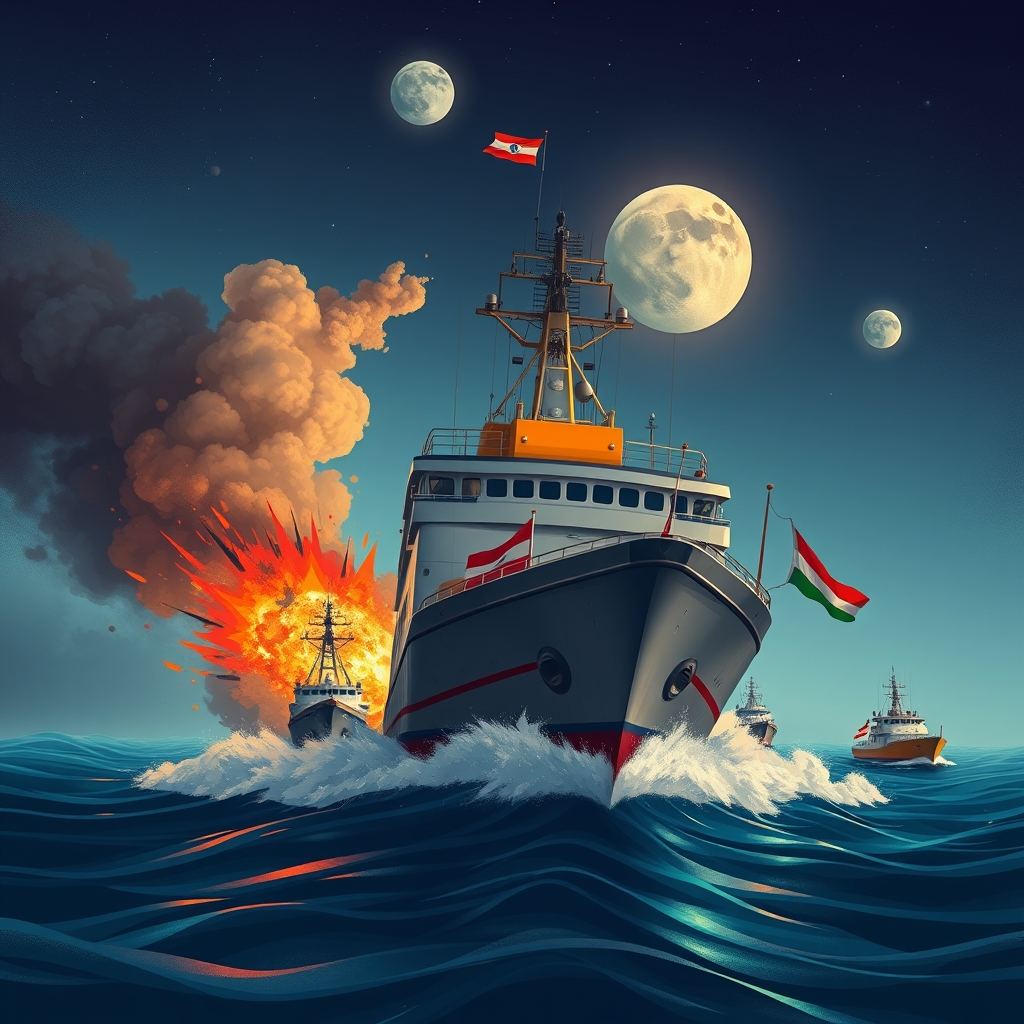
US forces fired Hellfire missiles at the Curacao-flagged tanker M/T Belma on July 14, blowing out its smokestack and halting the ship before it could reach Iran’s Kharg Island oil terminal. It was the first time the United States used kinetic weapons against a commercial vessel in its renewed Gulf blockade, shifting from passive monitoring to active interdiction.
How the engagement unfolded
CENTCOM said a surveillance aircraft spotted the tanker in international waters heading for Kharg Island, a hub for Iran’s crude exports. The vessel ignored several warnings to turn back. The aircraft then launched two Hellfire missiles that struck the smokestack, crippling the propulsion system. CENTCOM confirmed the ship is no longer en route to Iran. The attack occurred within the first 24 hours of the renewed enforcement, a period that also saw two other commercial ships redirected after complying with the blockade.
Why the United States changed tactics
In recent years US naval patrols in the Arabian Gulf have relied on tracking and boarding, leaving seizure decisions to senior commanders. The Belma incident shows Washington willing to use precision fire to achieve the same result without sinking a ship. By targeting a non-vital structure rather than the hull, the US can stop a non-compliant vessel while limiting loss of life and environmental fallout.
The shift serves two purposes. First, it tells shipping operators that ignoring the blockade will trigger a kinetic response, raising the cost of non-compliance. Second, it gives Washington a scalable tool: a missile strike can disable a ship’s engine, and a boarding team can be deployed later if the captain agrees to comply. The approach threads a narrow line between a “soft” blockade that leans on diplomatic pressure and a “hard” one that risks open conflict.
The stakes for Iran and the global oil market
Kharg Island processes a sizable share of Iran’s oil shipments. Cutting traffic to the island squeezes Tehran’s ability to earn foreign currency, a key pillar of its economy under sanctions. The United States hopes a tighter maritime chokehold will force Tehran to reconsider its regional policies, especially its nuclear program and support for proxy groups.
For oil markets, any Gulf disruption reverberates worldwide. Even a single delayed tanker can shift supply curves enough to lift spot prices. Insurers already flag the Strait of Hormuz as high-risk; a precedent of missile strikes on commercial ships could push premiums higher and encourage carriers to take longer, costlier routes around the Cape of Good Hope.
Risks to commercial shipping
The Belna case raises immediate concerns for ship owners, insurers and charterers. Vessels that treated the Gulf as a routine leg may now have to factor in the possibility of a missile-based interdiction. The threat is not limited to Iranian-bound traffic; any vessel that appears to flout a US-issued warning could become a target, regardless of flag.
Legal experts warn that using force in international waters sits on a slippery slope. Under the United Nations Convention on the Law of the Sea, a state may take “necessary” measures to enforce a blockade, but the definition of “necessary” is contested. Critics argue that striking a commercial tanker without a boarding or seizure could be deemed excessive, inviting diplomatic protests or reciprocal actions.
Counter-argument: the case for restraint
Proponents of the kinetic approach argue that a precise missile strike is less risky than a boarding operation, which can turn violent and endanger crews. They also note that the US has avoided sinking ships, limiting environmental damage. Opponents counter that any use of weapons against civilian vessels raises the specter of miscalculation. A mis-targeted missile could cause fire, a spill, or loss of life, eroding the moral high ground the United States claims in its sanctions regime.
What to watch next
- Dichiarazioni politiche degli Stati Uniti – Chiarimenti da parte del CENTCOM o del Dipartimento di Stato sulle regole di ingaggio riveleranno se l'attacco missilistico sia stato un episodio isolato o l'inizio di una dottrina più ampia.
- Attività navale regionale – Storicamente, le forze iraniane hanno risposto ai blocchi con manovre di “dimostrazione di forza”. Un'escalation nelle pattuglie iraniane o il dispiegamento di motovedette d'attacco veloce potrebbe aumentare il rischio di uno scontro diretto.
- Premi assicurativi e tariffe di nolo – Un aumento misurabile dei premi assicurativi marittimi o un cambiamento nei modelli di trasporto segnalerebbe che il mercato percepisce la nuova minaccia come concreta.
- Sfide legali – Qualsiasi ricorso presso un tribunale internazionale o una protesta formale da parte dello Stato di bandiera della Belma potrebbe mettere alla prova la legalità dell'interdizione cinetica in tempo di pace.
Implicazioni per l'India
L'India importa una quota significativa del suo greggio dal Golfo e la sua flotta mercantile transita regolarmente nello Stretto di Hormuz. Il blocco cinetico potrebbe tradursi in costi di nolo più elevati, condizioni assicurative più stringenti e la necessità di piani di rotta più elaborati. Dal punto di vista diplomatico, Nuova Delhi deve bilanciare la sua partnership strategica con Washington con la sua dipendenza economica dal petrolio del Golfo e la necessità di rotte di navigazione stabili. Un'escalation prolungata potrebbe costringere l'India a fare pressione per meccanismi multilaterali di de-escalation o a sviluppare rotte di approvvigionamento alternative, come un aumento delle importazioni dalla Russia o dagli Stati Uniti.
In sintesi
L'attacco missilistico alla M/T Belma dimostra che gli Stati Uniti sono pronti a impiegare una forza cinetica precisa per far rispettare il loro blocco marittimo all'Iran. Tale scelta aggiunge un nuovo livello di rischio per la navigazione commerciale, complica i dibattiti legali sull'uso della forza in acque internazionali e potrebbe avere ripercussioni sui mercati petroliferi globali. Il modo in cui gli Stati Uniti, l'Iran e la più ampia comunità internazionale risponderanno plasmerà il calcolo della sicurezza di uno dei corridoi marittimi più trafficati al mondo per i mesi a venire.