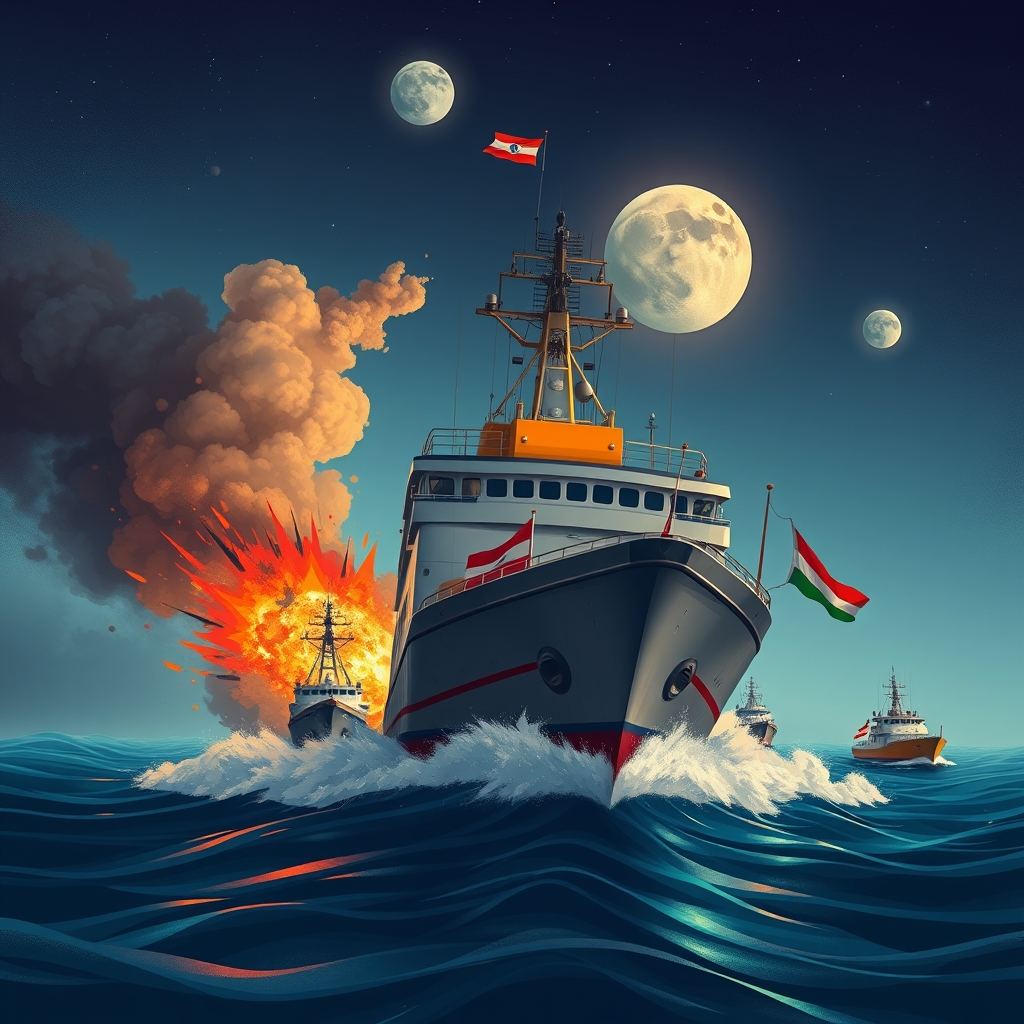
US forces fired Hellfire missiles at the Curacao-flagged tanker M/T Belma on July 14, blowing out its smokestack and halting the ship before it could reach Iran’s Kharg Island oil terminal. It was the first time the United States used kinetic weapons against a commercial vessel in its renewed Gulf blockade, shifting from passive monitoring to active interdiction.
How the engagement unfolded
CENTCOM said a surveillance aircraft spotted the tanker in international waters heading for Kharg Island, a hub for Iran’s crude exports. The vessel ignored several warnings to turn back. The aircraft then launched two Hellfire missiles that struck the smokestack, crippling the propulsion system. CENTCOM confirmed the ship is no longer en route to Iran. The attack occurred within the first 24 hours of the renewed enforcement, a period that also saw two other commercial ships redirected after complying with the blockade.
Why the United States changed tactics
In recent years US naval patrols in the Arabian Gulf have relied on tracking and boarding, leaving seizure decisions to senior commanders. The Belma incident shows Washington willing to use precision fire to achieve the same result without sinking a ship. By targeting a non-vital structure rather than the hull, the US can stop a non-compliant vessel while limiting loss of life and environmental fallout.
The shift serves two purposes. First, it tells shipping operators that ignoring the blockade will trigger a kinetic response, raising the cost of non-compliance. Second, it gives Washington a scalable tool: a missile strike can disable a ship’s engine, and a boarding team can be deployed later if the captain agrees to comply. The approach threads a narrow line between a “soft” blockade that leans on diplomatic pressure and a “hard” one that risks open conflict.
The stakes for Iran and the global oil market
Kharg Island processes a sizable share of Iran’s oil shipments. Cutting traffic to the island squeezes Tehran’s ability to earn foreign currency, a key pillar of its economy under sanctions. The United States hopes a tighter maritime chokehold will force Tehran to reconsider its regional policies, especially its nuclear program and support for proxy groups.
For oil markets, any Gulf disruption reverberates worldwide. Even a single delayed tanker can shift supply curves enough to lift spot prices. Insurers already flag the Strait of Hormuz as high-risk; a precedent of missile strikes on commercial ships could push premiums higher and encourage carriers to take longer, costlier routes around the Cape of Good Hope.
Risks to commercial shipping
The Belna case raises immediate concerns for ship owners, insurers and charterers. Vessels that treated the Gulf as a routine leg may now have to factor in the possibility of a missile-based interdiction. The threat is not limited to Iranian-bound traffic; any vessel that appears to flout a US-issued warning could become a target, regardless of flag.
Legal experts warn that using force in international waters sits on a slippery slope. Under the United Nations Convention on the Law of the Sea, a state may take “necessary” measures to enforce a blockade, but the definition of “necessary” is contested. Critics argue that striking a commercial tanker without a boarding or seizure could be deemed excessive, inviting diplomatic protests or reciprocal actions.
Counter-argument: the case for restraint
Proponents of the kinetic approach argue that a precise missile strike is less risky than a boarding operation, which can turn violent and endanger crews. They also note that the US has avoided sinking ships, limiting environmental damage. Opponents counter that any use of weapons against civilian vessels raises the specter of miscalculation. A mis-targeted missile could cause fire, a spill, or loss of life, eroding the moral high ground the United States claims in its sanctions regime.
What to watch next
- Kenyataan dasar AS – Penjelasan daripada CENTCOM atau Jabatan Negara mengenai peraturan penglibatan akan mendedahkan sama ada serangan peluru berpandu tersebut adalah terpencil atau permulaan kepada doktrin yang lebih luas.
- Aktiviti tentera laut serantau – Pasukan Iran secara sejarahnya telah bertindak balas terhadap sekatan dengan manuver “tunjuk kekuatan”. Peningkatan dalam rondaan Iran atau pengerahan bot serangan pantas boleh meningkatkan risiko pertembungan secara langsung.
- Kadar insurans dan tambang – Peningkatan ketara dalam premium insurans marin atau peralihan dalam corak tambang akan memberi isyarat bahawa pasaran menganggap ancaman baharu tersebut sebagai sesuatu yang nyata.
- Cabaran undang-undang – Sebarang pemfailan di tribunal antarabangsa atau bantahan rasmi oleh negara bendera Belma boleh menguji kesahihan interdiksi kinetik semasa waktu aman.
Implikasi terhadap India
India mengimport sebahagian besar minyak mentahnya dari Teluk, dan armada dagangnya rutin melalui Selat Hormuz. Sekatan kinetik tersebut boleh mengakibatkan kos tambang yang lebih tinggi, syarat insurans yang lebih ketat, dan keperluan untuk pelan laluan yang lebih terperinci. Dari segi diplomatik, New Delhi mesti mengimbangi perkongsian strategiknya dengan Washington berbanding pergantungan ekonominya terhadap minyak Teluk dan keperluan untuk laluan perkapalan yang stabil. Peningkatan ketegangan yang berpanjangan boleh memaksa India untuk mendesak mekanisme pengurangan ketegangan pelbagai hala atau membangunkan laluan bekalan alternatif, seperti peningkatan import dari Rusia atau Amerika Syarikat.
Rumusan
Serangan peluru berpandu ke atas M/T Belma menunjukkan Amerika Syarikat bersedia untuk menggunakan kekuatan kinetik yang tepat bagi menguatkuasakan sekatan maritimnya terhadap Iran. Pilihan tersebut menambah lapisan risiko baharu bagi perkapalan komersial, merumitkan perdebatan undang-undang mengenai penggunaan kekerasan di perairan antarabangsa, dan boleh memberi kesan berantai kepada pasaran minyak global. Bagaimana Amerika Syarikat, Iran dan komuniti antarabangsa yang lebih luas bertindak balas akan mencorakkan kalkulus keselamatan salah satu laluan laut tersibuk di dunia untuk bulan-bulan mendatang.