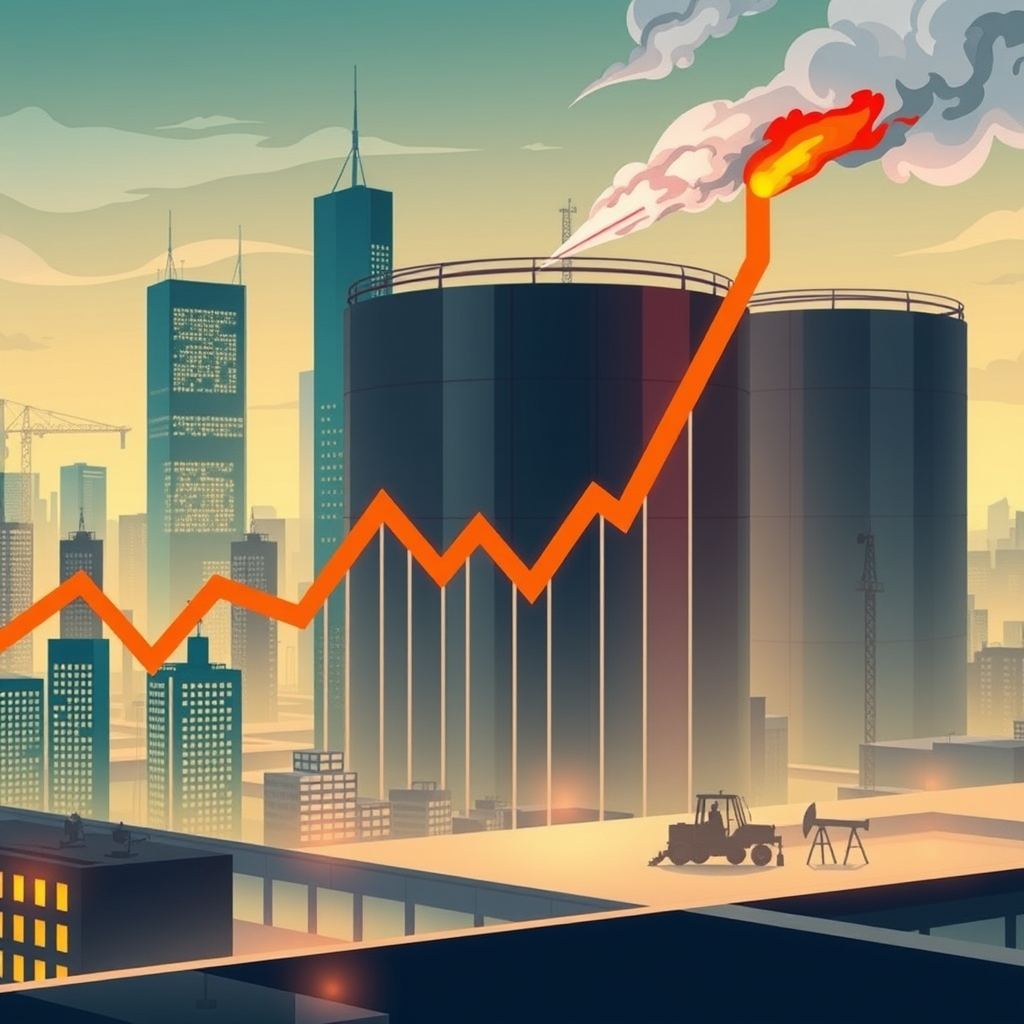
Beyond Oil Tanks: Why India Needs Strategic Pricing Reserves
As global geopolitical tensions fluctuate, India’s energy security faces a dual threat: physical supply disruptions and extreme price volatility. While the recent easing of tensions in the Middle East has provided temporary relief, the recent crisis has exposed critical vulnerabilities in how India manages both its oil stocks and its fiscal health.
The Vulnerability of Physical Reserves
India’s reliance on imported crude is massive, with the country importing approximately 88% of its annual requirements—amounting to 1.8 billion barrels, or roughly 5 million barrels per day. A significant portion of this comes from the Gulf region, which accounts for about 48% of total imports (2.4 million barrels daily).
The recent conflict highlighted a major gap in India's Strategic Petroleum Reserves (SPR). While the installed capacity stands at 5.33 million metric tonnes (MMT) across Visakhapatnam, Mangaluru, and Padur, actual storage levels at the onset of the war were only 64% of capacity. Furthermore, the Phase 2 expansion of the SPR—planned to add 6.5 MMT in Chandikol and Padur—remained largely on paper. This lack of execution resulted in a loss of 12.5 days of reserve coverage. Had both Phase 1 and Phase 2 been fully operational and filled, India would have maintained a 17-day buffer instead of the depleted levels experienced during the crisis.
The Economic Shock: A Second Defence Budget?
Beyond the physical availability of oil, the "price shock" poses a catastrophic fiscal risk. During the recent escalation, crude prices surged from $70 to $110 per barrel. For a nation importing 1.8 billion barrels annually, a $40 price hike translates to a theoretical cost increase of $72 billion to $80 billion when accounting for shipping and insurance.
To put this in perspective, India’s projected defence budget for FY 2026-27 is $86 billion. An uncontrolled spike in oil prices essentially forces the government to choose between energy security and national defence. The impact on the economy is immediate; during the peak of the crisis in May 2026, Indian oil companies were reportedly bleeding ₹700 crore per day.
The New Mantra: Strategic Pricing Reserves (SPR)
To safeguard the economy, experts suggest that India must move beyond mere "storage tanks" and implement a "Strategic Pricing Reserve" (SPR). This would function as a financial firewall to protect the national budget and oil companies from market volatility.
The concept involves creating a dedicated financial corpus by capturing savings during periods of low oil prices. For instance, when India procures oil at discounted rates—such as the $40 discounts seen during the Russia-Ukraine conflict or when prices dip to $40–$60 per barrel—the difference between the market price and India's "break-even" cost of $84 per barrel should be diverted into this reserve.
By utilizing a system of brackets and slabs to determine savings, India can build a buffer that can be deployed to subsidize or stabilize costs when prices inevitably spike during future geopolitical conflicts.
Key Takeaways
- Infrastructure Gap: India needs to aggressively scale its physical SPR from the current 17-day target to 45 days on land to meet international energy security standards.
- Fiscal Risk: Uncontrolled oil price spikes can add a burden nearly equal to India's entire national defence budget, threatening fiscal stability.
- Pricing Strategy: Implementing a "Strategic Pricing Reserve" to capture savings during low-price cycles can provide a vital financial cushion against future price volatility.