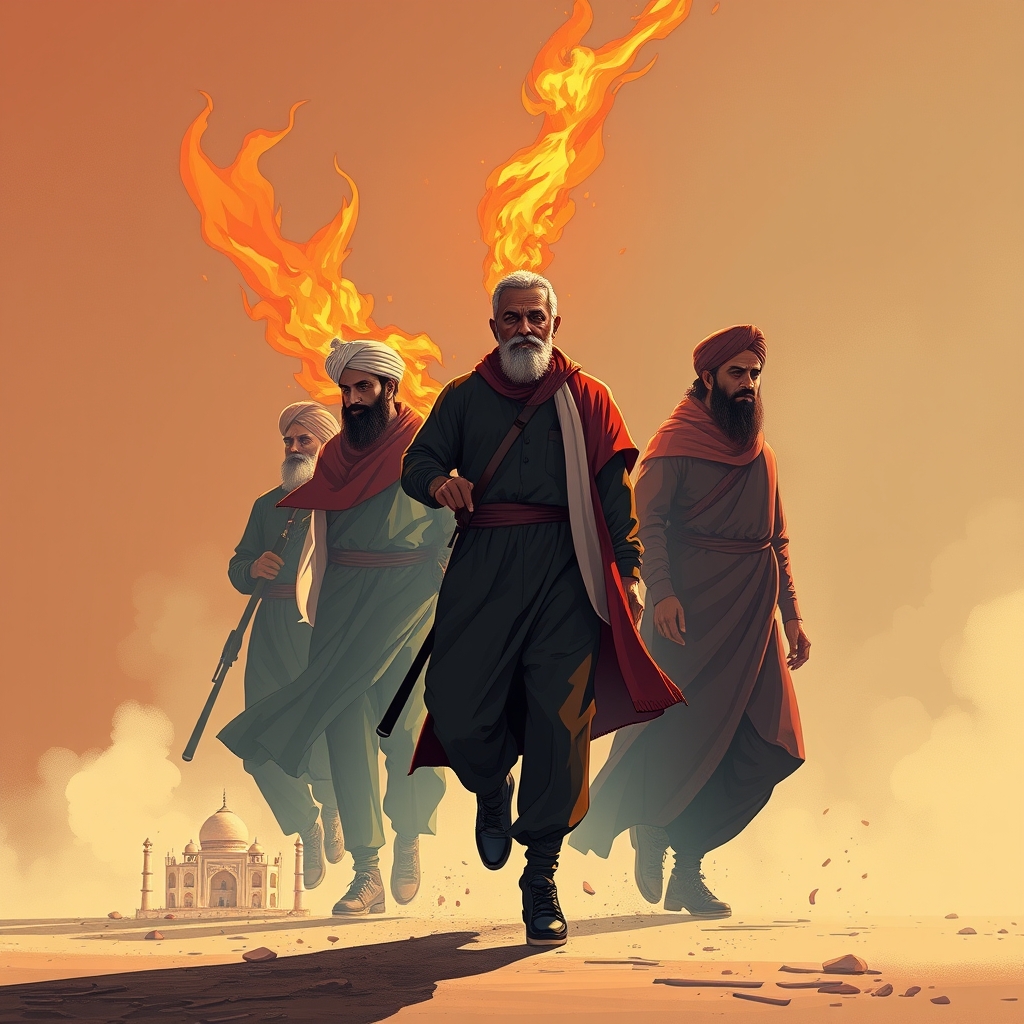
The Iran Conflict: Why US-Israeli Decapitation Strikes Failed
The recent all-out war launched by the United States and Israel against Iran has fundamentally altered the geopolitical landscape of West Asia. Despite devastating strikes intended to trigger regime collapse, the Iranian state has shown unexpected resilience, shifting the conflict from a swift military operation to a prolonged regional crisis.
The Failure of the Decapitation Strategy
The conflict escalated significantly on February 28, when the Trump administration and Israel launched a massive aerial campaign aimed at decapitating Iran's leadership. The strikes were lethal, resulting in the deaths of over 40 senior officials, including Supreme Leader Ayatollah Ali Khamenei, IRGC commander Mohammad Pakpour, and Defence Council chief Ali Shamkhani.
President Trump initially predicted a "three-day" victory, seeking a rapid regime change similar to the political shifts seen in Venezuela. However, the expected collapse of the Iranian state failed to materialize. Instead, the Iranian leadership apparatus demonstrated remarkable continuity. Following the initial shock, Ali Larijani took charge of decision-making, supported by President Masoud Pezeshkian managing the civilian administration and "ghost general" Ahmad Vahidi commanding the IRGC war effort. This rapid institutional succession prevented the chaos the U.S. and Israel had anticipated.
Asymmetric Retaliation and the Hormuz Lever
Iran’s response to the military onslaught was built on three strategic pillars: state preservation, regionalization of the conflict, and economic warfare. Rather than retreating, Iran expanded the theater of war by striking U.S. military bases in Jordan and various Persian Gulf nations, as well as direct attacks on Israel.
The most significant blow to global stability came on March 1, when the IRGC Navy closed the Strait of Hormuz to all maritime traffic. As a transit point for one-fifth of the world’s seaborne oil, the closure caused insurance costs to skyrocket and crude oil prices to soar, pushing the global economy toward a precipice. This maneuver demonstrated that while the U.S. could damage Iranian infrastructure, it could not effectively counter Iran's ability to wield its most potent strategic lever against the global energy market.
The Rise of Mojtaba Khamenei and the Push for Diplomacy
The political vacuum left by the death of the Supreme Leader was swiftly filled by his son, Mojtaba Khamenei, who was chosen by the Assembly of Experts as the new 'Leader of the Revolution.' Characterizing the war as an "existential struggle," Mojtaba Khamenei signaled that Iran would choose continued conflict over unconditional surrender.
Faced with the reality that the war was not ending and the Strait of Hormuz remained shut, the U.S. faced a strategic dilemma: continue depleting military stockpiles or negotiate. Following mediation efforts by Pakistan, a "double-sided ceasefire" was announced on April 8. While the ceasefire aims to reopen the Strait, the core issues—Iran's nuclear programme and regional hegemony—remain unresolved.
What It Means for India
- Energy Security Risks: As a massive importer of Middle Eastern oil, any instability in the Strait of Hormuz or volatility in crude prices directly threatens India’s macro-economic stability and inflation control.
- Strategic Autonomy in West Asia: The failure of the U.S. to achieve a quick regime change underscores the limits of Western military hegemony, reinforcing India's need to maintain balanced, multi-aligned relations with both Tehran and the West.
- Regional Stability and Diaspora: Increased regional militarization poses a dual challenge: ensuring the safety of the significant Indian diaspora in the Persian Gulf and managing the potential for heightened maritime insecurity in the Arabian Sea.