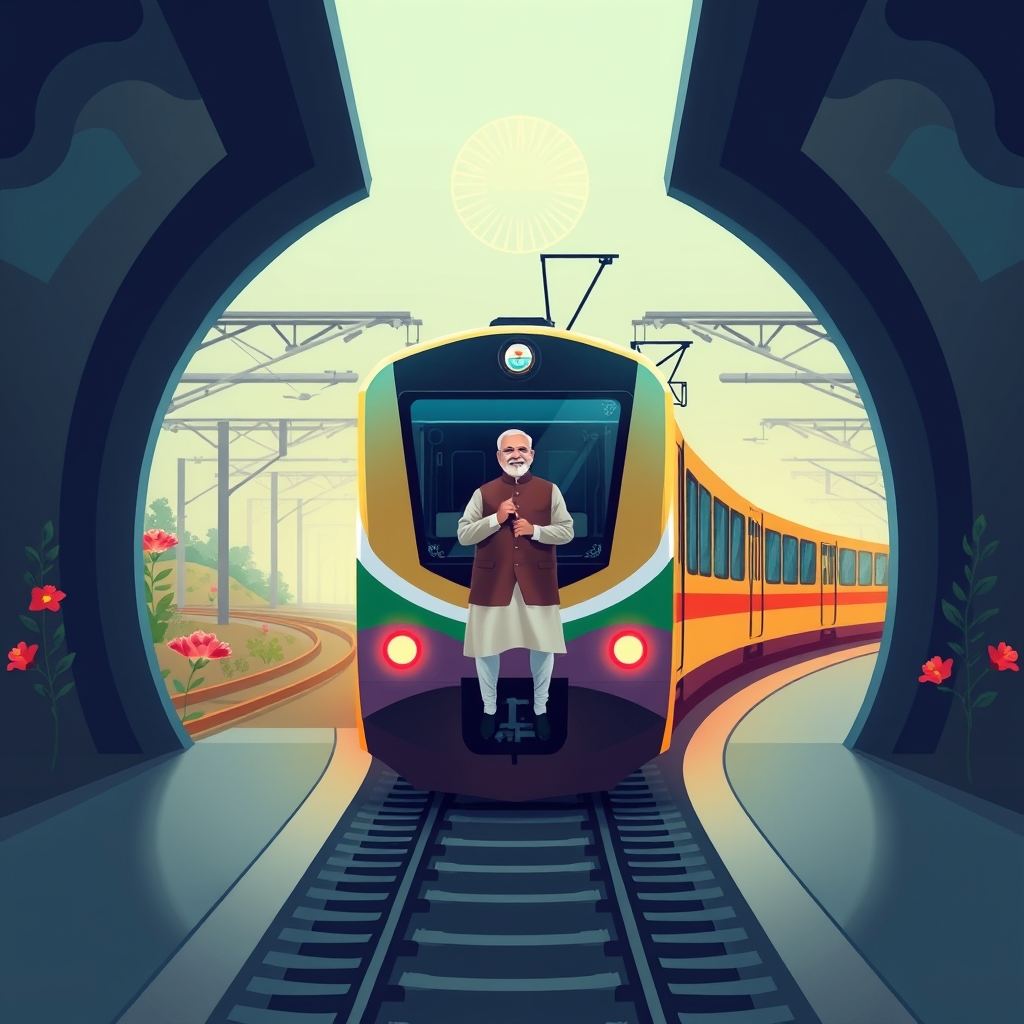
On July 17, Prime Minister Narendra Modi will flag off India’s first hydrogen-powered train on the Jind–Sonipat route in Haryana. The event is more than a ribbon-cutting. It signals that Indian Railways, one of the world’s largest rail networks, is now ready to test hydrogen fuel cell technology on its own tracks, moving beyond diesel and conventional electric traction in its search for cleaner propulsion.
How the Technology Works
This train runs on hydrogen fuel cells rather than drawing power from overhead electric wires or burning diesel in an engine. In simple terms, a fuel cell is an electrochemical device. Stored hydrogen from onboard tanks reacts with oxygen drawn from the air. The reaction generates electricity to power the traction motors, and the only direct emission is water vapor and a little heat. There is no exhaust smoke, no sulfur dioxide, and no carbon dioxide coming out of a tailpipe during operation.
That distinction matters. Diesel locomotives release pollutants at ground level along every kilometer they run. Even electric trains, while running clean on the track, carry an indirect emissions burden if the grid electricity that feeds them comes from coal. A hydrogen train shifts the pollution question upstream to how the hydrogen itself is made. If the hydrogen is produced using renewable energy—often termed green hydrogen—the entire cycle can approach near-zero emissions. For now, the immediate benefit is the removal of combustion from the vehicle itself, which sharpens air quality along railway corridors and eliminates noise and soot at stations.
The Jind–Sonipat Corridor
Indian Railways has chosen a regional stretch in Haryana for this debut. The Jind to Sonipat line is not the country’s busiest trunk route, and that is precisely the point. A pilot project on a shorter corridor allows engineers to monitor fuel consumption patterns, refueling logistics, braking energy recovery, and component wear in real-world Indian conditions without risking disruption on a high-density mainline.
Haryana’s relatively flat terrain and dry climate offer a manageable testing ground, though the summer heat and dust will still challenge the fuel cell stacks and air filtration systems. Running the train here lets the railway gather data on how hydrogen storage behaves in daily stop-start service, and how maintenance crews adapt to a technology that has never before operated on a commercial Indian route.
Why Hydrogen, and Why Now
Indian Railways has electrified track at a rapid clip over the past decade. Yet complete electrification across tens of thousands of route kilometers remains expensive and technically difficult on certain stretches. Remote branch lines, hilly terrain, and sections with low traffic density often do not justify the capital cost of erecting and maintaining overhead catenary wire.
Hydrogen trains fill that gap. They carry their own energy supply, which means they do not need overhead lines. They can run on non-electrified routes while still offering the performance and zero-local-emission profile of an electric multiple unit. For India, the timing also aligns with the National Green Hydrogen Mission, which aims to build domestic production capacity and bring down the cost of green hydrogen. If the country can produce affordable green hydrogen at scale, fuel cell trains become a far more compelling replacement for the diesel fleets that still serve hundreds of secondary routes.
What Passengers Will Notice
From a traveler’s perspective, the first difference will likely be the quiet. Fuel cell multiple units run almost silently compared to the rumble and clatter of diesel engines. Platforms will not smell of exhaust. Acceleration tends to be smooth because electric traction motors deliver torque evenly.
That said, passengers will not see the complexity hidden beneath the floor and roof: high-pressure hydrogen storage cylinders, battery buffers to handle peak power demands, power management systems, and safety cutoffs. Crews will need specialized training. Hydrogen is highly flammable, and though the storage and delivery systems are engineered to exacting standards, railway yards will need new protocols for refueling, leak detection, and emergency response.
The Harder Problems Still Ahead
השקת רכבת אחת היא הישג. הרחבת הטכנולוגיה היא קשה יותר. ייצור מימן ירוק בהודו נמצא עדיין בשלביו המוקדמים. רוב המימן המיוצר כיום בעולם מופק מגז טבעי בתהליך הפולט פחמן דו-חמצני. אלא אם שרשרת האספקה של המימן תהפוך לנקי יותר, התועלת הסביבתית של הרכבת עצמה תהיה חלקית.
העלות היא מציאות נוספת. רכבות המונעות בתאי דלק מימן יקרות יותר לרכישה כיום מאשר יחידות דיזל מרובות (DMU) קונבנציונליות. גם הדלק, בחישוב ליחידת אנרגיה מועילה, יקר יותר מאשר שאיבת חשמל ישירות מחוט מתח עליון מוחשל. המשמעות היא שרכבות מימן לא צפויות להחליף קווי ראשיים עמוסים שכבר מוחשלים או מתוכננים להחשלה. מקומן המעשי יהיה ככל הנראה בקווי אזוריים שאינם מוחשלים, בפריסה פרברית, ואולי בקווי מורשת שבהם הארכת חוטים עליונים אינה מעשית מבחינה פיזית או כלכלית.
תשתית התדלוק חייבת להיבנות מאפס. בניגוד לדיזל, שניתן להוביל במכליות ולאחסן בלוגיסטיקה קיימת, מימן דורש אחסון תחת לחץ או אחסון קריוגני ומערכות תדלוק ייעודיות במוסכי הרכבת. כל אחד מהמרכיבים הללו חייב להוכיח את עצמו כבטוח ואמין בתנאי מזג האוויר ובשגרת ההפעלה ההודית.
אות למערכת האקולוגית
ההשקה ב-17 ביולי אינה משנה את הרכבת ההודית בן לילה. קו אחד בהריאנה אינו מפצה על הפליטות של רשת המעבירה למעלה משמונה מיליארד נוסעים בשנה. אך טקס ההשקה מחייב סדרה של שיחות מכריעות. הוא אומר ליצרני רכבות שהודו פתוחה לחוזים עבור תאי דלק. הוא אומר לספקי אנרגיה שיהיה ביקוש צפוי למימן ירוק אם יוכלו לספק אותו במחיר סביר. והוא אומר למהנדסי רכבות להתחיל לבנות מומחיות תחזוקה כבר עכשיו, בעוד הצי קטן, במקום לנסות להשלים פערים מאוחר יותר.
מדינות אחרות כבר הציבו רכבות מימן בשירות ניסיוני או בשירות מסחרי מוגבל, וכניסתה של הודו לתחום פירושה שהיא יכולה ללמוד מה עבד במקומות אחרים תוך התאמת החומרה לרוחב המסילה המקומי, לעומסי הציר ולעומסים האקלימיים. המבחן האמיתי מתחיל לאחר הנסיעה החגיגית, כאשר הרכבת חייבת לתפקד תחת חום הקיץ, הלחות של המונסון והלכלוך המצטבר של השירות היומיומי, ללא אור הזרקורים המעודד של אירוע ההשקה.
השורה התחתונה האמיתית
רכבת המימן הראשונה של הודו היא אבן דרך אמיתית, אך מוטב להבין אותה כמעבדה על גלגלים. המסלול בין ג'ינד (Jind) לסוניפאט (Sonipat) קצר, והטכנולוגיה עדיין יקרה. אך על ידי הכנסת רכבת תא דלק לשירות קבוע, הרכבת ההודית מתחייבת לענות על השאלות הקשות בתנאים שלה: האם ניתן לייצר מימן נקי במחיר זול מספיק? האם צוותים יכולים לתחזק את הציוד הזה באופן אמין? והאם המערכת יכולה להצדיק את העלות במסלולים שבהם דיזל הוא כיום האופציה היחידה?
אם הנתונים מהריאנה יתבררו כחיוביים, הנעת מימן עשויה להתפשט לאט לקווי המשנה הלא-מחושלים האחרים, מה שיעניק להודו חלופה מעשית ללא פליטות במקומות שאליהם חוטים עליונים לעולם לא יגיעו. תוצאה זו תהפוך את ה-17 ביולי לא רק לתאריך השקה, אלא לנקודת ההתחלה של שינוי איטי ונחוץ באופן שבו מיליארד אנשים נעים.
הצטרפו לקהילת הלמידה של GyaanSetu: https://t.me/GyaanSetuBharat
Source: India TV News