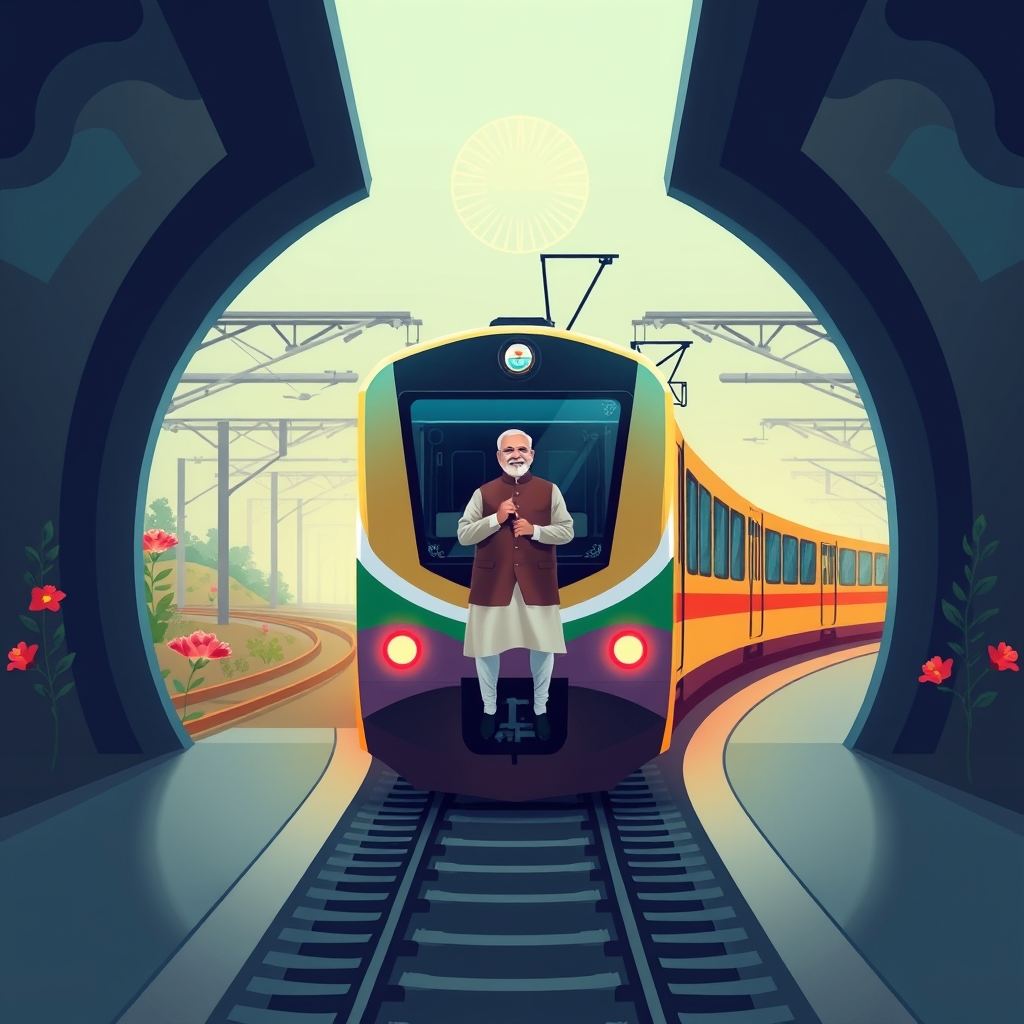
১৭ জুলাই, প্রধানমন্ত্রী নরেন্দ্র মোদী হরিয়ানার জিন্দ-সোনিপাট রুটে ভারতের প্রথম হাইড্রোজেন-চালিত ট্রেনের যাত্রা শুরু করবেন। এই অনুষ্ঠানটি কেবল একটি ফিতা কাটার আনুষ্ঠানিকতা নয়। এটি ইঙ্গিত দেয় যে বিশ্বের অন্যতম বৃহত্তম রেল নেটওয়ার্ক ভারতীয় রেল এখন নিজস্ব ট্র্যাকে হাইড্রোজেন ফুয়েল সেল প্রযুক্তি পরীক্ষা করার জন্য প্রস্তুত, যা পরিচ্ছন্ন প্রপালশনের সন্ধানে ডিজেল এবং প্রচলিত বৈদ্যুতিক ট্র্যাকশন থেকে আরও এক ধাপ এগিয়ে।
এই প্রযুক্তি কীভাবে কাজ করে
এই ট্রেনটি ওভারহেড বৈদ্যুতিক তার থেকে শক্তি গ্রহণ করা বা ইঞ্জিনে ডিজেল পোড়ানোর পরিবর্তে হাইড্রোজেন ফুয়েল সেলের মাধ্যমে চলে। সহজ কথায়, একটি ফুয়েল সেল হলো একটি ইলেক্ট্রোকেমিক্যাল ডিভাইস। অনবোর্ড ট্যাঙ্কে সঞ্চিত হাইড্রোজেন বাতাসের অক্সিজেন দ্বারা বিক্রিয়া করে। এই বিক্রিয়াটি ট্র্যাকশন মোটর চালানোর জন্য বিদ্যুৎ উৎপন্ন করে এবং এর একমাত্র সরাসরি নির্গমন হলো জলীয় বাষ্প এবং সামান্য তাপ। চলাচলের সময় কোনো ধোঁয়া, সালফার ডাই অক্সাইড বা কার্বন ডাই অক্সাইড নির্গত হয় না।
এই পার্থক্যটি অত্যন্ত গুরুত্বপূর্ণ। ডিজেল লোকোমোটিভ প্রতিটি কিলোমিটার চলার সময় ভূপৃষ্ঠের কাছাকাছি দূষক নির্গত করে। এমনকি বৈদ্যুতিক ট্রেনগুলো ট্র্যাকে পরিষ্কারভাবে চললেও, যদি তাদের সরবরাহকৃত গ্রিড বিদ্যুৎ কয়লা থেকে আসে, তবে তা পরোক্ষভাবে নির্গমনের বোঝা বহন করে। একটি হাইড্রোজেন ট্রেন দূষণের প্রশ্নটিকে সরাসরি হাইড্রোজেন তৈরির প্রক্রিয়ার দিকে নিয়ে যায়। যদি হাইড্রোজেন নবায়নযোগ্য শক্তি ব্যবহার করে তৈরি করা হয়—যাকে প্রায়শই 'গ্রিন হাইড্রোজেন' বলা হয়—তবে পুরো চক্রটি প্রায় শূন্য নির্গমনের কাছাকাছি পৌঁছাতে পারে। আপাতত, এর তাৎক্ষণিক সুবিধা হলো যানবাহন থেকে দহন প্রক্রিয়া দূর করা, যা রেলওয়ে করিডোর বরাবর বাতাসের গুণমান উন্নত করে এবং স্টেশনগুলোতে শব্দ ও কালি (soot) দূর করে।
জিন্দ-সোনিপাট করিডোর
ভারতীয় রেল এই debuted-এর জন্য হরিয়ানার একটি আঞ্চলিক অংশ বেছে নিয়েছে। জিন্দ থেকে সোনিপাট লাইনটি দেশের সবচেয়ে ব্যস্ত ট্রাঙ্ক রুট নয়, আর এটাই মূল উদ্দেশ্য। একটি ছোট করিডোরে পাইলট প্রজেক্টের মাধ্যমে প্রকৌশলীরা উচ্চ-ঘনত্বের মেইনলাইন বা প্রধান লাইনে চলাচলের বিঘ্ন ঘটার ঝুঁকি ছাড়াই বাস্তব ভারতীয় পরিস্থিতিতে জ্বালানি ব্যবহারের ধরণ, রিফুয়েলিং লজিস্টিকস, ব্রেকিং এনার্জি রিকভারি এবং যন্ত্রাংশের ক্ষয় পর্যবেক্ষণ করতে পারবেন।
হরিয়ানার তুলনামূলক সমতল ভূখণ্ড এবং শুষ্ক জলবায়ু একটি নিয়ন্ত্রণযোগ্য পরীক্ষাগার হিসেবে কাজ করে, যদিও গ্রীষ্মের তাপ এবং ধুলো ফুয়েল সেল স্ট্যাক এবং এয়ার ফিল্ট্রেশন সিস্টেমের জন্য চ্যালেঞ্জ হয়ে দাঁড়াবে। এখানে ট্রেন চালানোর মাধ্যমে রেলওয়ে এই তথ্য সংগ্রহ করতে পারবে যে প্রতিদিনের স্টপ-স্টার্ট সার্ভিসে হাইড্রোজেন স্টোরেজ কীভাবে কাজ করে এবং রক্ষণাবেক্ষণ কর্মীরা এমন একটি প্রযুক্তির সাথে কীভাবে মানিয়ে নেন যা আগে কখনও বাণিজ্যিক ভারতীয় রুটে ব্যবহৃত হয়নি।
কেন হাইড্রোজেন, এবং কেন এখন
গত এক দশকে ভারতীয় রেল অত্যন্ত দ্রুত গতিতে ট্র্যাক বৈদ্যুতিকীকরণ করেছে। তবুও হাজার হাজার কিলোমিটার রুটে সম্পূর্ণ বৈদ্যুতিকীকরণ করা কিছু ক্ষেত্রে ব্যয়বহুল এবং প্রযুক্তিগতভাবে কঠিন। দুর্গম শাখা লাইন, পাহাড়ি এলাকা এবং কম ট্রাফিক ঘনত্বের বিভাগগুলোতে ওভারহেড ক্যাটনারি তার স্থাপন এবং রক্ষণাবেক্ষণের মূলধনী খরচ বহন করা প্রায়শই যুক্তিযুক্ত হয় না।
হাইড্রোজেন ট্রেন সেই শূন্যতা পূরণ করে। তাদের নিজস্ব শক্তির সরবরাহ থাকে, যার অর্থ তাদের ওভারহেড লাইনের প্রয়োজন নেই। তারা অ-বৈদ্যুতিক রুটেও চলতে পারে এবং একই সাথে ইলেকট্রিক মাল্টিপল ইউনিটের মতো পারফরম্যান্স এবং শূন্য স্থানীয় নির্গমনের সুবিধা প্রদান করতে পারে। ভারতের জন্য, এই সময়টি ন্যাশনাল গ্রিন হাইড্রোজেন মিশনের সাথেও সামঞ্জস্যপূর্ণ, যার লক্ষ্য হলো দেশীয় উৎপাদন ক্ষমতা বৃদ্ধি করা এবং গ্রিন হাইড্রোজেনের খরচ কমানো। যদি দেশ বড় পরিসরে সাশ্রয়ী গ্রিন হাইড্রোজেন উৎপাদন করতে পারে, তবে ফুয়েল সেল ট্রেনগুলো সেই ডিজেল বহরের জন্য একটি অনেক বেশি কার্যকর বিকল্প হয়ে উঠবে যা এখনও শত শত সেকেন্ডারি রুটে পরিষেবা দিচ্ছে।
যাত্রীরা কী লক্ষ্য করবেন
একজন ভ্রমণকারীর দৃষ্টিকোণ থেকে, প্রথম পার্থক্যটি সম্ভবত হবে নীরবতা। ডিজেল ইঞ্জিনের গর্জন এবং খটখট শব্দের তুলনায় ফুয়েল সেল মাল্টিপল ইউনিটগুলো প্রায় নিঃশব্দে চলে। প্ল্যাটফর্ম থেকে ধোঁয়ার গন্ধ আসবে না। এক্সিলারেশন বা গতি বৃদ্ধি মসৃণ হয় কারণ বৈদ্যুতিক ট্র্যাকশন মোটর সমানভাবে টর্ক প্রদান করে।
তা সত্ত্বেও, যাত্রীরা মেঝে এবং ছাদের নিচে লুকিয়ে থাকা জটিলতাগুলো দেখতে পাবেন না: উচ্চ-চাপের হাইড্রোজেন স্টোরেজ সিলিন্ডার, পিক পাওয়ার ডিমান্ড সামলানোর জন্য ব্যাটারি বাফার, পাওয়ার ম্যানেজমেন্ট সিস্টেম এবং সেফটি কাটঅফ। কর্মীদের বিশেষ প্রশিক্ষণের প্রয়োজন হবে। হাইড্রোজেন অত্যন্ত দাহ্য, এবং যদিও স্টোরেজ এবং ডেলিভারি সিস্টেমগুলো অত্যন্ত নিখুঁত মানদণ্ড অনুযায়ী তৈরি করা হয়েছে, তবুও রিফুয়েলিং, লিকেজ শনাক্তকরণ এবং জরুরি প্রতিক্রিয়ার জন্য রেলওয়ে ইয়ার্ডগুলোতে নতুন প্রোটোকল প্রয়োজন হবে।
সামনে থাকা আরও কঠিন সমস্যাগুলো
Launching one train is an achievement. Scaling the technology is harder. Green hydrogen production in India is still in its early stages. Most hydrogen produced globally today is derived from natural gas in a process that emits carbon dioxide. Unless the hydrogen supply chain cleans up, the environmental benefit of the train itself is partial.
Cost is another reality. Hydrogen fuel cell rolling stock is currently more expensive to buy than conventional diesel multiple units. The fuel, measured per unit of useful energy, is also pricier than drawing power directly from an electrified overhead wire. This means hydrogen trains are unlikely to replace busy mainlines that are already electrified or planned for electrification. Their practical home is likely to be on non-electrified regional routes, suburban sprawl, and perhaps heritage lines where extending overhead wires is physically or financially impractical.
Refueling infrastructure must be built from scratch. Unlike diesel, which can be transported in tankers and stored with established logistics, hydrogen requires pressurized or cryogenic storage and dedicated dispensing systems at rail depots. Each of these pieces must be proven safe and reliable in Indian weather and operating routines.
A Signal to the Ecosystem
The July 17 launch does not transform Indian Railways overnight. One route in Haryana does not offset the emissions of a network that moves over eight billion passengers a year. But the flag-off forces a set of crucial conversations. It tells rolling stock manufacturers that India is open to fuel cell contracts. It tells energy suppliers that there will be predictable offtake for green hydrogen if they can deliver it affordably. And it tells railway engineers to start building maintenance expertise now, while the fleet is small, rather than playing catch-up later.
Other countries have already put hydrogen trains into pilot or limited commercial service, and India’s entry into the field means it can study what worked elsewhere while adapting the hardware to local track gauges, axle loads, and climatic stresses. The real test begins after the inaugural run, when the train must perform through summer heat, monsoon damp, and the accumulated grime of daily service without the forgiving spotlight of a launch event.
The Real Takeaway
India’s first hydrogen train is a genuine milestone, but it is best understood as a laboratory on wheels. The route between Jind and Sonipat is short, and the technology is still expensive. Yet by putting a fuel cell train into regular service, Indian Railways is committing to answer the hard questions on its own terms: Can clean hydrogen be produced cheaply enough? Can crews maintain this equipment reliably? And can the system justify the cost on corridors where diesel is currently the only option?
If the data from Haryana proves positive, hydrogen traction could slowly spread to other unelectrified branch lines, giving India a practical zero-emission alternative where overhead wires will never reach. That outcome would make July 17 not just a launch date, but the starting point of a slow, necessary shift in how a billion people move.
Join the GyaanSetu learning community: https://t.me/GyaanSetuBharat
Source: India TV News