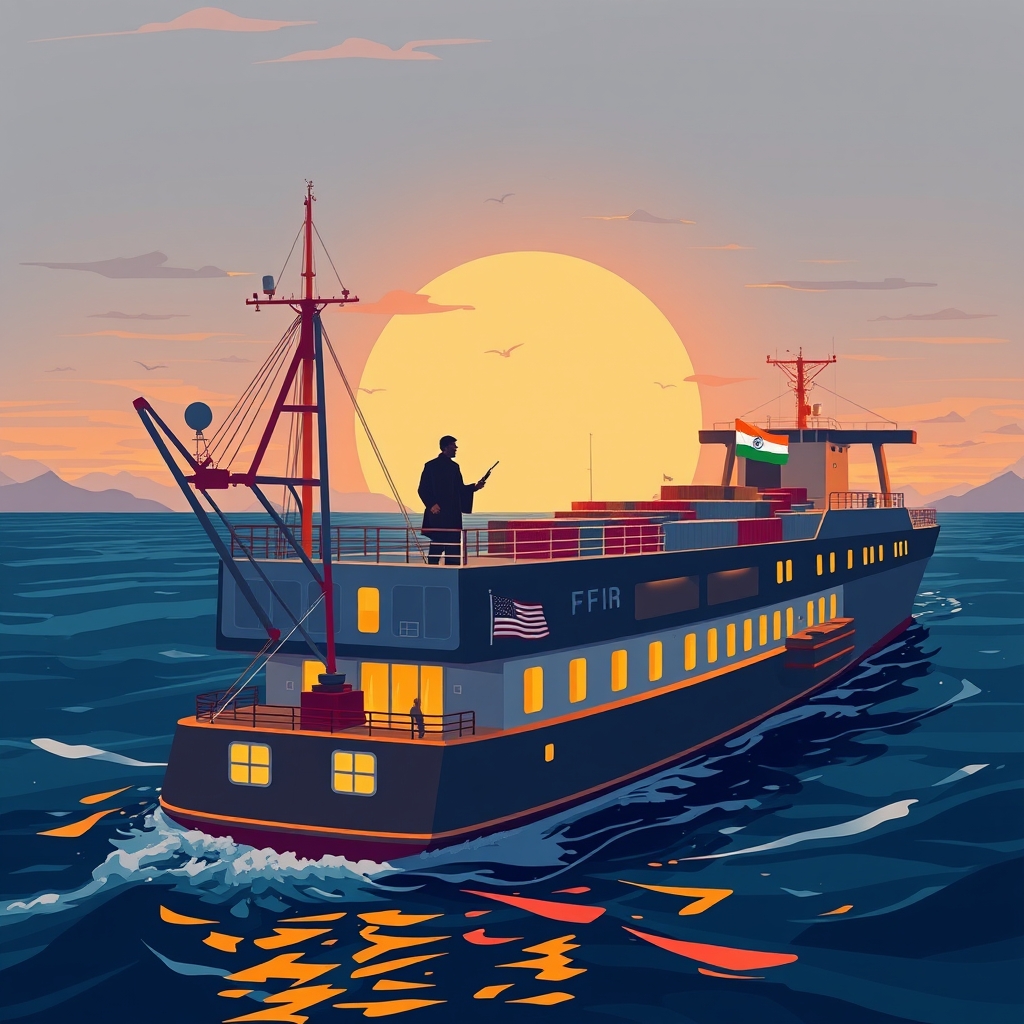
As the Russia-Ukraine conflict evolves into a volatile maritime front, the lives of Indian sailors are increasingly caught in the crossfire of drone and missile strikes. The Indian Embassy in Ukraine has officially declared the safety of our crew members as its "highest priority" following a critical emergency involving the vessel M.V. AMIR1.
The Crisis Aboard M.V. AMIR1 and Escalating Attacks
On July 28, 2026, the Forward Seamen’s Union of India (FSUI) issued an urgent appeal regarding the M.V. AMIR1, a commercial vessel currently trapped in a life-threatening situation in the Black Sea. Of the ship's 15 crew members, 13 are Indian nationals who are facing constant threats from repeated drone and missile attacks in their immediate vicinity. The FSUI has called for immediate intervention from the Government of India, ship owners, and flag states to ensure the prompt repatriation of these sailors.
This incident is not an isolated event but part of a terrifying pattern of aggression against civilian merchant vessels in the region. Recent casualties include:
- July 18: A Ukrainian projectile hit the MV OMORFI, resulting in the death of one Indian sailor.
- July 19: Russian-side projectiles struck the MV GOLDEN LEO near the port of Odesa, killing ten seafarers, four of whom were Indians.
- July 25: The MV AGN Ragnar was hit at the port of Odesa; while two Indian nationals were declared safe by the Embassy in Kyiv, two others remain missing.
India’s Diplomatic Response and Strategic Assertiveness
The Ministry of External Affairs (MEA) has adopted a firm and proactive stance, demonstrating that India will not remain a silent spectator to the endangerment of its citizens. In a significant display of diplomatic pressure, India has summoned representatives from both warring nations to convey its "strong concerns."
On July 22, the Russian Charge d’Affaires was summoned following the bombing of the MV GOLDEN LEO. Subsequently, on July 27, the Ukrainian Ambassador was summoned by the MEA regarding the attack on the MV OMORFI. By engaging both sides, New Delhi is signaling that the safety of non-combatants and civilian maritime infrastructure is a non-negotiable aspect of international law and a core concern for India.
Protecting the Backbone of Global Maritime Trade
During a briefing on July 28, MEA Spokesperson Randhir Jaiswal highlighted a critical fact: India is the second-largest supplier of seafarers in the world. This makes the security of these maritime professionals not just a humanitarian issue, but a vital economic and strategic necessity for India. As the Black Sea becomes a high-risk zone, the Indian government is working to balance its traditional neutral stance in the conflict with its absolute responsibility toward its massive seafaring workforce.
What It Means for India
- Protection of Human Capital: As the world’s second-largest provider of maritime labor, India must aggressively advocate for "safe corridors" and international maritime protections to ensure its citizens are not treated as "sitting targets" in global conflict zones.
- Diplomatic Balancing Act: The summoning of both Russian and Ukrainian diplomats showcases India's ability to hold both parties accountable, reinforcing its role as a responsible global power that prioritizes international law and civilian safety.
- Economic and Maritime Security: The increasing vulnerability of merchant vessels in strategic waterways like the Black Sea necessitates enhanced advisories and potentially new bilateral or multilateral frameworks to protect Indian commercial interests and personnel at sea.